Showing posts with label Florida. Show all posts

Sunday, 10 September 2017

The deadliest ever Atlantic hurricane


First there was Harvey (see my blog of Sept 4). Now we have Irma, and soon there will be Jose. Hurricane Irma is the fiercest Atlantic tropical storm in a decade. It has caused more than 30 deaths across a number of Caribbean islands, including Barbuda which is now said to be ‘barely habitable’. Next in its path is Florida.

But the deadliest Atlantic hurricane of all remains the Great Hurricane of 1780, which made landfall in Barbados on 10 October. Most buildings were destroyed or severely damaged and ‘a luxuriant fertile island’ turned into ‘the dreariest winter.’ The number killed was put at 4,500.

Next the storm moved on to St Lucia, where only two houses survived in the port city of Castries. Five Royal Navy ships that had been fighting in the American War of Independence were sunk and nine others severely damaged. The island’s death toll was estimated at 6,000.

On St Vincent, more than 580 out of 600 houses at Kingstown were destroyed. At Grenada, 19 Dutch ships were sunk, while off Martinique, 4,000 French sailors were drowned, and perhaps 9,000 people lost their lives on the island. The total death toll from the storm was put at around 30,000.

For the full story, see Storm: Nature and Culture (Reaktion Books).


Wednesday, 21 May 2014

Chikungunya - dengue's nasty cousin spreads


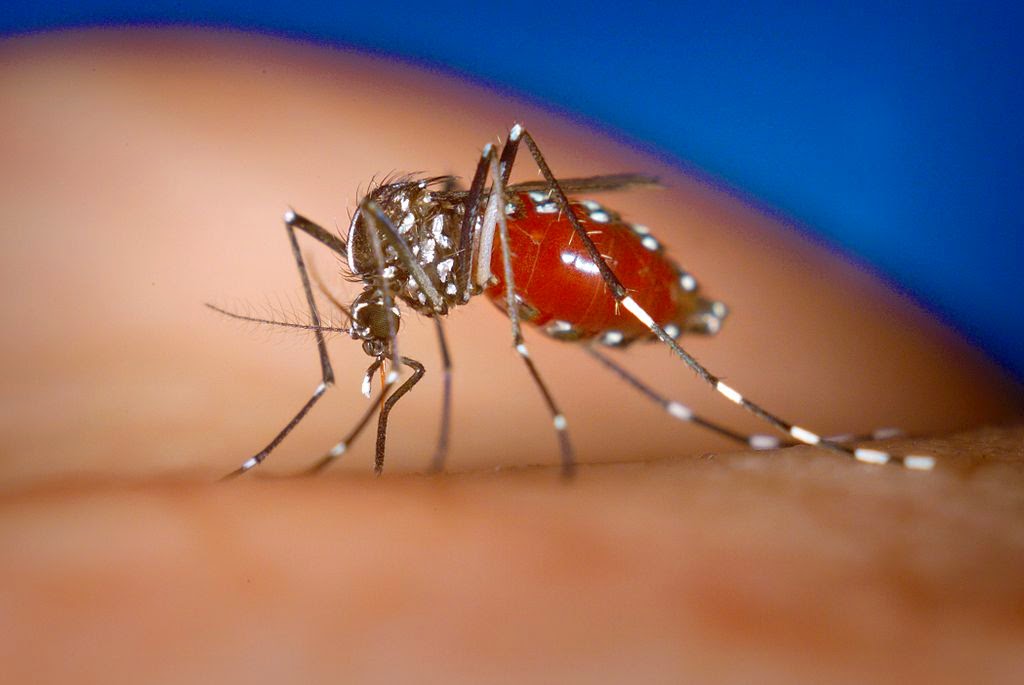
Chikungunya fever, like dengue, tortures sufferers with severe pain especially in the joints. Spread by the same mosquitoes that transmit dengue, it is common in Africa and Asia, but is now extending its presence alarmingly.

First detected in the Caribbean in December on St Martin, it has now spread to 15 other countries there. More than 4,500 cases have been confirmed, though health officials admit there may be thousands more. Haiti has more than 1,500 cases.

The disease probably crossed the ocean in the blood of an infected traveller. It has also reached French Guiana and Florida. Chikungunya is less lethal than dengue, but there are fears that it could leave victims with long-lasting arthritic pain in the joints.

Local people are being urged to get rid of puddles or containers holding water where mosquitoes thrive, while travellers are being told to wear long trousers, long-sleeved shirts and socks, and to use insect repellent. 

Sunday, 5 February 2012

The growing cost of disasters


The Economist ran a fascinating piece in its January 14 edition on the growing cost of disasters.   Five of the ten most expensive disasters in history have happened in the last four years, and a leading reinsurer, Munich Re, reckoned 2011 was the most costly year in its history.

The most expensive disaster ever is last year’s Japanese tsunami, followed by Japan’s Kobe earthquake of 1995, and Hurricane Katrina in 2005.   Most expensive does not mean highest number of casualties.      The Japanese tsunami cost fewer than 16,000 lives, Kobe 6,400 and Katrina 1,300, compared with a quarter of a million killed in the Boxing Day tsunami of 2004, and perhaps a similar number in the Haiti earthquake of 2010.

One reason for the growing cost of disasters is that there are more and more human beings around to suffer losses.   The population of hurricane-belt state Florida, for example, has risen from 2.8m in 1950 to 19m now.

And overall human beings are getting richer so there are more things to be destroyed, while sometimes not enough thought is given to where development takes place.   Thailand’s growing industries, for instance, have been located in areas known to be vulnerable to flooding.

Sunday, 24 April 2011

Space disasters

On this day……44 years ago, Soviet cosmonaut Vladimir Komarov died in the world’s first fatal space accident. A new kind of spacecraft was being used and it ran into a number of problems, culminating in the parachute failing to open properly on re-entry so that the capsule crashed into the ground.


The world’s deadliest space accidents both involved the American Space Shuttle. Challenger was destroyed 73 seconds after lift-off at Cape Canaveral on January 28, 1986. A faulty seal allowed hot gasses to escape causing the craft to break up in mid air, killing all seven people on board. Fragments are still occasionally washed ashore in Florida.


Seventeen years later, on February 1, 2003, Columbia was lost on re-entry at the end of a two-week mission. A piece of insulation foam had broken away during launch and damaged the shuttle’s left wing. It broke up over Texas, and all seven crew members were killed, including the first Israeli in space.

Saturday, 1 May 2010

Oil spills

A week ago (April 24), I blogged on the 11 people who lost their lives when BP’s Deepwater Horizon rig exploded and sank off Louisiana. Now this is also turning into an environmental disaster, with up to 5,000 barrels of oil a day gushing into the sea.

The slick is 130 miles long, and efforts to contain it are being hampered by choppy seas. Alabama, Mississippi, Louisiana and Florida have all declared states of emergency, and the US government has launched a fierce attack on the British oil company. It is only a month since President Obama eased restrictions on offshore drilling.

The worst oil spill in history came in 1991 when the Iraqis opened valves at the Sea Island terminal and dumped oil from several tankers into the Persian Gulf to try to foil any landing by US marines during the first Gulf War.

Estimates of the volume spilled range as high as 1.5 million tons (that compares with about 35,000 from the Exxon Valdez in 1989 – up to now America’s worst oil spill). Though wildlife was harmed in the Gulf, a study sponsored by UNESCO, the USA and countries in the region suggested that it did little long-term damage.