Sunday, 23 June 2013

Indian monsoon death toll rises


The death toll in India’s monsoon floods has now reached at least 600, and may eventually get as high as 1,000. 40,000 people are still stranded in the mountains of Uttarakhand state, the worst hit area.

The early monsoon rains are said to be the heaviest in 60 years, and with more downpours expected, search and rescue efforts are being stepped up. 33,000 people have been saved so far, but the terrain is difficult, and roads and bridges have been washed away.

These are likely to be the deadliest monsoon floods in India since 2008 when more than 2,400 people were killed between June and September in Maharashtra, Andhra Pradesh and Bihar.
Perhaps the worst monsoon flood ever in India came in 1978 when up to 15,000 people were killed, and more than 40 million were driven from their homes.  The disaster was made worse by a cyclone.

Wednesday, 19 June 2013

Deadly monsoon flood


Monsoon floods in northern India have now killed at least 138 people.  Officials in the state of Uttarakhand, famous for its many Hindu temples, said they were the worst ever known in the area.

Three thousand troops have been deployed to help with the rescue effort, as landslips and flash floods have been making the situation worse, and more rains are forecast from June 22. Twelve thousand pilgrims are stranded at the shrine of  Badrinath.

Because of rising river levels, more than 40 villages have been evacuated. Roads have been closed and crops destroyed, and there are fears of food shortages and possibly disease as bodies are left unburied.

Last August up to 50 people were killed in Uttarakhand when heavy rains triggered a series of flash floods.

Wednesday, 12 June 2013

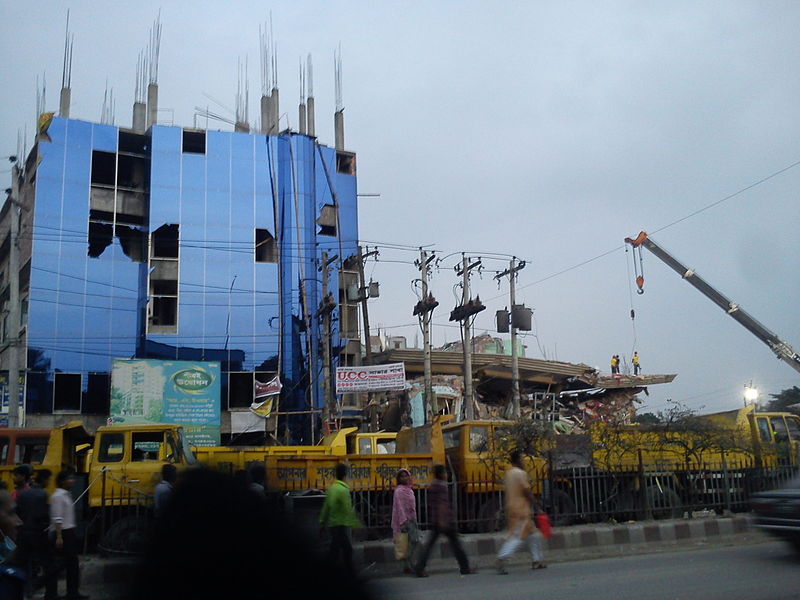
Bangladesh factory collapse - inspectors suspended


The Bangladesh government has suspended seven inspectors who it claims were negligent in their oversight of clothing factories in the Rana Plaza building which collapsed in April, killing more than 1,100 people.

An official said the inspectors never visited five of the factories and that one had been operating without a licence since 2008. A government investigation has blamed the use of poor building materials for the collapse of the block.

Over the last few years, the number of factories in Bangladesh has soared to more than 240,000, but there are only 50 inspectors.  The clothing industry alone employs more than 3 million workers, mainly women from poor villages.

The Rana Plaza’s owner and five executives and owners of factories housed in the building have all been arrested, but no formal charges have yet been brought.


Monday, 3 June 2013

More deaths at work


Following the collapse of the factory building in Bangladesh, a disastrous fire at a poultry processing plant in China.   At least 112 people have been killed in the blaze at Dehui in Jilin province according to an official news agency.
Dozens of injured workers have been sent to hospital, while about 100 managed to escape, but the news agency added that the ‘complicated interior structure’ of the building and narrow exits had made rescue work difficult. It is also said that the front gate had been locked.
One worker said that as the lights went out, people panicked in the rush to find an exit. An investigation is underway, while according to some reports, the fire took hold after a series of explosions in an electrical system.   
This is China's deadliest fire since 2000, when 309 people died in a dance hall in Luoyang, Henan province, while back in 1845, 1,670 people were killed in the world’s deadliest ever theatre fire in Canton.

Saturday, 1 June 2013

Rwanda 1994 genocide - more arrests


Five Rwandan men have been arrested by police in the UK on suspicion of involvement in the 1994 genocide in their country, following an extradition request from prosecutors in Rwanda, who want them to face charges of crimes against humanity.

The five lived all over the country – in Manchester, Bedford, London, Essex and Kent.   In 2009, four of them, who all denied any involvement in the genocide, won a legal battle to stop their extradition after senior judges ruled that they might not get a fair trial.   Three are former mayors.
 
Welcoming the arrests, Rwanda's chief prosecutor, Martin Ngoga, said Rwanda had made ‘significant progress’ on addressing concerns about fair trials since 2009.  The men are due to appear in court on June 5.

Rwanda’s genocide has the dubious distinction of being the fastest in human history.   In just 100 days, at least 800,000 people – mainly Tutsis – were murdered by Hutu extremists.


Tuesday, 28 May 2013

Syria - lessons from Iraq?


As Britain’s Foreign Secretary William Hague itches to arm the rebels in Syria, a warning from Iraq that getting rid of a bad ruler does not solve all problems.  Yesterday, at least 66 people were killed in a dozen explosions targeting mainly Shia areas in Baghdad.

The United Nations says more than 700 people were killed in April, the worst monthly death toll in nearly five years.  So far this month more than 450 have died, raising fears that violence is heading back to the peaks seen in 2006 and 2007.

Many of the bombs were detonated in busy shopping areas and markets.  Last week, more than 70 people were killed in explosions at bus stations and markets in mainly Shia districts, while two weeks ago, 38 perished in an attack on a Sunni mosque.

Iraq’s Sunni minority has been complaining that the government, led by Shias, discriminates against them.

Saturday, 25 May 2013

Darfur - lest we forget


So far this year, an estimated 300,000 people have fled their homes in Sudan’s Darfur region according to the United Nations.    After a peace deal was signed in 2011, violence had died down, but not out.
Altogether, about 1.4 million people are now homeless, and 300,000 are believed to have died since the conflict began in 2003.  While on a visit to a refugee camp, the UN’s top humanitarian official, Valerie Amos, said the situation was ‘extremely worrying’.
She said displaced people faced chronic food shortages, and had to walk in fierce heat to get water.  They also lacked access to health care and education, while rebels were obstructing the distribution of aid.
The conflict began with rebels complaining that the Sudanese government favoured Arabs and oppressed black Africans.  Since it started, the mainly Arab Janjaweed militia has been accused of carrying out ethnic cleansing and genocide, and President al-Bashir has been indicted by the International Criminal Court for alleged war crimes.
(See also my blogs of March 4, 5 March, 6 Aug, 21 Sept, 2009 and 27 May 2010.)
* The fifth in my series of videos on Britain’s 20 Worst Military Disasters features the Battle of Hastings.  http://www.youtube.com/watch?v=dtIhODt-Wrc&feature=youtu.be