Showing posts with label Uganda. Show all posts
Wednesday, 16 December 2015
After a disaster: return or move away?
After the Great Fire of London in 1666, there were plans to sweep away London's courts and alleys and replace them with something grander and neater, but many of them survived (and still do). A lot of Londoners wanted to rebuild the city much as it had been before the fire.
After the Tokyo earthquake of 1923, it was a similar story. Grand designs floundered because locals wanted to live in the same kind of homes in the same places as they had before. And when the Ugandan government tried to get people to settle away from an area devastated by floods in 1978, they too ran into opposition.
Now history seems to be re-repeating itself in Japan. After an earthquake and tsunami caused meltdown at the Fukushima nuclear power station in 2011, some argued that the 80,000 people evacuated should be persuaded not to return, but to go and live somewhere else.
And some have, but older people in particular seem to be keen to go back to the places they still think of as home. The town of Naraha is the first to be declared safe by the government.
Monday, 7 September 2015
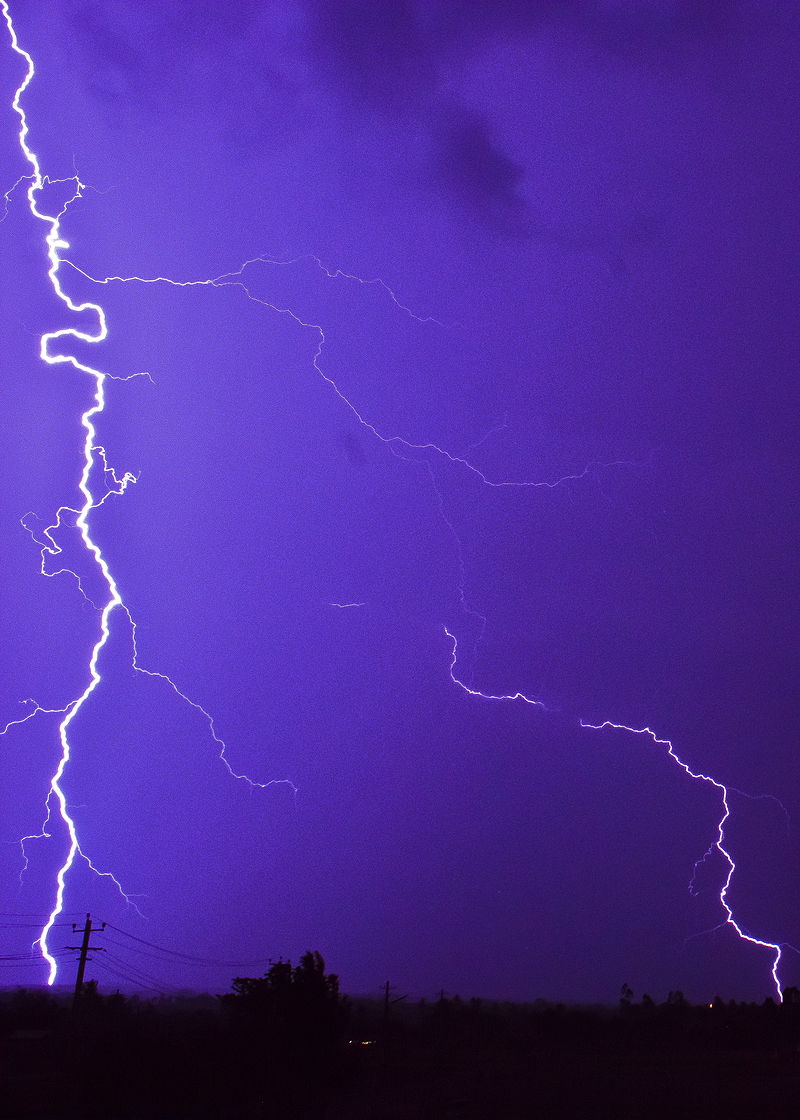
India's deadliest natural disaster - lightning
More than 30 people are reported to have been killed in lightning strikes in India - 23 in Andhra Pradesh and 9 in Orissa. Most were said to have been working in the fields during torrential monsoon rain storms.
Figures just released show that more than 2,500 people were killed by lightning in India last year, more than in any other kind of natural disaster. Next most disastrous was extreme heat with nearly 1,250 victims, though third came cold - killing more than 900.
India's National Crime Records Bureau says lightning is consistently the subcontinent's deadliest natural disaster, claiming at least 1,500 victims in every year since 2003.
In July 2011, 30 people were killed by lightning in Uganda, including 18 pupils and a teacher in a primary school (see my post of 1 July, 2011). Later that month, lightning caused a rail crash in China, when a train stalled after being struck, and another ran into its back. More than 40 people died. (see my post of 25 July, 2011)
See also my post of 15 May 2016.
Labels:
2011,
Andhra Pradesh,
China,
India,
lightning,
natural disaster,
Orissa,
storm,
thunderstorm,
train crash,
Uganda
Friday, 4 April 2014
Ebola spreads
Mali is the latest West African country to go on
alert against the Ebola virus, after three cases were reported close to the
border with Guinea where 86 people have died. Another six people have died in
Liberia, while Sierra Leone has also reported cases.
Senegal has now closed
its border with Guinea, and controls are being imposed on people entering Mali’s
capital, Bamako. The virus first
appeared in Guinea's
remote south-eastern region of Nzerekore, where most of the deaths have happened,
but it was not confirmed as Ebola for six weeks, and it has now reached the capital,
Conarky.
This is the first known
outbreak of the disease in Guinea. Most recent cases have appeared in Uganda and the
Democratic Republic of the Congo, and a sign of the alarm it is
causing is that Saudi Arabia has suspended visas for Muslim pilgrims from
Guinea and Liberia.
The virus is spread easily and kills
25-90% of those it infects. Just as with AIDS when it first appeared, there is
no vaccine and no cure. The deadliest outbreak so far came in Congo (then Zaire) in 1976
(pictured), when 280 people died - about 88% of those infected.
Tuesday, 30 August 2011
Uganda landslides
Heavy rain has brought disaster to another part of Africa. At least 24 people have been killed by landslides in the Bulambuli district of eastern Uganda. One village has been completely submerged in mud, and a chief, his wife and their eight children are reported to have died.
Red Cross workers and local people have been digging in the mud to try to find survivors, and hundreds of people have had to leave their homes. The sudden downpours follow months of below-average rain.
Last year, officials said they would be moving up to half a million people from the area after landslides killed at least 300 people, but in the end only a few thousand were relocated because of local opposition to the plan.
Many trees have been cut down because of rapid population growth, and this is said to have made floods and mudslides more common, while the government also blames climate change. (See also my blogs of November 12, 2009 and March 3, 2010.)
Friday, 1 July 2011
Lightning strikes
Eighteen children and a teacher have been killed after lightning struck a school in the Masindi area of Uganda. It is the second time the Runyanya Primary School has been hit. In 2001, a lightning strike injured three people.
Across Uganda, another 12 people have been killed by lightning during the last week. Meterologists say the reason for the strikes is a surge of moist air coming through the Congo Basin, but the government has also admitted that many buildings are not fitted with lightning conductors.
Perhaps the deadliest ever incident involving a lightning strike came in 1769 at Brescia in Italy, when the Church of St Nazaire was struck, setting fire to 100 tons of gunpowder stored in its vaults. The resulting explosion is said to have destroyed a sixth of the city, and killed 3,000 people.
More recently, in November 1994, fuel tanks were struck at Dronka in central Egypt. 469 people died in the explosion that followed.
Tuesday, 27 April 2010
Mass poisonings
Up to 90 people have been poisoned by illicit home-made banana gin in Uganda. The drink, much in demand among those who can’t afford commercial alcohol, had in this case been laced with methanol, which is used in anti-freeze. It causes blindness, coma and death.
Between 1990 and 1992, about 300 children died from kidney failure in Bangladesh, after being given paracetamol syrup laced with diethylene glycol, a solvent which is also used in brake fluid. In 2007, the same chemical was responsible for up to 365 deaths in Panama from contaminated cough medicine.
One of the worst mass poisonings took place in Iraq in the early 1970’s. After a series of poor harvests, stocks of grain had become dangerously low, and the authorities imported nearly 100,000 tons of foreign seed, which they insisted should be treated with a mercury fungicide – highly effective, but highly poisonous.
The seed was coloured bright pink, and carried warnings – in English or Spanish – not much use to most Iraqis. Unaware of the danger, many people used it to make bread, which was often reported as tasting delicious, but altogether about 100,000 people were poisoned, with 6,000 dying. For the full story, see A Disastrous History of the World.
* Thanks to the Daily Mirror for quoting me on the Icelandic volcano eruption even if they didn’t get the story exactly right – see my comment. http://www.mirror.co.uk/news/top-stories/2010/04/16/volcanic-ash-cloud-almost-wiped-out-the-human-race-in-1973-115875-22190307/
Labels:
Bangladesh,
diethylene glycol,
eruption,
Iceland,
Iraq,
mass poisoning,
methanol,
Mirror,
Panama,
Uganda,
volcano
Wednesday, 3 March 2010
Landslides - this time it's Uganda
The latest country to be hit by landslides caused by heavy rain is Uganda. More than 300 people are feared dead in the mountainous Bududa region about 170 miles from Kampala.
Because roads are blocked, mechanical diggers cannot get through to the stricken villages, and rescuers are having to work with their bare hands. President Museveni has criticised farmers for stripping hillsides and residents for building on flood planes.
One survivor said he was in a church when mud suddenly engulfed it. The five people sitting next to him were killed, but he managed to keep his head above the mud. The region often suffers from landslides, but this one is unusually deadly, and more heavy rain is forecast. (See also my blogs of April 17, Oct 10, Nov 12 and 19, 2009, and Feb 21, 2010)
This day….66 years ago saw perhaps the world’s weirdest ever rail disaster. There was no collision, no derailment. Instead a train became stranded in a tunnel in the Italian Apennine mountains because of ice on the track, and more than 520 people – almost everyone on board – died from carbon monoxide poisoning. For the story see A Disastrous History of the World.
Thursday, 8 October 2009
Rwanda genocide - another arrest
According to the old saying, the wheels of justice grind slow, but they grind exceeding small. Fifteen years after the Rwandan genocide in which 800,000 people were murdered in 100 days, another suspect has been arrested.
This follows the detention last month of a former mayor, and the conviction of the former governor of Rwanda’s capital, Kigali, in July. This time the indicted man is a former intelligence chief and senior figure at Rwanda’s elite military training school, Idelphonse Nizeyimana, who was apprehended in Uganda.
He is accused of organising the killing of thousands of people, setting up roadblocks and organising special military units to carry out the slaughter. Troops said to have been under his command rampaged through the University of Butare killing Tutsi lecturers and students.
A spokesman for the prosecutor at the UN-backed tribunal at which he will be tried said: “there is no time limit for justice.” The court is still searching for another 11 fugitives. (See also my blogs of March 1, 25, April 9, July 16, Sept 23.)
Labels:
Africa,
Butare,
genocide,
Idelphonse Nizeyimana,
Kigali,
mass murder,
Rwanda,
Uganda
Tuesday, 10 March 2009
Polio + Europe's worst mining disaster
There are small but ominous signs of polio making a comeback in Africa, aided by the chaos prevailing in parts of the continent. Refugees fleeing Somalia have brought the disease back to Kenya for the first time in 20 years, and Uganda has just had its first case in 12 years at a refugee camp, while Togo had three cases in 2008, after being clear of polio for five years.
A worldwide campaign against the virus reduced the number of cases from about 350,000 in 1988 to just 1,310 in 2007, but Bill Gates, who has pledged £185 million to the fight against the disease, says that if it is not eradicated, the number of victims will start rising again.
On this day....103 years ago, Europe’s worst ever mining disaster happened at the Courrieres colliery in northern France. About 1,800 men and boys were underground when a fierce explosion ripped through the pit. Rescue workers toiled day and night and managed to bring more than 650 men up, but eventually so many of the galleries collapsed that the search had to be called off.
Then astonishingly, 20 days after the disaster, a group of 13 miners emerged. They had survived by eating food taken down by colleagues who had been killed, and by slaughtering a horse. In the perpetual darkness, the group had lost all sense of time and believed they had been trapped for only four or five days.
The final death toll was 1,099 – a number surpassed only by the Honkeiko mining disaster of 1942 (see my blog of February 22).
Labels:
1906,
Africa,
Bill Gates,
Courrieres,
disaster,
disease,
explosion,
Honkeiko,
Kenya,
mining disaster,
polio,
Somalia,
Togo,
Uganda
Subscribe to:
Posts (Atom)