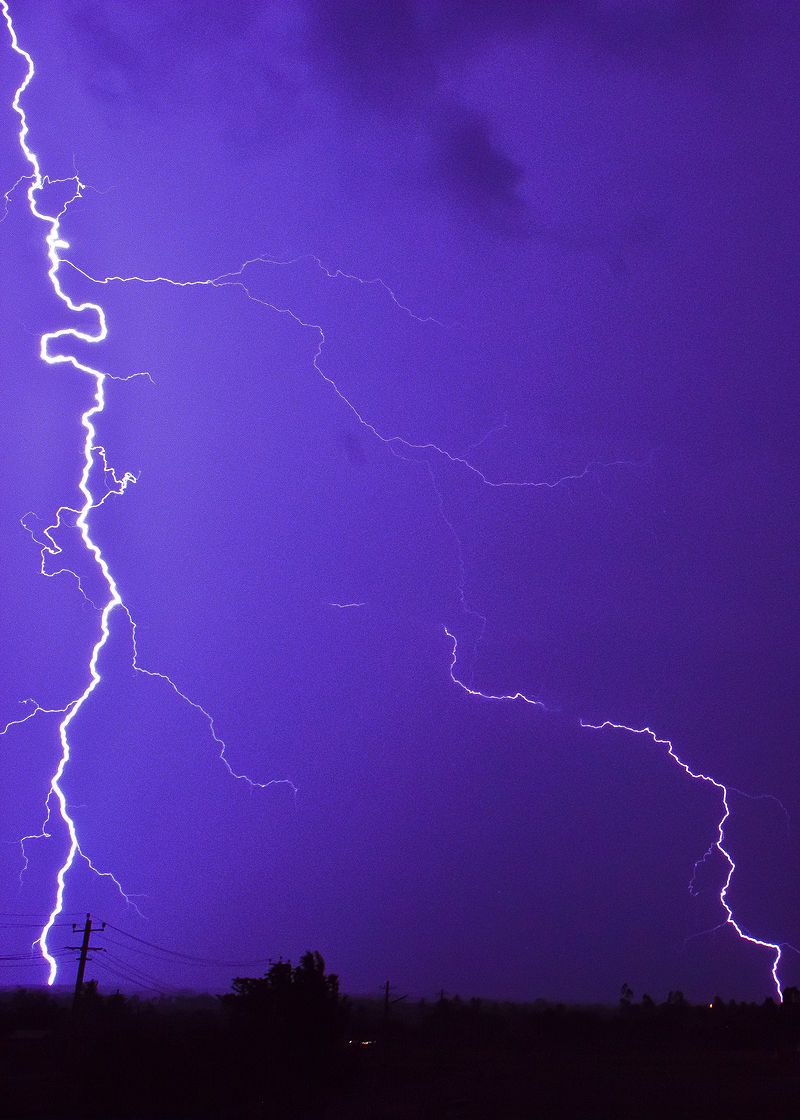
Showing posts with label lightning. Show all posts

Thursday, 17 November 2016

Britain's wettest 5 minutes and the world's wettest minute


On Thursday, 10 August 1893, about an inch and a quarter of rain fell on Preston in Lancashire in five minutes. This remains a record for the UK. It was the result of what that day’s Lancashire Daily Post described as a ‘terrific thunderstorm’.

The rain was so heavy you could not see across the main street, parts of the town was flooded to a depth of two feet, and a horse was reportedly drowned, while there were also said to be hailstones ‘as big as pigeon’s eggs’.

Surreally in the midst of this water, water everywhere, a wholesale greengrocer’s was set on fire when it was struck by lightning. Lancashire also holds other British rainfall records. The most to fall in 15 minutes was 2.2 inches at Bolton Hall in July 1964, and the most in 90 minutes was 4.6 inches at Dunsop Valley in August 1967.

As far as world records go, an inch and a half of rain came down in just one minute on Guadeloupe in 1970, while the island of Reunion (pictured) was subjected to an astonishing 71 and ¾ inches in 24 hours in 1966.

For the full story of Lancashire’s stormy history, see my Lancashire Evening Post story - http://www.lep.co.uk/news/environment/when-a-record-breaking-storm-hit-town-1-8237809
For more on record rainfalls worldwide, see Storm: Nature and Culture (Reaktion).

Sunday, 15 May 2016

Lightning kills more than 50 in Bangladesh


More than 50 people have been killed by lightning in Bangladesh over the last few days, and scores have been injured. In total, over 90 have been killed since March, compared with 51 in the whole of last year.

Most of the victims were working in the fields, though two students were struck as they played football in the capital, Dhaka. March to May is the worst time of the year for thunderstorms, and more are expected over the next week or so.

M. Abdul Mannan, a meteorology department official, said storms had been getting more severe over the last 30 years because of climate change. He blamed this year’s exceptionally hot weather for the increase in deaths, while the Bangladesh Disaster Preparedness Forum said the felling of trees was also a factor.

Lightning is also India’s deadliest natural disaster, killing at least 1,500 people every year since 2003. (See my post of 7 September 2015. See also my posts of 1 July 2011 and 4 July 2015.)


*My new book Storm: Nature and Culture (Reaktion Books) is due out in September.

Monday, 7 September 2015

India's deadliest natural disaster - lightning


More than 30 people are reported to have been killed in lightning strikes in India - 23 in Andhra Pradesh and 9 in Orissa. Most were said to have been working in the fields during torrential monsoon rain storms.

Figures just released show that more than 2,500 people were killed by lightning in India last year, more than in any other kind of natural disaster. Next most disastrous was extreme heat with nearly 1,250 victims, though third came cold - killing more than 900.

India's National Crime Records Bureau says lightning is consistently the subcontinent's deadliest natural disaster, claiming at least 1,500 victims in every year since 2003.

In July 2011, 30 people were killed by lightning in Uganda, including 18 pupils and a teacher in a primary school (see my post of 1 July, 2011). Later that month, lightning caused a rail crash in China, when a train stalled after being struck, and another ran into its back. More than 40 people died. (see my post of 25 July, 2011) 

See also my post of 15 May 2016.


Saturday, 4 July 2015

Indonesian air crash - lightning strikes twice


Students of lightning will tell you that far from it never striking the same place twice, it has favourite places it is always hitting. A structure such as New York’s Empire State Building, for example, might be struck 40 times in a single day.

Even so, the citizens of Medan on the Indonesian island of Sumatra must have felt themselves particularly unfortunate when a 51 year old Hercules military aircraft crashed this week, killing 9 people on the ground, as well as the 12 crew members and perhaps 109 passengers on board. There still seems to be confusion about the exact number of passengers.

It came down just two kilometres from where a Mandala Airlines Boeing 737 crashed shortly after take off in 2005, killing 100 people in the aircraft and 49 on the ground. An official investigation concluded the airliner had taken off with its flaps and slats retracted, meaning it failed to lift off properly.


The first indications from the Hercules crash are that one of its four engines failed shortly after take off. It is the latest in a series of accidents involving Indonesian military aircraft. Relatives of some of the passengers told reporters the victims had paid to be carried on the aircraft, which would be an illicit use of a military craft.

Monday, 25 July 2011

Lightning strike brings rail disaster

On July 1, I blogged about the role played by lightning strikes in disasters, and on Saturday we saw another, when a Chinese bullet train was struck near the city of Wenzhou.   It stalled, and another train ran into it from behind, killing at least 43 people and injuring another 200.   A four year old child was found alive in one of the carriages 24 hours later.

China’s bullet trains came into service in 2007, with some travelling at more than 180 miles an hour.   In Saturday’s crash, four coaches from the second train fell off a viaduct up to 100 feet high.

Plenty of people are worried about how a lightning strike could cause a disaster on this scale.  Three senior rail officials have been sacked, and an official newspaper has said the crash represented a ‘bloody lesson’ and should be a spur to ‘safer railway standards.’

Public anger seems to go further, though, with 97 per cent declaring themselves unhappy about the government’s response to the accident in an online poll of 44,000, and some blaming official corruption.

Friday, 1 July 2011

Lightning strikes

Eighteen children and a teacher have been killed after lightning struck a school in the Masindi area of Uganda.     It is the second time the Runyanya Primary School has been hit.    In 2001, a lightning strike injured three people.

Across Uganda, another 12 people have been killed by lightning during the last week.   Meterologists say the reason for the strikes is a surge of moist air coming through the Congo Basin, but the government has also admitted that many buildings are not fitted with lightning conductors.

Perhaps the deadliest ever incident involving a lightning strike came in 1769 at Brescia in Italy, when the Church of St Nazaire was struck, setting fire to 100 tons of gunpowder stored in its vaults.    The resulting explosion is said to have destroyed a sixth of the city, and killed 3,000 people.

More recently, in November 1994, fuel tanks were struck at Dronka in central Egypt.     469 people died in the explosion that followed.