Showing posts with label novel. Show all posts

Tuesday, 1 February 2022

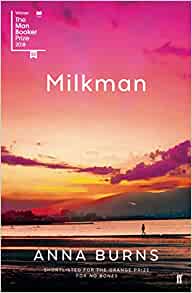
'Milkman' is a masterpiece


I do not say this lightly or often. In my opinion, Anna Burns' novel Milkman is a masterpiece. Its shunning of proper names gives it a universality as it tells the story of a young woman's life caught up in the turmoil of a violent political struggle.

It's written in Joycean, though more accessible, stream-of-consciousness style. I listened to the audiobook, read by the author herself, and found it a completely compulsive listen.

Sunday, 18 September 2016

Brexit: a lesson from literature


Another book I read on my holidays was Snow by the Turkish Nobel prize winning novelist, Orhan Pamuk. 

Published in 2004, it tells the story of a coup in the city of Kars, mounted by a demagogic but rather past-it actor. Pamuk writes about how local people support him because they believe he will stop immigrants coming in, working for low wages and stealing their jobs.

A lot of folk in Kars are disappointed with life, and different people have different views of the land of milk and honey that will follow the coup. Some think it will end immigration, others that the unlicensed slaughter of animals will be stopped; others still that corrupt politicians and business people will be called to account.

They do not understand that those mounting the coup do not have the slightest interest in these things, and just want to stop political parties they dislike from winning an upcoming election. In the end, the coup fails.

* Fact. Leading Brexiter Boris Johnson used to campaign unsuccessfully for Turkey to be admitted to the EU. Then he discovered he was anti-EU, and started to say it would be a very bad thing for Turkey to be let in, claiming this was about to happen, even though he knew it wasn't.

Friday, 16 September 2016

Tristan da Cunha - the volcano that emptied an island


On holiday, I read HervĂ© Bazin’s Les bienheureux de la desolation (which appeared in English as Tristan) – his novel about the volcanic eruption on the island of Tristan da Cunha, a remote British overseas territory in the South Atlantic, in 1961 and its aftermath.

It tells of how a violent eruption of Queen Mary’s Peak at the centre of the island forced the entire population of 264 to flee to the UK.

There was a strong collective spirit on Tristan, with a belief that no one should raise himself up above anyone else, but life was hard, and the British authorities thought that once the islanders experienced the greater comforts of life in England, they would want to stay.

In fact, many rejected what they saw as the materialism and emptiness of modern British life, and when the government held a ballot a couple of years later, the islanders voted 148 to 5 to return. Most of them did.

They adopted some of the new things they had seen in England, but live television did not arrive until 2001, and there is still no mobile phone coverage. Tristan’s population has barely grown, now standing at 266.


Bazin’s book appeared in 1970, and is seen by some as a comment on the misgivings about ‘progress’ which had helped to foment the French riots of 1968.