
I'm thrilled to be featured on an American science history podcast on the story of fireworks. Drawing on my book 'A History of Fireworks' (Reaktion Books), I talk about their origins in China, how they came to Europe, their first appearance in Britain, how they were used as soft power by monarchs such as Louis XIV, how they were used to overawe indigenous populations, how they became central to July 4th celebrations in America and much more. You can listen to it here (my first contribution is about 0639 in) https://www.sciencehistory.org/stories/distillations-pod/making-things-explode/
Showing posts with label Britain. Show all posts
Showing posts with label Britain. Show all posts
Sunday, 22 November 2026


Monday, 20 October 2025
Fireworks: illuminating their mysterious history

Looking forward to talking online about my book A History of Fireworks. From their Origins to the Present Day (Reaktion Books) to the Boundless organisation for civil servants past and present on 11 November.
I'm going to be talking about their mysterious origins in ancient China and the possibility that they were a by-product of the search for eternal life, how warfare played an important part in their development, how the pope became a major sponsor of displays in Europe, and how their first known appearance in Britain was at an event designed to put an end to the enmities of a 30 years civil war.
Then there will be the story of how 5 November, Bonfire Night, became a focus for disorder and anti-government protests, how British fireworks conquered the world in Queen Victoria's time, and how they featured at the centre of one of Britain's most famous libel cases involving one of Britain's most celebrated artists.
I will reveal the technological breakthroughs that have transformed fireworks and displays, describe how they have inspired music and literature, reminisce over the rise and fall of famous British manufacturers, and examine the challenges fireworks now face from worries about the environment and the effect they have on animals.
Scroll down this web page to find out more https://www.boundless.co.uk/news-competitions/lifestyle/meet-the-online-storytellers
Thursday, 29 February 2024
The true history of Brexit Britain: the real coalition

I've been busy with the glue and paste and I've manged to piece together another section of the New Oxford History of Brexit Britain written some time after 2050. Read it ONLY HERE:
When people talked about ‘the coalition’ in the 2020s, they invariably
meant the Conservative-Liberal Democrat coalition government that ruled from
2010 to 2015, but the real coalition in British politics was the one between
two ostensibly bitter rivals, the Conservative Party and the Labour Party. And
although, the Labour Party was an enthusiastic participant, this coalition was
fiercely conservative, resolutely blocking the changes that Britain needed, to
solve its deep-seated, long-standing problems.
The Labour-Conservative coalition obstinately defended
Brexit even when most British people had long ago realised it was a terrible
mistake, and that it had been imposed on them by a political process that could
most kindly be described as ‘unsatisfactory’, and which had effectively been
ruled illegal.
The Conservative-Labour coalition also fought like tigers
against any reform of the undemocratic ‘First Past the Post’ voting system,
which constantly awarded virtually absolute power to politicians most voters
had rejected.
So more than 63 per cent had voted against the notorious
Conservative government of 2015 that implemented the disastrous Brexit
referendum, while more than 56 per cent had opposed Boris Johnson’s vacuous
‘get Brexit done’ regime in 2019, and in the three supposed Thatcher 'landslides' of 1979-1987 she never won more than 43.9 per cent of the vote. But Labour also
benefited from this undemocracy, with Tony Blair gaining his first ‘landslide’ in
1997 with only 43 per cent of the vote, and his last election victory in
2005 with just 35 per cent. In other words, nearly two-thirds of voters opposed
him.
As the 21st century progressed, there was more
and more agonising and hand-wringing from Labour and Conservative politicians
about how voters were ‘alienated’ from the political process and about how
dangerous this was. Yet it seemed to occur to few of them that constantly
imposing on the British people governments they did not want would surely cause
‘alienation.’
As we now know, this fierce conservatism over Brexit and the
electoral system would have severe consequences for both parties, and, sadly,
for the people of Britain.
Sunday, 25 June 2023
I-Spy Penang, Malaysia. A reward for losing America

This is Fort Cornwallis, built by the British East India Company in the late 18th century to defend Penang against pirates. It was named after Earl Cornwallis, who lost America. Maybe I should have lost America, then I could have had a fort named after me!
Actually, that's a bit unfair to Cornwallis. There were plenty of British defeats and disasters in the American War of Independence (see my book Britain's 20 Worst Military Disasters, Spellmount), but the British never recovered from Cornwallis's surrender at Yorktown in 1781 and the following year parliament voted to end the war. Cornwallis went on to become Governor-General of India, and Lord-Lieutenant of Ireland.
Friday, 31 March 2023
How historians will see Brexit. I have been granted a privileged glimpse: the CPTPP
I have managed to decipher another section of the fire-damaged New Oxford History of England: Brexit 2015- which was offered to me by Sybil, an emissary from The Future (see my post of 7 March). This is from what appears to be the section on the CPTPP.
‘After a brief attack of courage when he faced down the Brexit fanatics
who wanted the UK to welch on the agreement we had made with the EU over
Northern Ireland, Sunak sadly soon reverted to spineless type, and decided
he had to offer the ‘head-bangers’, as they would become known, a consolation
prize.
Most British people soon saw that even among the multiple absurdities of Brexit, the UK’s ludicrous decision
to join a trade group on the other side of the world in preference to
neighbours 20 miles away, stood out.
It was presented by Sunak as one of those highly elusive ‘Brexit
benefits’, but this argument soon fell apart when it was revealed that, on the
government’s own figures, it would benefit the UK's economy by about 0.08 per cent, while
Brexit impoverished the country by fully 4 per cent, fifty times as much.
Instead it became clear that joining the CPTPP had only two functions:
1. As one of those endless empty gestures designed to fool people into thinking
that there was some upside to Brexit, and 2. To try to put another obstacle in
the way of the UK ever rejoining the EU, so imprisoning the country permanently
in the Brexit disaster.’
Sunday, 1 January 2023
Brexitwatch: my New Year's honours list

Emeritus Professor of Organization Studies at Royal Holloway, University of London, he blogs most Fridays on Brexit, cutting through the lies, deceit and confusion that have plagued the UK during the Brexit years. He writes authoritatively, soberly and fairly, but also readably. It is consistently the best thing I have read on the subject.
One of his many illuminating insights is that both Conservatives and Labour are trapped in what he calls 'performative' policies on Brexit. That they constantly advocate courses of action that are not designed to benefit the British people, courses of action indeed that they know will damage the British people, and whose only point is that they appeal to the prejudices of Brexiters and make them feel better.
Leaver or former remainer, right wing or left, if you want to really understand Brexit, invest 10-15 minutes of your time each week in reading Chris Grey.
Sunday, 24 May 2020
Coronavirus watch: the plagues of Southampton

The Black Death was the deadliest epidemic in British history. Did it enter the country through Southampton? Coronavirus has brought a resurgence of interest in my book, A Disastrous History of Britain, and here's the piece I've written on 'the plagues of Southampton' for the Southampton Daily Echo.
https://www.dailyecho.co.uk/news/18468017.black-death-entered-country-southampton-look-past-pandemics/
It tells the story of the plagues that have afflicted Southampton, Winchester and the region from the Black Death, through bubonic plague and cholera to Spanish flu.
Wednesday, 13 May 2020
Coronavirus watch: second waves - a lesson from history

The Black Death, probably bubonic plague, was the deadliest epidemic in British history, carrying off up to 40 per cent of the population. What a relief it must have been when it finally petered out in the early 1350s.
But in
1361, the disease was back! In what became known as the ‘children’s plague.’
While the Black Death killed more older people, this epidemic was especially
hard on those born since the earlier plague had departed. It was less devastating than the Black Death, but it
still carried off perhaps one person in five.
There
were another four serious plague outbreaks before the end of the century, and
the disease struck regularly over the next 300 years so that overall it
reduced Britain’s population by maybe half.
All
sorts of cures and preventions were tried - bleeding, carrying nosegays of flowers or herbs, sealing windows
with waxed cloth, the constant burning of aromatic woods or powders. But with
the disease being passed on by fleas of the black rat, none of them worked. The
best plan was probably to run for it, away from the towns and cities, as many
of the wealthy did, but even that wasn’t foolproof, though, as generally
happens, the rich survived better than the poor.
For more, see my book A Disastrous History of Britain (The History Press)
Friday, 27 March 2020
Coronavirus's ancestors: the plagues of Ancient Britain

Many
epidemics must have afflicted Ancient Britain without leaving any mark on
history. Perhaps the first that any historians speak of with any confidence
came in AD 166 when Roman Britain, particularly London, may have been attacked
by the Plague of Galen (named after the physician who described it), brought
back by soldiers who had been fighting in the East.
It could have
been smallpox or measles. No one is sure, but some historians believe it played
a part in a major decline in London’s population, exacerbated by a great fire
or a series of fires.
Nearly six
centuries later, the ‘father of English history’, the Venerable Bede (pictured above), a monk in
Jarrow, recorded a number of epidemics. Were they bubonic plague or some other
disease? Again no one really knows.
Bede wrote of
a sudden ‘severe plague’ falling on the Britons in 426-7. It ‘destroyed such
numbers of them, that the living were scarcely sufficient to bury the dead.’ In
664, he says that ‘a sudden pestilence…..depopulated the southern coasts of
Britain’ and then spread right up to Northumbria where it ‘ravaged the country
far and near, and destroyed a great multitude of men.’
This was
such a shock, according to Bede, that it helped to revive heathenism, as many
‘forsook the mysteries of the Christian faith and turned apostate’. The next
year, pestilence ravaged Essex, and in 681, a ‘grievous mortality ran through
many provinces of Britain’.
For more,
see my book, A Disastrous History of Britain
(The History Press).
Sunday, 22 March 2020
Coronavirus: a lesson from history

‘The plague,’ wrote Samuel Pepys, ‘made
us as cruel as dogs one to another.’ The famous diarist lived through the Great
Plague of 1665 which killed perhaps 100,000 in London, a fifth of the
population. It also raged outside the capital. More than a sixth of the
inhabitants of Cambridge are said to have died, a quarter in Norwich, between a quarter
and a third in Dover, a third in Newark and some claimed it was one person in two
in Southampton.
I have just come back to the UK from
a short time abroad, and Pepys’ words leapt into my mind as I traipsed
around a series of supermarkets looking at empty shelves. No pasta, no rice, no
canned foods, no chicken, precious little fruit and veg. Even items like
lentils, buckwheat and quinoa, which do not normally appear to be in great
demand, had been cleaned out.
Back in 1665, the elite often
got out of the cities. In Southampton, the deputy mayor and 16 other local officials
were fined for deserting their posts. Infected people and their families were
locked up in their houses. The authorities were supposed to provide food for
them, but the money ran out, and as those being incarcerated began resisting,
sometimes violently, the practice had to be abandoned.
Carts collected corpses with cries
of ‘bring out your dead’ and as coffins and even shrouds got scarce, bodies were
flung naked into plague pits. If you want to know more about the Great Plague,
see my books London’s Disasters and A Disastrous History of Britain (The
History Press).
Sunday, 9 June 2019
Brexitwatch: the 'will of the people' is to be found in parliament not the Brexit referendum result

Regular
readers of this blog will know I reject the ‘will of the people’ argument for
Brexit (see for example my post of 15 December 2016), that the result of a
crooked referendum that promised a deal that could never be delivered is a
reason for leaving the EU.
But let’s go
with it for a moment. So the ‘will of the people’ in June 2016 was that we
leave the EU. But then who elected our current parliament in 2017? ‘The people’.
Under our
system, no parliament can bind its successor so the ‘will of the people’
expressed by the general election supersedes the ‘will of the people’ of the
referendum, and the squeals of ‘betrayal’ from the Brexit fanatics are the
usual hypocritical bunkum.
MPs are
under absolutely no obligation to implement a Brexit they consider damaging to
our country. Indeed, it is their duty to reject it.
Saturday, 31 December 2016
How humans have tried to control storms

In Lithuania in the olden days,
they would drink beer, dance round bonfires, or sacrifice animals. In other
Slav countries, maidens would be danced to death. In the British Isles, we
burned humans and animals alive inside a great wickerwork idol (remember the cult horror film, The Wicker Man?), while the
Aztecs sacrificed children. All these things were done to try to control the
tempests which humanity has learned the hard way, can unleash immense
destruction without warning.
It must all have sounded so
primitive to those in more modern times, who tried to enlist science. So in
Central Europe in the late nineteenth century, they fired mortars in vineyards
and orchards to stop hailstorms, believing the shock waves in the atmosphere
would stop the stones forming. Great success was claimed, but scientific
experiments found the method useless.
In the twentieth century, the
Soviet Union went for a more ambitious approach, trying to protect the cotton
fields of Uzbekistan and other places from hailstorms by firing into the clouds
rockets and artillery shells carrying silver or lead iodide crystals. The idea
was to provide lots of nuclei around which stones could form, making them more
numerous but smaller, and less able to do damage.
The Russians claimed that between
1968 and 1984 they achieved 80 per cent success, but American tests were unable
to reproduce the results.
For the full story of humanity’s
attempts to control storms see my new book Storm:
Nature and Culture (Reaktion Books).
Friday, 18 November 2016
100 years ago today - the last day of the Somme
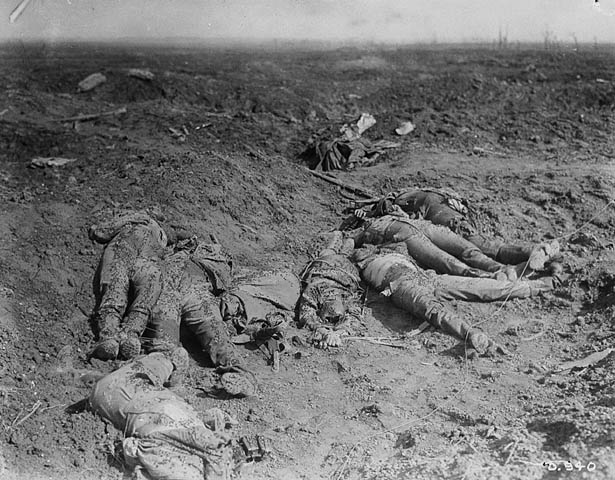
A
service of remembrance is being held today at Thiepval in northern France to
commemorate the last day of the Battle of the Somme. (Though the historian Martin
Gilbert in his Somme: The Heroism and
Horror of War, puts the final action on November 19.) Thiepval’s Memorial
to the Missing lists the names of more than 72,000 soldiers whose bodies were never
found.
I
wrote about the Somme in my book Britain’s
20 Worst Military Disasters, noting that every other battle I featured was clearly
a defeat, while the Somme is sometimes seen as a victory.
The
ground gained was negligible. Nowhere did the Allied line advance more than six
miles, and many objectives due to be taken on the first day were never
captured, nor did the Allies liberate a single town or gain a single
strategically significant point. But it is said that the bloody attrition
fatally drained German resources and paved the way for the Allied victory two
years later.
The
offensive involving British, British Empire and French soldiers had begun on 1
July, 1916. By the end of that day, nearly 20,000 British soldiers were dead,
and 36,000 wounded – the worst toll for a single day in the history of the
British Army.
When
rotten weather and cloying mud finally brought an end to the battle, Britain and the British Empire had suffered an almost
unimaginable 400,000 casualties, the French had lost about 200,000, and the
Germans perhaps 450,000.
Friday, 16 September 2016
Tristan da Cunha - the volcano that emptied an island

On holiday, I read Hervé Bazin’s Les bienheureux de la desolation (which appeared in English as Tristan) – his novel about the volcanic
eruption on the island of Tristan da Cunha, a remote British overseas territory
in the South Atlantic, in 1961 and its aftermath.
It tells of how a violent eruption of Queen Mary’s Peak at the
centre of the island forced the entire population of 264 to flee to the UK.
There was a strong collective spirit on Tristan, with a belief
that no one should raise himself up above anyone else, but life was hard, and the
British authorities thought that once the islanders experienced the greater comforts of life in England, they would want to stay.
In fact, many rejected what they saw as the materialism and emptiness
of modern British life, and when the government held a ballot a couple of years
later, the islanders voted 148 to 5 to return. Most of them did.
They adopted some of the new things they had seen in England,
but live television did not arrive until 2001, and there is still no mobile
phone coverage. Tristan’s population has barely grown, now standing at 266.
Bazin’s book appeared in 1970, and is seen by some as a
comment on the misgivings about ‘progress’ which had helped to foment the
French riots of 1968.
Wednesday, 18 May 2016
Europe: stay or leave? Focus on fact - 6

Today’s fact: leaving Europe is not
just for Christmas.
Interesting to hear some people
inclined to vote for Brexit on the radio yesterday morning. They were asking:
‘if we leave Europe and it all goes wrong, when do we get the chance to join
again? Is it in 3 years or in 5 years?’ The fact that the answer to the question
is ‘probably never’ and that Brexit is a one-way ticket, does not seem to have
dawned on some of the anti-Europeans.
Interesting also the way the
anti-Europeans dismiss the overwhelming weight of reputable, statistically
supported economic forecasts that leaving Europe will damage us, and that the
only question is how much. The Brexiters reply: ‘forecasts are nearly always
wrong’. And yet they base their own arguments on completely unsupported forecasts
that the EU is going to (a) get closer and closer or (b) break up. As these
forecasts are contradictory, plainly at least one cannot be right.
And even if either should one day
come to pass, neither is a reason for leaving now. Should the EU get closer and
closer, we are exempt from the process, and if we should ever feel our
exemption was insufficient, we could then leave. Similarly, if the EU were to
break up, we would, like everyone else, leave.
The anti-Europeans are behaving
like a man on a cliff top who jumps off because he is afraid that at some time
in the future a dangerous animal may appear.
Thursday, 5 May 2016
Europe: stay or leave? Focus on fact - 5

Today’s fact: other countries have rights and interests just
as much as we do.
The anti-Europeans are so focused on what they see as OUR
rights and interests that they have a real problem getting their heads round the
idea that our European neighbours have THEIR rights and interests too.
A similar thing happened in the Scottish referendum. The
pro-independence campaigners were so obsessed with their own interests, they
could not understand that the rest of Britain would consider ITS interests and
say: ‘No. You can’t keep the pound.’
Because the other EU countries are better at selling things to
us than we are at selling things to them, we have a huge trade deficit, but to the anti-Europeans in their parallel universe, this weakness is a strength,
for it means the rest of Europe will be desperate to offer us a stonkingly favourable
trade deal. Unfortunately it does not work like that.
Europe sells about 8 per cent of its exports to us. One would
not want to give that up, but if push came to shove, one could do without it.
Between 40 and 50 per cent of our exports go to Europe. If we lost that, it
would destroy our economy. In any post-Brexit negotiations, the rest of Europe
will have the strong hand, and we will have the weak one. We will be the ones
desperate for an agreement.
The anti-Europeans want a relationship with the rest of the
Europe that gives us all the benefits of EU membership with none of the costs,
and they blame any suggestion of a refusal to give in to their demands
on spite. Europe would certainly be justified in feeling spiteful when you look
at the constant vituperation it receives from the anti-Europeans, but spite is
not the reason it will refuse the Brexiters’ demands. The reason is that it is
not in the interests of the rest of Europe to concede them.
Saturday, 30 April 2016
Ancient apocalypse: The great British tsunami of 6100 BC.

Watching Neil Oliver’s excellent History of Ancient Britain on BBC-4 television,
I was reminded of the story of a great tsunami that struck the country 8,000
years ago, which may have been the first major natural disaster
suffered by British men and women.
Archaeologists think that in about
6100 BC, huge landslides in Norway triggered great waves which struck the North-east and penetrated 25 miles inland, turning low-lying plains into what
is now the North Sea, and cutting us off from the continent.
Before the tsunami, a landbridge
from the region around the Wash connected us with the Low Countries. Rising sea
levels were already threatening it before the natural disaster finished off the
job.
The drowned area was known to
archaeologists as Doggerland, and was largely made up of lagoons, marshes and
mudflats. It is believed to have been one of the richest hunting grounds in
Europe. So many humans would presumably have been caught up in this ancient
tsunami. (See also my post of 1 May 2014.)
Saturday, 13 June 2015
Of disasters, gods and spirits

The court case against four Western
tourists who stripped off at the top of a Malaysian sacred mountain has been
given added spice by claims from a local politician that their action caused an earthquake
that killed 18 people. His rationale was that they had angered the spirits of Mount
Kinabalu.
It is easy to mock, and other
Malaysian politicians have distanced themselves from linking the natural
disaster to the tourists’ behaviour, but we should remember that the need to
find some divine retribution behind the suffering inflicted by disasters is
deep-seated, and was common in Britain until relatively recently.
After we were struck by the worst
storm in our history in 1703, Queen Anne declared it was because God felt a ‘heavy
displeasure’ at our wickedness. Even though thousands were killed, especially
around our coasts, it was no good feeling sorry for ourselves, she said. We had
behaved so badly, we were lucky the storm was not even worse.
When cholera struck in 1832, the
British government announced a series of days of fasting and humiliation during
which the nation would confess its sins and beg for God’s forgiveness. It did
not halt the disease, which raged for another year and killed about 60,000
people.
Thursday, 21 May 2015
Quintinshill - Britain's worst train crash

Tonight at 2100 the BBC4 tv channel
will tell the story of Britain’s worst ever rail disaster, which happened 100 years ago tomorrow. It was a three train
pile-up during the First World War at Quintinshill near Gretna on the West
Coast main line early on the morning of 22 May 2015, in which about 226 people
died, most of them soldiers on a troop train.
The troop train was carrying about
500 men south on the first leg of their journey to Gallipoli. It was made up of
gas-lit wooden coaches. Congestion in the area that morning meant that a local
train was being held stationary on the main line.
The troop train ploughed into it,
and then shortly after, a sleeper coming up from the south ran into the
wreckage. The carriages of the troop train were soon alight, the blaze
spreading with nightmare speed.
Two signalmen were blamed for the
crash. One was sentenced to three years’ hard labour, and the other to 18
months in gaol, but pre-publicity for tonight’s programme suggests it may have
new information on the causes.
For more on Quintinshill, see A Disastrous History of Britain.
Saturday, 11 April 2015
200 years ago today - the biggest volcanic eruption of modern history

200 years ago today, the Indonesian volcano of Tambora was spewing molten rock nearly 30 miles up into the atmosphere. It is a less famous disaster than Krakatoa, also in modern-day Indonesia 68 years later, but this was the most powerful eruption of at least the last 500 years.
The immediate death toll on the island of Sumbawa, where the volcano is located, was perhaps 12,000, but across the world, hundreds of thousands may have perished in the volcanic winter that came after the eruption, as ash blotted out the sun.
It brought starvation to China's Yunnan province, hunger and disease to India, while the great chill killed many across Europe as global temperatures fell by perhaps three degrees, with the effect persisting into the following summer. There were food riots in Britain and France, while soup kitchens had to be opened in Manhattan.
The ash meant many countries experienced strange, dramatic sunsets, some of which inspired the great painter, J.M.W. Turner, while the 'wet, ungenial summer' in Switzerland confined Mary Shelley and her friends indoors. For entertainment, they had a story competition. Mary's entry was Frankenstein. The rotten weather was even thought to have contributed to Napoleon's defeat at Waterloo.
For the full story, see A Disastrous History of the World.
Subscribe to:
Posts (Atom)
