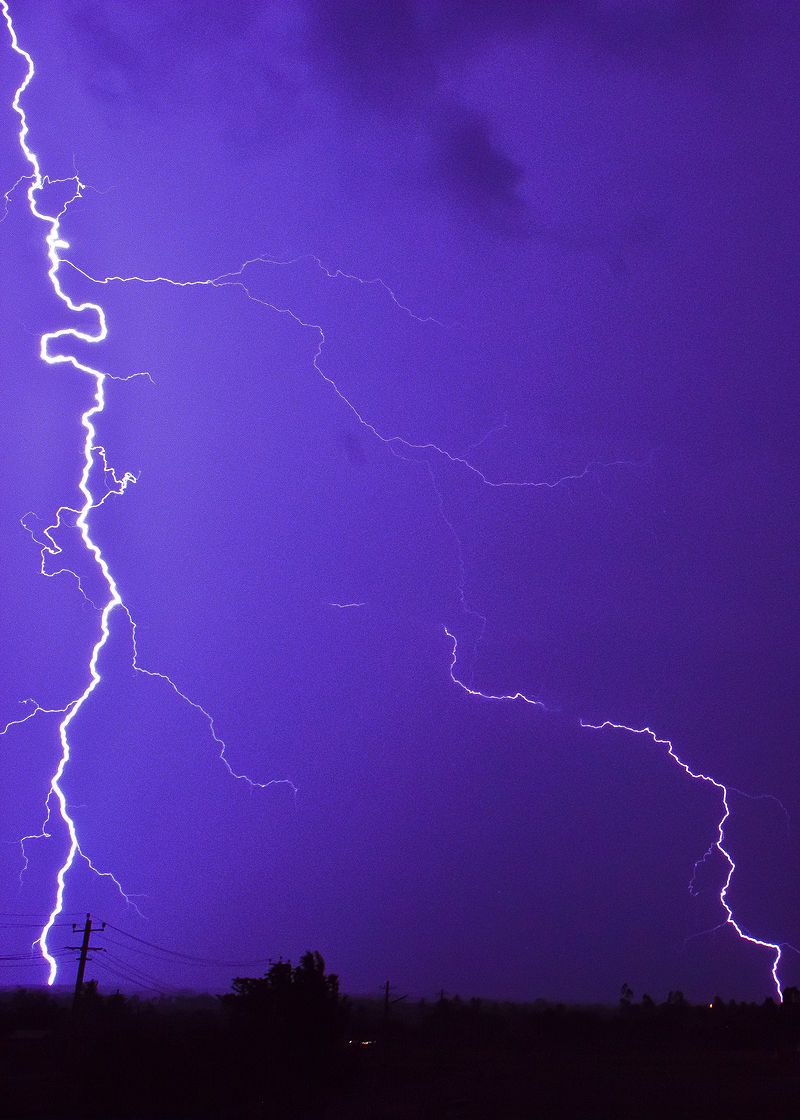
I've also had this review from an Indian environmental website:- http://www.downtoearth.org.in/reviews/storm-front-57277?platform=hootsuite
Showing posts with label India. Show all posts
Friday, 24 March 2017
'Storm: Nature and Culture': new reviews
Here's another review of Storm. This time from the Church Times.
I've also had this review from an Indian environmental website:- http://www.downtoearth.org.in/reviews/storm-front-57277?platform=hootsuite
Labels:
art,
Church Times,
culture,
Down to Earth,
environment,
India,
nature,
Nature and culture,
painting,
Reaktion,
religion,
review,
storm,
votive,
Withington
Saturday, 12 November 2016
Storm gods rule!
In ancient religions all over the
world – Greece, Rome, Iceland, India – the chief god was the god of storms,
whether it was Zeus brandishing his thunderbolt, Thor with his magic hammer, or
Indra riding his multi-tusked elephant.
My new book Storm: Nature and Culture (Reaktion) explores the fascinating
stories surrounding these gods, such as how a wicked giant stole Thor’s hammer
and demanded the hand of a princess in marriage as the price of its return.
Thor disguised himself as the bride, and managed to escape detection at the
wedding ceremony in spite of eating an ox and eight salmon. Then he grabbed the
hammer and killed the giant.
The Maoris told of how the sky god
made love endlessly to the earth goddess so their children could never get out
of her womb. Eventually one of the young deities managed to prise them apart, but
this upset the storm god Tawhirimatea who had been quite happy inside his
mother, and now became an unruly presence on land and sea.
In some Slavic regions, they
believed the darkness held the sun prisoner in a cell which could be opened
only by lightning from the storm god, Perun, and a spring festival used to be
held at which maidens would dance themselves to death in his honour. This
became the inspiration for Stravinsky’s ballet, The Rite of Spring, while the cult 1970s British horror film, The Wicker Man, was inspired by
sacrifices to the Celtic storm god, Taranis.
For much more on the role of storms in religion, see Storm: Nature and
Culture by John Withington. Reaktion Books. Price £14.95. ISBN 9781780236612.
Labels:
god,
Greece,
Iceland,
India,
Indra,
Maori,
myth,
New Zealand,
Perun,
Rite of Spring,
Rome,
storm,
Taranis,
Tawhirimatea,
The Wicker Man,
Thor,
Zeus
Sunday, 15 May 2016
Lightning kills more than 50 in Bangladesh
More than 50 people have been
killed by lightning in Bangladesh over the last few days, and scores have been
injured. In total, over 90 have been killed since March, compared with 51 in
the whole of last year.
Most of the victims were working in
the fields, though two students were struck as they played football in the
capital, Dhaka. March to May is the worst time of the year for thunderstorms,
and more are expected over the next week or so.
M. Abdul Mannan, a meteorology
department official, said storms had been getting more severe over the last 30
years because of climate change. He blamed this year’s exceptionally hot
weather for the increase in deaths, while the Bangladesh Disaster Preparedness
Forum said the felling of trees was also a factor.
Lightning is also India’s deadliest
natural disaster, killing at least 1,500 people every year since 2003. (See my
post of 7 September 2015. See also my posts of 1 July 2011 and 4 July 2015.)
*My new book Storm: Nature and Culture (Reaktion Books) is due out in September.
Sunday, 10 April 2016
Is this the world's deadliest firework accident?
Nearly 100 people are believed to
have been killed in what may have been the deadliest firework disaster in
history. It came at a display to
celebrate the Hindu new year at a temple in southern
India. The number injured is put at up to 350.
The fire at the Puttingal temple in
Kollam, Kerala, is believed to have been caused by a stray firework hitting a
firework store and causing a major explosion or perhaps a series of blasts.
There are suggestions that dynamite sticks were also being stored. According to
some reports, the explosions caused a roof to collapse, trapping people beneath.
About 6,000 people had been
attending the festivities, and local residents spoke of concrete blocks flying
through the air, and landing in gardens.
Southern India suffered another
serious firework disaster in 2012 in the town of Sivakasi, known as India’s
firework capital, because it turns out perhaps 70 per cent of the country’s production.
40 people were killed and 70 injured in an explosion at a factory that did not
have a valid licence.
(See also my posts of 28 January, 25
March, 28 October and 3 November 2013.)
Friday, 26 February 2016
Mumbai bombings: a bizarre twist
A chapter has closed in a strange story
on the fringes of the Mumbai terrorist attacks of 1993 which left 257 people
dead. The Bollywood star, Sanjay Dutt, aged 56, has been released from prison
after serving 5 years for buying guns from the terrorists.
Dutt’s defence was that he had needed
the weapons to protect his family during riots in which Muslims fought Hindus.
The son of a Hindu father and a
Muslim mother, he was one of India’s most popular stars, specialising in
tough anti-hero roles. Sentencing him at his trial, the judge said: ‘Don’t get
perturbed. You have many years to go and work like the Mackenna’s Gold actor Gregory Peck.’
A hundred people were convicted for
their role in the bombings, with 12 given the death penalty and 20 others
sentenced to life imprisonment. For
more, see A Disastrous History of the
World.
Labels:
1993,
attack,
Bollywood,
Bombay,
Gregory Peck,
Hindu,
India,
Mackenna's Gold,
Mumbai,
Muslim,
prison,
released,
Sanjay Dutt,
star,
terrorist
Sunday, 13 September 2015
Mumbai train bombers convicted
In India, 12 men have been convicted
for their part in the co-ordinated bombings of Mumbai commuter trains in 2006
that killed 189 people and injured more than 800. One man was acquitted.
Sentencing is due tomorrow.
The seven bombs went off during a
15 minute spell, and appeared to have targeted first class compartments as
people were going home from jobs in the city’s financial district. Explosives
were packed into pressure cookers, then put in bags.
Prosecutors said the attack was
planned by Pakistan's intelligence agency ISI, and carried out by the
Pakistan-based militant group Lashkar-e-Taiba with help from the Students'
Islamic Movement of India, a banned Indian group. Pakistan has rejected the
allegations.
Mumbai has been hit by a number of
terrorist attacks. In 2013, bombs killed 257 people, and bombers also struck in
2003 and 2011, killing a total of 70, while in 2008, gunmen attacked a number
of places in the city, killing 165.
Monday, 7 September 2015
India's deadliest natural disaster - lightning
More than 30 people are reported to have been killed in lightning strikes in India - 23 in Andhra Pradesh and 9 in Orissa. Most were said to have been working in the fields during torrential monsoon rain storms.
Figures just released show that more than 2,500 people were killed by lightning in India last year, more than in any other kind of natural disaster. Next most disastrous was extreme heat with nearly 1,250 victims, though third came cold - killing more than 900.
India's National Crime Records Bureau says lightning is consistently the subcontinent's deadliest natural disaster, claiming at least 1,500 victims in every year since 2003.
In July 2011, 30 people were killed by lightning in Uganda, including 18 pupils and a teacher in a primary school (see my post of 1 July, 2011). Later that month, lightning caused a rail crash in China, when a train stalled after being struck, and another ran into its back. More than 40 people died. (see my post of 25 July, 2011)
See also my post of 15 May 2016.
Labels:
2011,
Andhra Pradesh,
China,
India,
lightning,
natural disaster,
Orissa,
storm,
thunderstorm,
train crash,
Uganda
Saturday, 11 April 2015
200 years ago today - the biggest volcanic eruption of modern history
200 years ago today, the Indonesian volcano of Tambora was spewing molten rock nearly 30 miles up into the atmosphere. It is a less famous disaster than Krakatoa, also in modern-day Indonesia 68 years later, but this was the most powerful eruption of at least the last 500 years.
The immediate death toll on the island of Sumbawa, where the volcano is located, was perhaps 12,000, but across the world, hundreds of thousands may have perished in the volcanic winter that came after the eruption, as ash blotted out the sun.
It brought starvation to China's Yunnan province, hunger and disease to India, while the great chill killed many across Europe as global temperatures fell by perhaps three degrees, with the effect persisting into the following summer. There were food riots in Britain and France, while soup kitchens had to be opened in Manhattan.
The ash meant many countries experienced strange, dramatic sunsets, some of which inspired the great painter, J.M.W. Turner, while the 'wet, ungenial summer' in Switzerland confined Mary Shelley and her friends indoors. For entertainment, they had a story competition. Mary's entry was Frankenstein. The rotten weather was even thought to have contributed to Napoleon's defeat at Waterloo.
For the full story, see A Disastrous History of the World.
Wednesday, 14 January 2015
Mass poisonings - Africa and India
Alcohol can kill, especially it it’s
laced with crocodile bile, or other lethal additives. In Mozambique, 69 people,
including apparently a toddler, have died after drinking home-made beer,
ironically, at a funeral.
Health officials believe
contamination with crocodile bile made the drink lethal. The woman who brewed
it and a number of her relatives are dead, and another 39 people are being
treated in hospital.
Meanwhile in India, at least 29
people have died in Uttar Pradesh after drinking toxic liquor at a cricket
match, and 100 more are in hospital. Some have lost their sight. Doctors say the
drink may have been adulterated with cheap, but dangerous, methyl alcohol. The
owner of the shop that sold it has been arrested.
Poisonings of this kind are
depressingly common in India. Nearly 170 people died in 2011 in West Bengal,
107 in Gujarat in 2009, and 30 in Uttar Pradesh in the same year.
Labels:
2009,
2011,
Africa,
alcohol,
beer,
Bengal,
cricket,
funeral,
Gujarat,
India,
Lucknow,
mass poisoning,
Mozambique,
poisoning,
Uttar Pradesh
Wednesday, 3 December 2014
Bhopal + 30
On the 30th
anniversary of the Bhopal explosion, hundreds of protesters have gathered
outside the Indian factory which was the scene of the world’s deadliest
industrial disaster. They burned effigies of the plant’s owners, held up
banners, and shouted ‘We want justice!’
In the early hours of
the morning, 30 years ago today, about 40 tons of deadly methyl isocyanate gas leaked
from a pesticide factory owned by U.S. multinational Union Carbide and was
carried by the wind into the surrounding slums.
The
government’s official total of deaths is 5,295, but activists say the
true figure is about 25,000 and that many people still suffer from cancer,
blindness, respiratory problems and immune and neurological disorders, and that
they have received inadequate compensation. They also complain that toxic waste
around the plant is still contaminating water supplies for 50,000 people.
Union
Carbide’s present owners, Dow Chemical has denied liability, saying it bought
Union Carbide a decade after the firm settled its liabilities to the Indian
government by paying $470 million. (see also my blogs of March 17, 2010 and Dec
3, 2012.) For more, see A Disastrous
History of the World.
Labels:
1984,
Bhopal,
disaster,
Dow,
explosion,
India,
methyl isocyanate,
poison,
protest,
Union Carbide
Monday, 24 February 2014
Polio - a tale of two countries
India became officially free of polio last month. It is now three years
since its last case was recorded. The health minister praised the efforts of
more than two million vaccinators who had made this possible.
India had launched its anti-polio campaign in 1995. An important role
was played by religious leaders who gave reassurance to people who were
suspicious about the immunisations. The country now hopes to eradicate measles
by 2020.
Over the border in Pakistan, it is a different story. Along with
Afghanistan and Nigeria, it is one of the last three countries in the world where
the disease is still endemic. Indeed, it is on the increase. The practice of
murdering vaccination workers does not help.
Last month, three were killed in Karachi, as were six policemen on their
way to guard the teams. Those who oppose the immunisation programme claim it is
a Western plot to sterilise Muslims. Now India is worried that the disease my
re-enter the country from Pakistan.
Labels:
Afghanistan,
disease,
India,
Karachi,
measles,
Nigeria,
Pakistan,
polio,
vaccination
Tuesday, 28 January 2014
Apocalyptic floods in religions
The story of Noah is one of the
best-known in the Bible – the universal flood, the warning to the one righteous
man to save his family, the ark, the dove that goes out to find land, the
sacrifice to God, the re-population of the earth.
But
dozens of religions in different parts of the world have their own tales of
apocalyptic deluges - perhaps a reflection of the fact that floods are the
natural disaster most commonly suffered by humanity.
A story
from the Middle East even older than Noah’s, The Epic of Gilgamesh,
shows striking similarities. It relates how, as human beings grew in numbers,
they started to make so much noise that the gods decided to destroy them all,
apart from a solitary good man and his family who were tipped off, enabling
them to escape in a huge boat.
Apart
from the Middle East, tales of apocalyptic floods are also found in Greece and
India, in south-east Asian countries such as Burma, Vietnam, and Indonesia; in New
Guinea and Australasia; in many South Pacific Islands, the Philippines, Taiwan,
the Kamchatka peninsula of Far Eastern Russia, Lithuania, Transylvania, and all
over North and South America.
*For the full story, see my new
book, Flood: Nature and Culture
(Reaktion Books) ISBN 978 1 78023 196 9. It also
includes chapters on the deadliest floods in history, how floods have been
portrayed in literature, art and films, how some of the most ambitious
structures ever built by humans have been erected to protect against flooding,
and how climate change may now be making humanity more vulnerable than ever to
the waters.
Labels:
ancient,
Australasia,
Burma,
deluge,
flood,
Gilgamesh,
Greece,
India,
Indonesia,
myth,
New Guinea,
Noah,
Philippines,
Taiwan,
Vietnam
Sunday, 3 November 2013
More fireworks explosions
Fireworks can be spectacular, but following last
month’s explosion at a Vietnamese fireworks factory that killed more than 20
people (see my blog of Oct 28), now there's news from China that 11 have died with another 17
injured at a fireworks factory at Cenxi in the southern region of Guangxi.
Two businessmen
are reported to have been arrested. Controls on China’s fireworks industry are
lax, and there have been a number of deadly incidents in recent years. In 2010,
19 people were killed in a blast in the southern province of Guangdong, and a
similar number in an explosion at Yichun in Heilongjiang province.
India too is
plagued by firework factory accidents. A blast in Thanjavur district of Tamil
Nadu province on Friday killed nine people. The plant made high-decibel bangers
and rockets.
And last month,
two children lost their lives when a stack of fireworks exploded at a house at
Dalowal in Pakistan. The blast was followed by a fire, and neighbours said the
roof then collapsed before they could go in to help.
Monday, 14 October 2013
Fatal crushes and religious festivals
At least 115 people are now known to have died in a stampede
at a Hindu religious festival in the
central Indian state of Madhya Pradesh. Panic broke out on a bridge near the
Ratangarh temple, perhaps because of a rumour that it was about to collapse.
Most
of the dead were women and children, some crushed, other who jumped into the
river below. Hundreds of thousands had gathered for the festival of Navratra. The
narrow bridge, which is about 550 yards long, had only recently been rebuilt
following another stampede in 2006 that killed more than 50 people.
Stampedes often happen at Indian religious
festivals. In 2008, more than 220 people were killed at the Chamunda Devi Hindu temple, while in 2011 more than 100 died in
the southern state of Kerala.
The Muslim Hajj to Mecca has also seen a
number of fatal crushes. In 1990, more than 1,400 died in a fearsomely hot tunnel
after a few people had fallen. Four years later, at least 270 pilgrims died in
another stampede, while in 2001, 244 people were killed at the traditional
ceremony where stones are thrown at the devil, and 345 more perished at the
same event in 2006.
(See also my blogs of November 23, 2010 and August 31,
2011.)
Wednesday, 24 July 2013
India school meal poisoning - now a teachers' boycott
Following the
poisoning of 23 schoolchildren in the Indian state of Bihar by a contaminated free
school meal (see my blog of July 18), teachers in the state have announced they
are boycotting the lunch service.
After the
deaths, students at a school in the Nawada district of Bihar beat up their
teachers, complaining about the quality of the food. Meanwhile it has been
revealed that high levels of an agricultural pesticide was found in the fatal
lunch dispensed in the village of Dharmasati Gandaman.
The authorities say they are still trying to find the
school principal who is wanted on suspicion of criminal negligence.
About 120
million children in 1.2 million schools benefit from the free meals scheme, but
teachers complain about corruption and poor quality food. The state says it
cannot afford to hire other workers to implement the scheme.
Labels:
Bihar,
Dharmasati Gandaman,
India,
lunch,
mass poisoning,
meal,
Nawada,
pesticide,
poison,
school
Thursday, 18 July 2013
Mass poisonings
Twenty-three
children have died in the Indian state of Bihar after eating a contaminated school
meal. Another 24 are ill. A doctor at the local hospital said that a chemical
used in pesticides was the most likely culprit.
Some of the surviving
children are said to have vomited after the first bite of the food, while
others spat it out because it was too bitter. The Bihar State Education
Minister said the cook had complained about the cooking oil, but the
headmistress had insisted it was safe to use.
The headmistress is said to have fled.
Angry parents in the
village of Dharmasati Gandaman demolished the school kitchen and set fire to
police vehicles. The
government provides 120 million free school meals for poor children, but the
scheme is often criticised for poor hygiene.
One of the worst
mass poisonings in history happened in Iraq in the early 1970’s when villagers
made bread from imported grain designed for planting, not eating, and treated
with a deadly fungicide. Up to 6,000 died.
Labels:
1970,
Bihar,
Dharmasati Gandaman,
India,
Iraq,
meal,
poison,
poisoned grain,
poisoning,
school
Friday, 28 June 2013
Monsoon flood - a man-made disaster?
Nearly 3,000
people are still stranded by the monsoon floods in India’s Uttarakhand
state, while more than 800 have been killed.
The rains are believed to be the heaviest in 80 years, and have swept
away entire villages, while 100,000 people have had to be rescued.
Now there are claims that this has been a man-made and not a natural
disaster. Critics maintain that the root
of the problem is the unchecked building of roads, hotels, blocks of flats, and
hydroelectric dams.
This has made the floodwaters more deadly as they have become laden with
thousands of tons of silt, boulders and debris, while the escape routes they
took in the past down streams and ravines have been blocked.
It is said that the Uttarakhand Disaster Management Authority, formed in
October 2007, has never actually met, and that that there were no emergency
evacuation plans. Similarly, modestly
priced radar-based technology that could have forecast cloudbursts was never
installed.
Labels:
development,
disaster,
flood,
flooding,
India,
monsoon,
Uttarakhand
Sunday, 23 June 2013
Indian monsoon death toll rises
The death toll
in India’s monsoon floods has now reached at least 600, and may eventually get
as high as 1,000. 40,000 people are still stranded in the
mountains of Uttarakhand state, the worst hit area.
The early monsoon rains are said to be the heaviest in 60 years, and
with more downpours expected, search and rescue efforts are being stepped up.
33,000 people have been saved so far, but the terrain is difficult, and roads
and bridges have been washed away.
These are likely to be the deadliest monsoon floods in India since 2008
when more than 2,400 people were killed between June and September in Maharashtra, Andhra Pradesh and Bihar.
Perhaps the worst monsoon flood ever in India came in
1978 when up to 15,000 people were killed, and more than 40 million were driven
from their homes. The disaster was made
worse by a cyclone.
Labels:
1978,
2008,
Andhra Pradesh,
Bihar,
flood,
India,
Maharashtra,
monsoon,
Uttarakhand
Wednesday, 19 June 2013
Deadly monsoon flood
Monsoon floods
in northern India have now killed at least 138 people. Officials in the state of Uttarakhand, famous for its many Hindu temples, said they
were the worst ever known in the area.
Three thousand
troops have been deployed to help with the rescue effort, as landslips and
flash floods have been making the situation worse, and more rains are forecast
from June 22. Twelve thousand pilgrims are stranded at the shrine of Badrinath.
Because of rising river levels, more
than 40 villages have been evacuated. Roads have been closed and crops
destroyed, and there are fears of food shortages and possibly disease as bodies
are left unburied.
Last August up to 50 people were
killed in Uttarakhand when heavy rains triggered a series of flash floods.
Monday, 8 April 2013
Indian building collapses
Nine people have
been arrested in India in connection with the collapse of a high-rise block of
flats in Mumbai last week. 74 people
were killed.
The nine, who
include builders, police officers and local officials, are alleged to have paid
bribes to police and municipal officials so they could put up the building
without official sanction. They may
face charges of culpable homicide and causing death by negligence.
Even though work
is said to have started on the block just six weeks ago, seven floors had
already been completed, and people had been moved into some apartments. Most of the dead were poorly paid
construction workers and their families.
India has
suffered a number of deadly building collapses in recent years. In November 2010, a 15 year old block of
flats in New Delhi came down as an additional storey was being added. At least 67 people, mostly poor migrants, died.
*I am posting a series of videos on Britain’s
20 Worst Military Disasters. This is the
first. https://www.youtube.com/watch?v=D0Bgf-xHHGE
Subscribe to:
Posts (Atom)