Showing posts with label China. Show all posts

Tuesday, 21 July 2026


 Another American publication, Stndrds, has interviewed me about fireworks, having spotted my book A History of Fireworks from their Origins to the Present Day (Reaktion). 

I told the writer about their mysterious origins back in ancient China, about how they came to Europe and featured in all manner of important occasions - church services, royal occasions, celebrations of military victories and the ends of wars.

I revealed their first known appearance in Britain, and in America, where they were used to overawe native Americans. Then we went on to how they helped to mark American independence and other significant celebrations, as well as covering the chemical and technological innovations that have created the great global displays we now all see on television.

You can find the article here https://www.stndrds.com/cultivate/how-fireworks-became-an-american-fourth-of-july-tradition


Monday, 20 October 2025

Fireworks: illuminating their mysterious history


Looking forward to talking online about my book A History of Fireworks. From their Origins to the Present Day (Reaktion Books) to the Boundless organisation for civil servants past and present on 11 November. 

I'm going to be talking about their mysterious origins in ancient China and the possibility that they were a by-product of the search for eternal life, how warfare played an important part in their development, how the pope became a major sponsor of displays in Europe, and how their first known appearance in Britain was at an event designed to put an end to the enmities of a 30 years civil war. 

Then there will be the story of how 5 November, Bonfire Night, became a focus for disorder and anti-government protests, how British fireworks conquered the world in Queen Victoria's time, and how they featured at the centre of one of Britain's most famous libel cases involving one of Britain's most celebrated artists.

I will reveal the technological breakthroughs that have transformed fireworks and displays, describe how they have inspired music and literature, reminisce over the rise and fall of famous British manufacturers, and examine the challenges fireworks now face from worries about the environment and the effect they have on animals.

Scroll down this web page to find out more https://www.boundless.co.uk/news-competitions/lifestyle/meet-the-online-storytellers

Tuesday, 13 August 2024

A History of Fireworks: hear me on Talk Radio Europe, while stocks last!


Last Thursday, I was fortunate enough to be interviewed by Giles Brown on Talk Radio Europe about my new book A History of Fireworks from Their Origins to the Present Day (Reaktion Books).

We talked about their mysterious origins in ancient China, perhaps as a by-product of the search for eternal life, of their use in war, of how they came to Europe, and their first recorded appearance in England in 1487. Then there was Handel's music, and how the Shah of Persia liked the displays at London's Crystal Palace so much that he turned up incognito and paid at the door.

We talked about the famous brands - Standard, Brocks, Pains etc. Nor did we skate over firework disasters, and the challenges they now face from worries about pollution and their effects on animals.
You can catch the interview here https://www.talkradioeurope.com/on-demand/

At the bottom of the page, you can select the day, Thursday 8 August, and then the time 1000-1100. The interview starts at about 1035. It should be up until the end of tomorrow 14 August.


Sunday, 4 December 2022

I'm out in Chinese! With the strange tale of the assassin who cut off his own hand


The Chinese translation of my history of assassination, Assassins’ Deeds (Reaktion Books) is out. So Chinese readers can now marvel at the astonishing story of the assassin who cut off his own hand.

About two and a half thousand years ago, Helu, ruler of the Chinese kingdom of Wu, decided to book an assassin to kill off a rival who wanted to steal his throne. He was surprised when a trusted adviser recommended Yao Li, who was barely four feet tall, but the king was assured that anything the assassin lacked in stature he would more than make up for in commitment.

And that seemed to be confirmed when Yao’s first demand was that the king should cut off his hand and kill his entire family. The assassin argued that this would convince Helu’s rival that Yao Li was the king’s sworn enemy. And sure enough, the now one-handed assassin was able to worm his way into the rival’s confidence and, once there, use his surviving hand to plunge a spear into his back as he tried to mount his bid for the throne.

The story goes that the victim was so impressed, he congratulated Yao on his daring and with his dying breath, ordered his soldiers not to punish the killer, but Yao was overcome with remorse at what he had done to his own family, and threw himself into the Yangtse River never to be seen again.

Or if Chinese readers prefer, there is the giant assassin who learned the skills of haute cuisine to open up a path to his target, but that is another story.

Sunday, 4 August 2019

The world's worst dam disaster


Yesterday I blogged about Britain’s worst dam disaster. The world’s worst happened in China in 1975.

As part of his ‘Great Leap Forward’ designed to enable China to become a major industrial power, Chairman Mao encouraged peasants to go off and build dams, which they did with great enthusiasm, but also with a Brexiter-like disdain for experts. So the structures were jerry-built, and within a couple of years, they were collapsing. A hydrologist who tried to sound a warning was purged for being a ‘right-wing opportunist’.

In August 1975, storms dumped heavy rain on Henan province. On 9 August, the Shimantan dam collapsed and half an hour later, the Banqiao dam gave way, unleashing a wall of water 20 feet high. In all 60 dams burst, flooding an area of 4,000 square miles.

China tried to hide the disaster from the world’s gaze, and it was 30 years before the truth began to emerge. The authorities admitted that at least 26,000 had been killed, but other estimates put the figure as high as 85,000 killed by the floods, with another 145,000 from the famine and disease that followed.

For the full story, see my book A Disastrous History of the World.

Wednesday, 4 April 2018

Brexitwatch: a lesson from history - the Great Chinese Famine


From 1959 to 1961, tens of millions died in a terrible famine in Chairman Mao’s China. There was bad weather, but foolish government policies, such as ordering peasants to abandon their fields and concentrate on making steel instead, were also to blame.

Anyone watching the mainstream media or listening to politicians would have had no idea that millions were starving to death. The State Statistical Bureau had been shut down and replaced by ‘good news reporting stations’, and there was fierce competition between local activists to be the most Maoist by announcing the best news.

So the smaller the real harvests became, the bigger the phantom ones reported. The New China News Agency said peasants were growing pumpkins weighing 10 stones, cows were supposed to have been successfully crossed with pigs. There seemed to be more than enough food to go round, so Mao cut imports and increased exports.

He refused to hand out food from the official granaries, and party activists tortured peasants they believed were hoarding non-existent grain. This was perhaps the first famine in history that devastated the whole of China, but the areas that suffered most were those run by the most fanatical Maoists.

*For more, see A Disastrous History of the World.


Saturday, 17 September 2016

Brexitwatch: Hinkley Point: 'take control' means lose control cont'd


I forecast a month ago (http://disasterhistorian.blogspot.co.uk/2016/08/brexitwatch-take-control-means-lose.html) that post-Brexit, Thresea May would find she had no option but to continue with Hinkley Point in spite of fears about national security and the colossal electricity price it will bring:


'Another foreign-owned enterprise is Hinkley Point nuclear power station. It looks as though Theresa May would dearly love to cancel it because of the eye-watering price for electricity it commits us to paying, but, the Chinese are major investors, and they have made it clear that if it does not go ahead, they will be severely displeased.

As the Brexiters’ ‘plan’ involves us cosying up to people like the Chinese to replace the trading partners in Europe we are turning our back on, it will be interesting to see how much ‘control’ they dare exercise over Hinkley Point.' 

And now that we have spat in the face of our European allies, Ms May did indeed decide we dare not upset the Chinese. Here's the story:


http://www.heraldscotland.com/opinion/14746666.Tweaks_are_not_enough_to_convince_doubters_over_Hinkley_Point_C/


* A review of my book Flood: Nature and Culture that I have just found - http://geographical.co.uk/reviews/books/item/310-flood-nature-and-culture-by-john-withington


Sunday, 3 April 2016

Europe - stay or leave? Focus on Fact - 1


I am getting increasingly depressed at the way the UK's Europe referendum debate has become a fact-free zone. We can expect no help from popular newspapers. Most have given up any pretence of covering the EU objectively and have simply become anti-European propaganda sheets. So I will be posting regularly on the facts.

Some recent development:-

1)This week I heard a couple of anti-Europeans on the radio blaming the plight of the British steel industry on the EU. Now it has been revealed that the EU wanted to take action against the dumping of Chinese steel, but the UK government has been blocking it: http://www.independent.co.uk/news/uk/politics/tata-steel-uk-government-accused-of-failing-to-protect-british-workers-by-blocking-eu-plans-to-allow-a6962446.html

2) Even the pro-Brexit Daily Telegraph has had to admit that Boris Johnson doesn’t know what he is talking about on Europe. http://www.telegraph.co.uk/news/politics/12186288/Boris-is-wrong-Britain-will-be-protected-from-the-maw-of-a-EU-superstate.html


More soon!

Monday, 7 September 2015

India's deadliest natural disaster - lightning


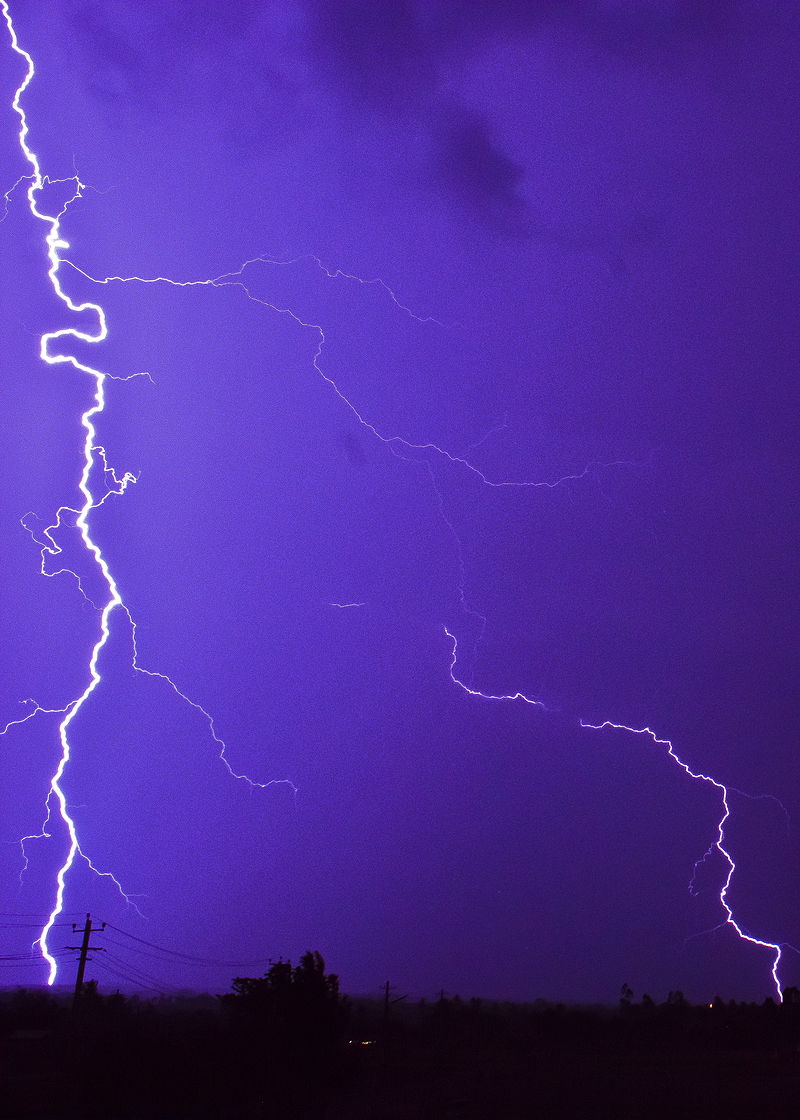
More than 30 people are reported to have been killed in lightning strikes in India - 23 in Andhra Pradesh and 9 in Orissa. Most were said to have been working in the fields during torrential monsoon rain storms.

Figures just released show that more than 2,500 people were killed by lightning in India last year, more than in any other kind of natural disaster. Next most disastrous was extreme heat with nearly 1,250 victims, though third came cold - killing more than 900.

India's National Crime Records Bureau says lightning is consistently the subcontinent's deadliest natural disaster, claiming at least 1,500 victims in every year since 2003.

In July 2011, 30 people were killed by lightning in Uganda, including 18 pupils and a teacher in a primary school (see my post of 1 July, 2011). Later that month, lightning caused a rail crash in China, when a train stalled after being struck, and another ran into its back. More than 40 people died. (see my post of 25 July, 2011) 

See also my post of 15 May 2016.


Monday, 31 August 2015

Taiwan typhoon


Managed to dodge Typhoon Goni while I was in Taiwan, though for a few days, it looked as thought it might hit the island. The Philippines were less fortunate, and there the typhoon killed at least 27 people, while in Japan, one man died after he fell from a fishing boat.

The storm passed within about 100 miles of the island, but we got away with nothing worse than very heavy rain. While I was in Taiwan I did see some of the damage from Typhoon Soudelor, which hit the island on August 7.


The picture above shows a landslide at the Taroko Gorge, where almost all of the trails had been closed because of the effects of the storm. At least 8 people were killed in Taiwan, with another 30 across China and Japan.


Taiwan's deadliest ever typhoon was Marokot, which struck the island on 7 August 2009, killing 461 people and doing damage estimated at more than $3 billion. 

Sunday, 2 August 2015

China's coal mines - getting less dangerous


For a long time China has had the unenviable record of running the world's most dangerous coal mines, but at least things are not as bad as they used to be. Last year the total number of miners killed fell below 1,000 for the first time. 931 is still a lot, but it is many fewer than the 7,000 recorded in 2002.

China produces about half of the worlds's coal, and the director of the State Administration of Work Safety acknowledged it still faces 'grave and complicated challenges in coal mine work safety.'  

Safety campaigns and better monitoring of methane gas have played their part in reducing the death toll, though perhaps the most important factor has been the closing of small mines which often had the worst records.

But there is concern that the number of casualties may be under-reported. Any accident that kills more than 30 miners automatically becomes the subject of a government inquiry. Last year, 14 managers and officials in Jilin province were gaoled for concealing the deaths of 8 miners so that the death toll in an accident in 2013 appeared to be 28 not 36.

See also my posts of Feb 22, March 10 and 19 Nov, 2009, and 16 Jan and 14 April, 2010.


Wednesday, 3 June 2015

What sank the Yangtze cruise ship?


What caused the Eastern Star cruise ship to capsize in the Yangtze River with the loss of more than 440 lives? Meteorologists confirmed that a ‘sudden, strong and violent’ storm hit the area, and the transport ministry said the Eastern Star was a ‘grade B vessel’ that might be vulnerable to it.

But others are asking how it could be overturned in seconds, without being able to send out a distress signal, when no other vessels in the area seem to have been affected. It is known that the ship was investigated for safety defects in 2013.

Of the 456 people aboard, only 14 have so far been rescued, including one man who spent ten hours in the water, but hopes are fading that any more survivors will be found. The captain and the chief engineer are in police custody.


China’s worst peacetime shipwreck of the twentieth century came in 1948, when the passenger steam ship Kiangya (pictured) sank in the mouth of the Huangpu River 50 miles south of Shanghai with the loss of up to 3,900 lives. It is believed it struck a mine left behind by the Japanese after World War Two.

Saturday, 17 May 2014

Mining disasters

The death toll in the mining disaster at Soma in Western Turkey has now passed 300, and the energy minister has said there may be more bodies to be recovered. 485 miners are reported to have escaped or been rescued.

Police had to use tear gas and water cannon to disperse protesters complaining about safety standards and demanding that the government resign. Lawyers who came to advise victims’ families have been detained.

One survivor claimed inspectors never visited the lower reaches of the mine, but the government said it had been inspected ‘vigorously’ 11 times since 2009. A report in 2010 said the Turkish mining industry had the highest death rate in the world per million tons of coal extracted – 5 times the figure for China, and 360 times that for the United States.

The deadliest mining disaster in history happened on 26 April, 1942 at Honkeiko in the Manchuria region of China, while it was under Japanese occupation. 1,549 miners perished after an explosion, and the Japanese were heavily criticised for closing down the ventilation system and sealing the pithead, condemning many of the victims to death by suffocation.


*Review of the Romanian edition of A Disastrous History of the World. http://www.gds.ro/Util%20si%20Placut/2014-05-05/Cele+mai+mari+dezastre+din+istoria+omenirii 

Sunday, 9 March 2014

Ghosts of Asian disasters


Japan’s prime minister, Shinzo Abe (pictured), made an interesting appointment as a governor of the country’s NHK broadcasting organisation. Naoki Hyakuta has declared that Japan’s massacre of up to 350,000 civilians in the Chinese city of Nanking in 1937 never happened.

Mr Hyakuta has also written a best-selling novel, now turned into a film, glorifying Japan’s kamikaze pilots of World War Two. China and South Korea, which also suffered dreadfully at Japan’s hands, are both angry.


Ghosts are walking in Indonesia too. The Act of Killing, a film about the mass slaughter that accompanied the birth of President Suharto’s dictatorship in the mid-1960’s, has won a BAFTA award for best documentary. Perhaps half a million people were killed by death squads.

In 2012, the country’s human rights commission urged President Yudhoyono to make a formal apology, and called for the killers to be prosecuted. But the president, a former general, is the son-in-law of the then head of the army’s special forces, who was deeply implicated in the massacre, and the report has been largely ignored.

Saturday, 15 February 2014

Floods - the lengths to which we have gone to fight them


Some of the most ambitious structures ever created by humans have been put up in an effort to stop flooding. The founder of China’s first real imperial dynasty owed his position to some of these. Throughout history, the Yellow River has flooded so often it became known as ‘China’s Sorrow’, but during the third millennium before Christ, a man named Yu (pictured), was hired to tame it.

Inspired, it is said, by the many lines on a turtle’s shell, Yu decided the answer lay not just in building dykes, but also in clearing existing waterways and digging new canals. In one place, he even had a gorge cut through a mountain, which became known as ‘Yu’s doorway.’

Yu took on the job just four days after getting married, but such was his dedication that he never once visited his wife during the eight years he fought the river. The existing emperor was so impressed that he named Yu his successor instead of his own son, leading to the foundation of the Xia dynasty, which ruled the country for 400 years, though the river continued to be a menace.

Now there is a campaign to get World Heritage status for the Yellow River dykes, which were said to have required more technological expertise than the Great Wall, and consumed 13 times as much effort.

My new book, Flood: Nature and Culture (Reaktion Books. ISBN 978 1 78023 196 9) tells the story of many more ambitious anti-flood structures.  It also includes chapters on the deadliest floods in history, the flood myths that feature in so many religions, on how floods have been portrayed in literature, art and films, and on the impact that climate change may have on humanity’s attempts to combat them in the future.

* Review of the book from a Belgian newspaper -http://www.standaard.be/cnt/dmf20140206_00966899

Wednesday, 29 January 2014

The worst floods in history


The worst natural disaster ever happened in 1931 when the Yellow River and the Yangtze burst their banks in China, flooding an area nearly as big as England. Up to 3.75 million people lost their lives in the flood itself, then in the famine and disease that swept through the country in its wake. The second deadliest natural disaster ever was another flood of the Yellow River in 1887, which cost up to 2.5 million lives.
In fact, the Yellow River burst its banks an estimated 1,500 times over three millennia, to be given the name ‘China’s Sorrow’.  Another of its floods in 1938 (pictured) cost the lives of up to 800,000 people, but this was a man-made flood, as the Chinese Nationalist leader, Chiang Kai-shek, ordered dykes to be blown up to slow the advance of the invading Japanese army.
Floods come in many shapes and sizes, and China was also the scene of the world’s deadliest dam burst, with the collapse in 1975 of a number of Gerry-built structures erected as part of Chairman Mao’s Great Leap Forward, at the cost of up to 230,000 lives.
We usually think of rain causing floods, but the culprit in Peru in 1941 was a heat wave. It caused a huge lump of ice to fall off a mountain into Lake Palcacocha, making it overflow and sending a torrent racing through towns and villages, drowning 7,000 people.

*For the full story, see my new book, Flood: Nature and Culture (Reaktion Books) ISBN 978 1 78023 196 9. It also includes chapters on how so many religions have stories of apocalyptic floods, how floods have been portrayed in literature, art and films, how some of the most ambitious structures ever built by humans have been erected to protect against flooding, and how climate change may now be making humanity more vulnerable than ever to the waters.
** Here's a review of the book. http://www.highbeam.com/doc/1P2-35616955.html


Sunday, 3 November 2013

More fireworks explosions


Fireworks can be spectacular, but following last month’s explosion at a Vietnamese fireworks factory that killed more than 20 people (see my blog of Oct 28), now there's news from China that 11 have died with another 17 injured at a fireworks factory at Cenxi in the southern region of Guangxi.

Two businessmen are reported to have been arrested. Controls on China’s fireworks industry are lax, and there have been a number of deadly incidents in recent years. In 2010, 19 people were killed in a blast in the southern province of Guangdong, and a similar number in an explosion at Yichun in Heilongjiang province.

India too is plagued by firework factory accidents. A blast in Thanjavur district of Tamil Nadu province on Friday killed nine people. The plant made high-decibel bangers and rockets.


And last month, two children lost their lives when a stack of fireworks exploded at a house at Dalowal in Pakistan. The blast was followed by a fire, and neighbours said the roof then collapsed before they could go in to help.

Monday, 30 September 2013

Chemical weapons


So the UN inspectors now have the taks of destroying 1,000 tonnes of Syrian chemical weapons. Such weapons were first banned by the Hague convention of 1899.

This relatively new rule book, though, was not enough to stop them being used during World War One, first by Germany, and then the Allies. They killed at least 90,000 soldiers.

During the 1930’s they were deployed by the Italians in Ethiopia and the Japanese in China. In the later stages of World War Two, President Roosevelt was advised by some to use them on the Japanese stubbornly defending Iwo Jima from caves and tunnels, where they would have been particularly vulnerable. He rejected the idea.

In the post-war era, Saddam Hussein employed chemical weapons against Iran and against the Kurds and other minorities in Iraq, while in 1995, a terrorist used a home-made nerve gas to attack commuters on the Tokyo subway system.

Wednesday, 7 August 2013

Bird Flu bug spreads person to person


Worrying news from China that the new bird flu strain H7N9 has managed to pass from human to human. A 32 year old woman, who had had no contact with birds, died after nursing her father, who was also killed by the disease.

So far there have been 133 cases and 43 deaths from the strain.  Most victims had either had close contact with live poultry or had visited poultry markets. Researchers said there was no evidence of the virus being able to spread easily from person to person, but that there was ‘potential for pandemic spread’.

Dr James Rudge, of the London School of Hygiene and Tropical Medicine, said limited transmission of this kind was not surprising and that it had also been seen with the H5N1 strain which has killed more than 370 people since 2003.  There are worries that the world is due, indeed overdue, for a new pandemic.

The most devastating flu epidemic the world has ever seen came in 1918 when up to 70 million people died, while the ‘Asian flu’ outbreak of 1957 killed up to 4 million. (See also my blogs of 5 Feb; 14, 30 April; 13 May; 6, 11, July; 24 Oct, 13 Dec, 2009 and April 15, 2013.)

Monday, 3 June 2013

More deaths at work


Following the collapse of the factory building in Bangladesh, a disastrous fire at a poultry processing plant in China.   At least 112 people have been killed in the blaze at Dehui in Jilin province according to an official news agency.
Dozens of injured workers have been sent to hospital, while about 100 managed to escape, but the news agency added that the ‘complicated interior structure’ of the building and narrow exits had made rescue work difficult. It is also said that the front gate had been locked.
One worker said that as the lights went out, people panicked in the rush to find an exit. An investigation is underway, while according to some reports, the fire took hold after a series of explosions in an electrical system.   
This is China's deadliest fire since 2000, when 309 people died in a dance hall in Luoyang, Henan province, while back in 1845, 1,670 people were killed in the world’s deadliest ever theatre fire in Canton.