Showing posts with label Orissa. Show all posts
Monday, 7 September 2015
India's deadliest natural disaster - lightning
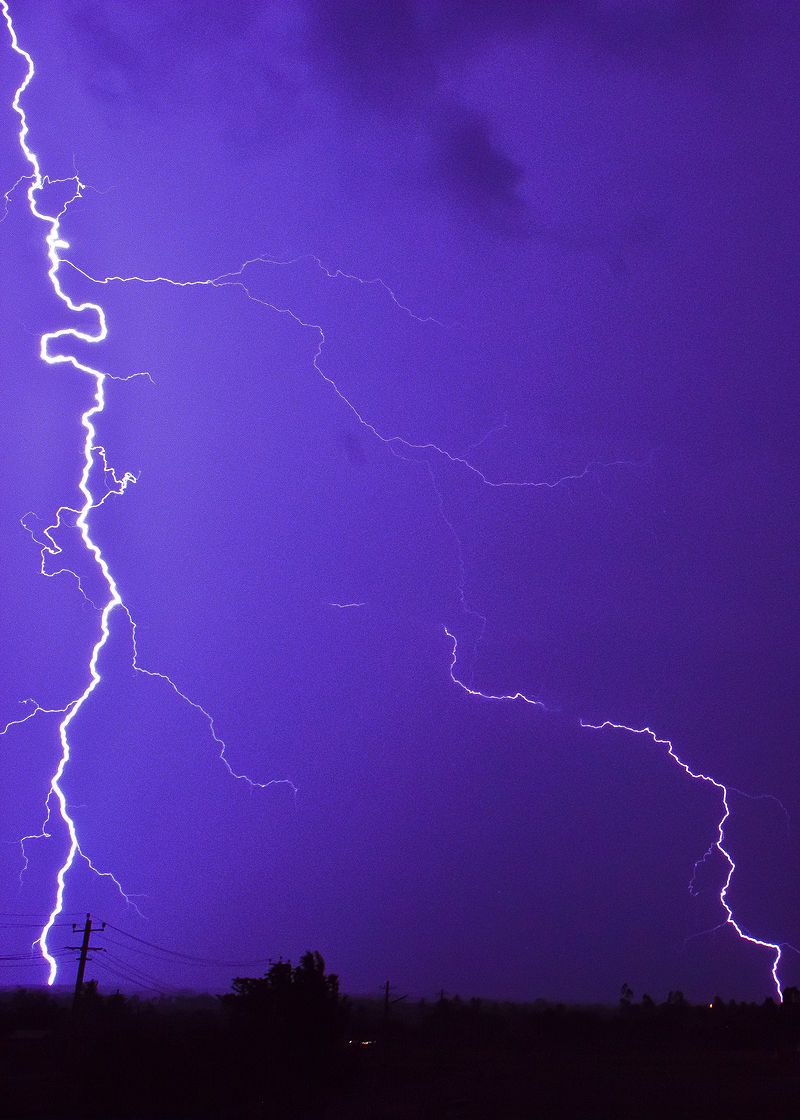
More than 30 people are reported to have been killed in lightning strikes in India - 23 in Andhra Pradesh and 9 in Orissa. Most were said to have been working in the fields during torrential monsoon rain storms.
Figures just released show that more than 2,500 people were killed by lightning in India last year, more than in any other kind of natural disaster. Next most disastrous was extreme heat with nearly 1,250 victims, though third came cold - killing more than 900.
India's National Crime Records Bureau says lightning is consistently the subcontinent's deadliest natural disaster, claiming at least 1,500 victims in every year since 2003.
In July 2011, 30 people were killed by lightning in Uganda, including 18 pupils and a teacher in a primary school (see my post of 1 July, 2011). Later that month, lightning caused a rail crash in China, when a train stalled after being struck, and another ran into its back. More than 40 people died. (see my post of 25 July, 2011)
See also my post of 15 May 2016.
Labels:
2011,
Andhra Pradesh,
China,
India,
lightning,
natural disaster,
Orissa,
storm,
thunderstorm,
train crash,
Uganda
Monday, 20 July 2009
Monsoon floods
Monsoon floods have killed at least 36 people in the Indian state of Orissa, while over the border in Pakistan, at least 26 have been killed in Karachi – mainly from collapsing walls or being electrocuted.
The city’s ageing drainage system means that every year the monsoon tends to cause havoc. In August 2006, 35 people died as a result of the rains, while in India in 2005, hundreds were killed in the area around Mumbai, as a record 26 inches fell in one day.
Perhaps the deadliest monsoon flood of all time struck India in September 1978. The Ganges and Yamuna rivers burst their banks, flooding hundreds of towns and villages, and cholera broke out as drinking water was contaminated.
In the first week of October, the flooding was made worse by a cyclone. Altogether, 15,000 people are estimated to have died, and no fewer than 43 million had to flee their homes.
The city’s ageing drainage system means that every year the monsoon tends to cause havoc. In August 2006, 35 people died as a result of the rains, while in India in 2005, hundreds were killed in the area around Mumbai, as a record 26 inches fell in one day.
Perhaps the deadliest monsoon flood of all time struck India in September 1978. The Ganges and Yamuna rivers burst their banks, flooding hundreds of towns and villages, and cholera broke out as drinking water was contaminated.
In the first week of October, the flooding was made worse by a cyclone. Altogether, 15,000 people are estimated to have died, and no fewer than 43 million had to flee their homes.
Saturday, 27 June 2009
Indian heatwave
A heatwave in India is now thought to have killed hundreds of people. With the monsoon rains arriving late, up to 200 have died in Orissa, and temperatures in many parts of the country have reached over 40 degrees.
Seventeen people are said to have perished in Jharkand and seven in Bihar. As so often happens, it is the poor who have suffered worst. Orissa’s minister for disaster management has been asking the federal government to declare the heatwave a “national calamity” so that the families of those killed get better compensation.
Hospitals have opened special wards for victims of heatstroke and mobile ice vans are patrolling the cities, while the government is organising special prayers for rain.
The worst Indian heatwave of recent years came in 1998 when more than 2,000 people died in Orissa alone. The deadliest heatwave of all was probably the one that swept Europe in 2003, and claimed up to 50,000 lives.
Seventeen people are said to have perished in Jharkand and seven in Bihar. As so often happens, it is the poor who have suffered worst. Orissa’s minister for disaster management has been asking the federal government to declare the heatwave a “national calamity” so that the families of those killed get better compensation.
Hospitals have opened special wards for victims of heatstroke and mobile ice vans are patrolling the cities, while the government is organising special prayers for rain.
The worst Indian heatwave of recent years came in 1998 when more than 2,000 people died in Orissa alone. The deadliest heatwave of all was probably the one that swept Europe in 2003, and claimed up to 50,000 lives.
Saturday, 14 February 2009
Indian train crashes
At least 15 people were killed last night when India’s Coromandel Express train was derailed 60 miles from Bhubaneswar, the capital of Orissa state. Hundreds of local people have been helping the emergency services to try and free people trapped in the wreckage.
India has one of the busiest rail networks in the world, carrying more than 18 million passengers every day and employing nearly one and a half million people. If also has lots of accidents – around 300 a year.
Two of the worst rail crashes in history happened in India. In 1981, a desperately overcrowded train plunged into a river in the state of Bihar, killing up to 1,000 people, while in 1995 the Puroshottam Express ploughed into another express train that had hit an animal on the tracks at Firozabad, and 358 people died.
India has one of the busiest rail networks in the world, carrying more than 18 million passengers every day and employing nearly one and a half million people. If also has lots of accidents – around 300 a year.
Two of the worst rail crashes in history happened in India. In 1981, a desperately overcrowded train plunged into a river in the state of Bihar, killing up to 1,000 people, while in 1995 the Puroshottam Express ploughed into another express train that had hit an animal on the tracks at Firozabad, and 358 people died.
Labels:
Bhubaneswar,
Bihar,
disaster,
disasters,
disastrous,
Firozabad,
India,
Orissa,
Puroshottam,
rail crash,
train crash
Subscribe to:
Posts (Atom)
