Showing posts with label 2011. Show all posts

Saturday, 24 March 2018

Christchurch: seven years after the earthquake


Just back from New Zealand where the delightful city of Christchurch is still toiling to recover from the earthquake of 22 February 2011, which killed 185 people. Buildings had already been weakened by another quake five months before in September 2010.

Of the victims, 115 died in the 6-storey Canterbury Television Building. The Royal Commission that conducted an inquiry into the disaster said the local authority should not have allowed it to be re-occupied after the quake of 2010.

Seven years on, the damage from the 2011 quake is still clear to see, with many buildings unrepaired, notably the cathedral which still has an end wall missing.

Concern has been expressed about the number of key reconstruction projects that have failed to get underway, and the government has admitted some will not be finished for years.

*One of the things I missed while I was away was this review of my book Secrets of the Centenarians in the Oldie.  https://www.theoldie.co.uk/blog/will-you-score-a-century

Friday, 11 March 2016

Japan tsunami + 5


On this day…..five years ago, one of the most powerful earthquakes in history unleashed a tsunami that killed 18,000 people in Japan, and drove nearly half a million from their homes as it caused the world’s worst nuclear accident since Chernobyl.

Five years later, 180,000 have still not been able to return home, more than half of them from Fukushima, where nearly 800,000 tons of contaminated water are still stored in tanks at the stricken nuclear plant. It is not clear when, how, or if the water will be disposed of.

After the tsunami, all of Japan’s nuclear plants were shut down, and only a few have been restarted, often in the face of protests from local people. Just this week, Japan’s Prime Minister Shinzo Abe said the country could not do without nuclear power in the long-term, but also this week, two of the plants that had restarted were forced to shut again.

The government has invested billions in reconstruction, but much more is needed. A volunteer fireman who lost 51 colleagues said: ‘Infrastructure is recovering, hearts are not.’ (see also my posts of 19 March 2011, 11 March 2013, 11 March 2014.)

Sunday, 14 February 2016

Train crashes and safety improvements


We still do not know what caused this week’s German train crash in Bavaria, in which 10 people died. The trains collided head-on on a stretch of single line track, but safety precautions introduced after another fatal accident in 2011 should have made this impossible.

As a German train approaches a red signal, an alarm is supposed to go off in the driver’s cab, and if he fails to stop, the brakes are supposed to go on automatically. Since the crash, there has been speculation that a signal controller may have turned off the automatic system, or even that someone else may have sabotaged it.

Rail crashes have often provided the spur for safety innovations. So in 1989, five people were killed at Purley in South London when one train ran into the back of another after going through a red light, even though the driver’s cab was fitted with an alarm that sounded when the train was approaching the danger signal.


After that, a system called ATP (Automatic Train Protection) was introduced to apply the brakes automatically if the driver ignored a red light. But that did not prevent a crash between a passenger and a goods train at Southall in West London in 1997 (see picture) in which seven people died. Neither the alarm system nor the ATP were working. For more, see London's Disasters.

Wednesday, 16 December 2015

After a disaster: return or move away?


After the Great Fire of London in 1666, there were plans to sweep away London's courts and alleys and replace them with something grander and neater, but many of them survived (and still do). A lot of Londoners wanted to rebuild the city much as it had been before the fire.

After the Tokyo earthquake of 1923, it was a similar story. Grand designs floundered because locals wanted to live in the same kind of homes in the same places as they had before. And when the Ugandan government tried to get people to settle away from an area devastated by floods in 1978, they too ran into opposition.

Now history seems to be re-repeating itself in Japan. After an earthquake and tsunami caused meltdown at the Fukushima nuclear power station in 2011, some argued that the 80,000 people evacuated should be persuaded not to return, but to go and live somewhere else. 

And some have, but older people in particular seem to be keen to go back to the places they still think of as home. The town of Naraha is the first to be declared safe by the government.

Sunday, 13 September 2015

Mumbai train bombers convicted


In India, 12 men have been convicted for their part in the co-ordinated bombings of Mumbai commuter trains in 2006 that killed 189 people and injured more than 800. One man was acquitted. Sentencing is due tomorrow.

The seven bombs went off during a 15 minute spell, and appeared to have targeted first class compartments as people were going home from jobs in the city’s financial district. Explosives were packed into pressure cookers, then put in bags.

Prosecutors said the attack was planned by Pakistan's intelligence agency ISI, and carried out by the Pakistan-based militant group Lashkar-e-Taiba with help from the Students' Islamic Movement of India, a banned Indian group. Pakistan has rejected the allegations.

Mumbai has been hit by a number of terrorist attacks. In 2013, bombs killed 257 people, and bombers also struck in 2003 and 2011, killing a total of 70, while in 2008, gunmen attacked a number of places in the city, killing 165.


Monday, 7 September 2015

India's deadliest natural disaster - lightning


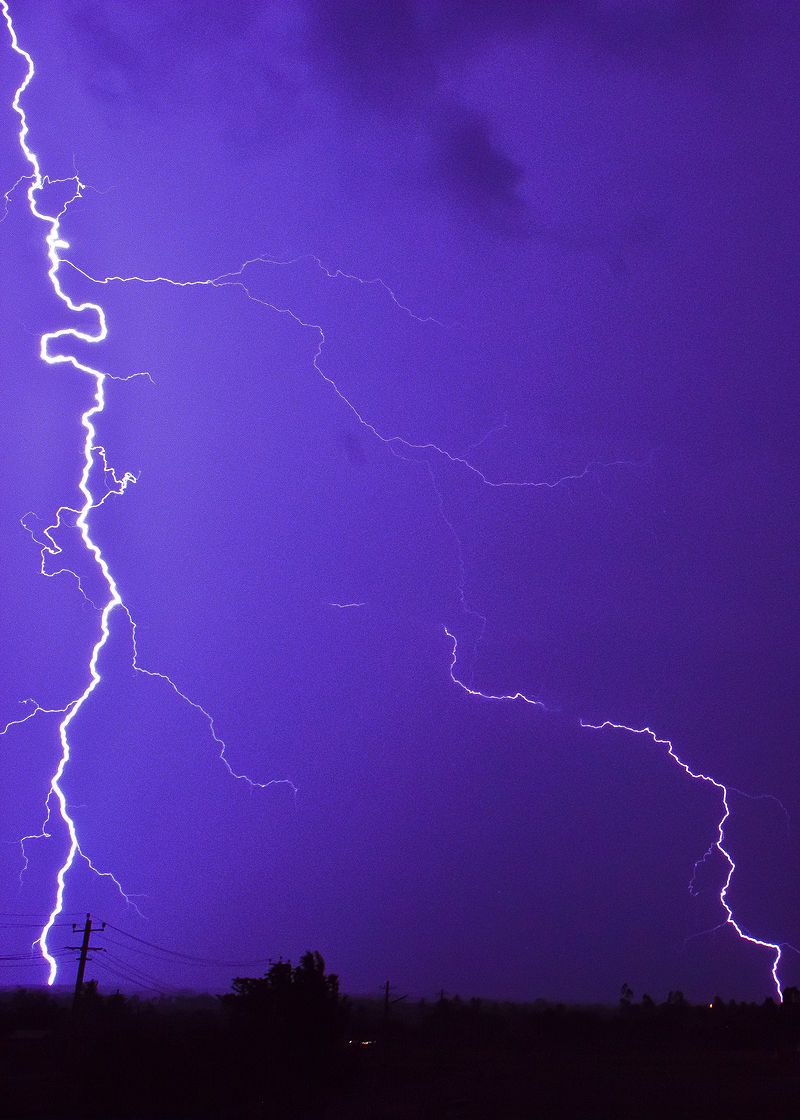
More than 30 people are reported to have been killed in lightning strikes in India - 23 in Andhra Pradesh and 9 in Orissa. Most were said to have been working in the fields during torrential monsoon rain storms.

Figures just released show that more than 2,500 people were killed by lightning in India last year, more than in any other kind of natural disaster. Next most disastrous was extreme heat with nearly 1,250 victims, though third came cold - killing more than 900.

India's National Crime Records Bureau says lightning is consistently the subcontinent's deadliest natural disaster, claiming at least 1,500 victims in every year since 2003.

In July 2011, 30 people were killed by lightning in Uganda, including 18 pupils and a teacher in a primary school (see my post of 1 July, 2011). Later that month, lightning caused a rail crash in China, when a train stalled after being struck, and another ran into its back. More than 40 people died. (see my post of 25 July, 2011) 

See also my post of 15 May 2016.


Monday, 2 February 2015

Ferry disasters - al-Salam Boccaccio 98 nine years on


On this day............9 years ago, the al-Salam Boccaccio 98, a roll-on, roll-off ferry, set sail from Duba in Saudi Arabia across the Red Sea to Safaga in southern Egypt, carrying 96 crew and 1,312 passengers. It would never get there.

A couple of hours into the voyage, a fire broke out among the 220 vehicles on the car deck. Repeated attempts to put it out failed, and at about one o' clock on the morning of 3 February, 2006, the ship began to list alarmingly.

Within a few minutes she sank, without any of her bigger lifeboats getting launched, and people had to get away as best they could in rubber dinghies. More than 1,000 perished. For the full story see A Disastrous History of the World.

IHS Maritime and Trade Intelligence says that over the last ten years, 4,784 lives have been lost in accidents involving large ferries.  The worst year was 2011, when IHS says 1,642 people died. On September 10 of that year, the Spice Islander 1 sank off Zanzibar, with a death toll estimated at up to 1,500.


Wednesday, 14 January 2015

Mass poisonings - Africa and India

Alcohol can kill, especially it it’s laced with crocodile bile, or other lethal additives. In Mozambique, 69 people, including apparently a toddler, have died after drinking home-made beer, ironically, at a funeral.

Health officials believe contamination with crocodile bile made the drink lethal. The woman who brewed it and a number of her relatives are dead, and another 39 people are being treated in hospital.

Meanwhile in India, at least 29 people have died in Uttar Pradesh after drinking toxic liquor at a cricket match, and 100 more are in hospital. Some have lost their sight. Doctors say the drink may have been adulterated with cheap, but dangerous, methyl alcohol. The owner of the shop that sold it has been arrested.


Poisonings of this kind are depressingly common in India. Nearly 170 people died in 2011 in West Bengal, 107 in Gujarat in 2009, and 30 in Uttar Pradesh in the same year.

Tuesday, 11 March 2014

Tsunamis and terrorism - two anniversaries

Today sees the third anniversary of the Japanese tsunami of 2011 which killed at least 15,880 people. More than 2,600 remain unaccounted for, while 267,000 are still living in temporary accommodation.

The 9.0 magnitude earthquake that triggered the tsunami caused a triple meltdown at the Fukushima nuclear power plant, and medical authorities in the region are reporting a big increase in thyroid cancer in children and young adults.

The number of suspected or confirmed cases among those under 18 at the time of the disaster has reached 75, compared with 59 at the end of September. There is disagreement over whether the increase is a result of the accident or just of more widespread screening.

Today also sees the 10th anniversary of the Madrid train bombings of 2004. Ten explosions ripped through 4 commuter trains, killing 191 people, and injuring another 1,800. Seven of the alleged plotters blew themselves up in a flat surrounded by police three weeks later, though arguments continue about who was responsible for the attack.

* A sneak preview of my book Flood: Nature and Culture on youtube http://www.youtube.com/watch?v=UkC-V685Bms

Friday, 22 March 2013

Landslide in Brazil's ancient capital


In Brazil, at least 27 people have been killed by landslides in Petropolis about 40 miles to the north of Rio de Janeiro.  The city was named after Emperor Pedro II, who ruled Brazil from 1831 to 1889, and was once the country’s capital.

The landslides hit Petropolis when a river burst its banks after some areas got more than a month’s normal rainfall in just 24 hours.  Brazil’s president suggested that some people had ignored warnings to get out of threatened areas.  

The same region was hit by a series of deadly floods and mudslides precipitated by heavy rain in 2011, when more than 900 people were killed in Petropolis and four other cities.     It is reported that promises by the authorities to invest in better prevention measures had not been kept.

*Landslides and mudslides are among the things that will be featured in my new book – Flood. Nature and Culture.   Here is the first internet whisper about it. (I didn’t write the blurb about the Old Testament.)  http://www.press.uchicago.edu/ucp/books/book/distributed/F/bo16826611.html

Monday, 11 March 2013

Japan tsunami two years on


Ceremonies have been held to mark the earthquake and tsunami that devastated the north-east of Honshu, Japan’s main island, two years ago, in which more than 18,000 people were left dead or missing.

Emperor Akihito praised the stoicism of survivors, saying how little they complained, but more and more people are expressing frustration at the slow pace of reconstruction, as tens of thousands have not been able to return to their homes.

Prime Minister Shinzo Abe, who has made regular visits to the regions affected, pledged to try to speed things up , but a fierce debate continues over the future of nuclear power in Japan.

After the quake damaged the Fukushima nuclear power station, Japan’s 50 reactors were shut down, and only two have been re-opened.  Mr Abe would like to get them running again, but on Sunday, thousands of people marched in Tokyo demanding an end to nuclear power.

(See also my blogs of 14 and 22 March, 1 April, 2011, and 5 Feb, 2012.)

Wednesday, 5 December 2012

Philippines typhoon - being prepared helps


At least 200 people are now believed to have been killed in the southern Philippines by Typhoon Bopha, and 70 per cent of the agricultural land in the area is said to have been damaged.

Compostela Valley province, in eastern Mindanao, is the area worst hit, where mudslides engulfed a school and a village hall being used as evacuation centres.   Among those killed or missing are soldiers who had gone to help. Rescue efforts are being hampered because many roads are blocked by fallen trees and collapsed bridges.  

In December last year, Typhoon Washi killed more than 1,300 people in the Southern Philippines.  Bopha is actually stronger than its deadly predecessor, but this time people were better prepared thanks to the media, telephone warnings, early evacuations and a special website.

The death toll has also been reduced because Bopha had slowed down a little before it hit some particularly vulnerable areas.  The deadliest ever typhoon to hit the Philippines is believed to have been Thelma which killed up to 8,000 people in November 1991.   (See also my blogs of 28 Sept and 10 Oct, 2009; and 6 Jan 2011.)

Saturday, 29 September 2012

Pakistan floods YET again


I have been away for a month, but some things don’t change.   My last blog at the end of August was about floods in Pakistan, so is this one.

During the last two weeks, heavy monsoon rains have caused floods that have killed more than 400 people and driven tens of thousands from their homes, with the province of Sindh worst hit.    

Pakistan’s worst floods came in 2010 (see picture) when nearly 1,800 people died and more than 20 million were affected in some way, leaving about a fifth of the country under water, and causing damage estimated at up to £30 billion.

Sindh also suffered badly from heavy rains in 2011, when again more than 400 people lost their lives, and 1.7 million acres of arable land were inundated in one of the country’s most important agricultural areas.

Sunday, 5 February 2012

The growing cost of disasters


The Economist ran a fascinating piece in its January 14 edition on the growing cost of disasters.   Five of the ten most expensive disasters in history have happened in the last four years, and a leading reinsurer, Munich Re, reckoned 2011 was the most costly year in its history.

The most expensive disaster ever is last year’s Japanese tsunami, followed by Japan’s Kobe earthquake of 1995, and Hurricane Katrina in 2005.   Most expensive does not mean highest number of casualties.      The Japanese tsunami cost fewer than 16,000 lives, Kobe 6,400 and Katrina 1,300, compared with a quarter of a million killed in the Boxing Day tsunami of 2004, and perhaps a similar number in the Haiti earthquake of 2010.

One reason for the growing cost of disasters is that there are more and more human beings around to suffer losses.   The population of hurricane-belt state Florida, for example, has risen from 2.8m in 1950 to 19m now.

And overall human beings are getting richer so there are more things to be destroyed, while sometimes not enough thought is given to where development takes place.   Thailand’s growing industries, for instance, have been located in areas known to be vulnerable to flooding.

Sunday, 5 June 2011

US - worst tornado season in 75 years

More than 520 people have been killed in tornadoes in the United States so far this year, making it the deadliest since 1936.

Between April 25 and 28, what has now been dubbed the 2011 Super Outbreak caused the deaths of 317 people in Alabama and seven other states.     Then on May 22, Joplin, Missouri was devastated with 138 people being killed.   

According to some estimates, up to 75% of the city of 50,000 was damaged, with around 2,000 buildings destroyed.   One relief worker described the devastation as ‘unimaginable’, and when President Obama visited Joplin, he said it was the worst destruction he had ever seen, calling the scene ‘heartbreaking’, but he promised government help to rebuild the city.

Scientists put the strength of the tornado at the top of the scale used to measure them.    (See also my blogs of April 18 and May 24.)