Wednesday, 21 May 2014
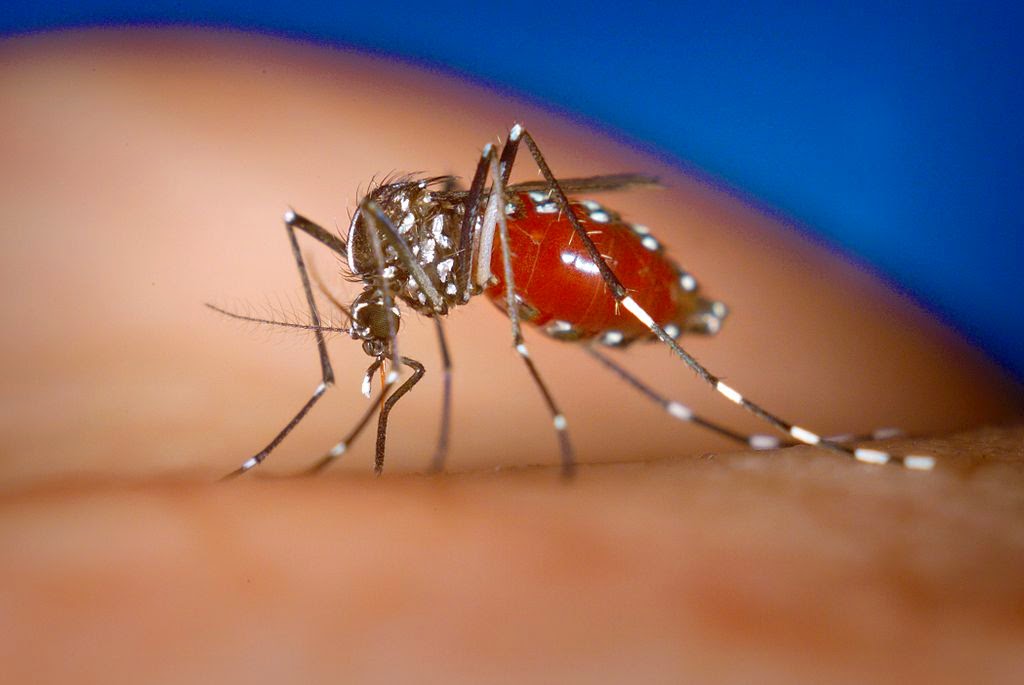
Chikungunya - dengue's nasty cousin spreads
Sunday, 12 January 2014
Haiti 4 years on - recovery stalled
Wednesday, 27 November 2013
Boat people - Haiti
Monday, 20 May 2013
Great disasters - great escapes
Saturday, 23 February 2013
Compensation for cholera: UN says no
Saturday, 12 January 2013
Haiti three years on
Sunday, 5 February 2012
The growing cost of disasters
Sunday, 16 October 2011
Disaster relief funds - record for a famine
Tuesday, 1 March 2011
New Zealand's worst disasters
The death toll in last week’s earthquake at Christchurch on New Zealand’s South Island stands officially at 154, but the authorities are warning it could rise as high as 240. Today the country held a two-minute silence to commemorate the victims.
The earthquake – with a force of 6.3 - was not as strong as many others that have done less damage, such as last September’s in the same region which was measured at 7.1. On that occasion, the quake happened in the middle of the night when there were fewer people around, and it also struck further from the surface.
Though survivors were being pulled from the rubble left by the Haiti earthquake eleven days after the disaster (see my blog of Jan 24, 2010), all hope seems to have been lost of finding anyone else alive in Christchurch.
New Zealand’s deadliest ever natural disaster remains the Hawke’s Bay earthquake of 1931 which happened on the country’s North Island. Measured at 7.9, it killed 256 people. The country is prone to earthquakes because it lies along the boundary between the Australian and Pacific plates.
Wednesday, 12 January 2011
Haiti one year on
It’s a year since the disastrous Haiti earthquake killed a quarter of a million people, and twelve months on, the pace of reconstruction has been disappointing, with at least 800,000 people still living in temporary shelters. This is a particular nightmare for the women and girls who live in the camps, as rape and sexual assault are daily occurrences.
With so many people finding it hard to get access to clean water, 3,500 have died of cholera over recent months, and political deadlock has made the situation worse. There were complaints of fraud and intimidation in November’s indecisive elections, and the second round has still not been held.
Last March, international donors promised more than £1.25 billion, but by the end of last month, nearly 40 per cent of that had still not been spent. Former US President, Bill Clinton, now a UN envoy to the country, admitted his frustration, but said he hoped the pace would now pick up.
*Now you can follow me on Facebook:- http://www.facebook.com/update_security_info.php?wizard=1#!/pages/Disaster-historian/166380310063983
Wednesday, 24 November 2010
Haiti cholera gets worse
The cholera epidemic in Haiti (see my blog of Nov 12) is spreading even quicker than was feared. So far more than 1,400 people have died, and the UN’s co-ordinator for humanitarian relief, Nigel Fisher, is expecting to see 200,000 cases. He has called on aid agencies to send more medical staff.
As this is the first time the disease has struck Haiti in a century, there appears to be little natural immunity around. Last week, there were riots against UN peacekeepers from Nepal who were accused by some Haitians of having introduced cholera to the country. The UN says there is no evidence to support this accusation.
The first global cholera pandemic began in 1817 in India, and swept through much of Asia and East Africa over the next six years. The second started in Russia in 1830, reaching most of Europe before crossing the Atlantic to infect North and Central America. However, the disease may have been present in India as early as the fourth century BC.
*Here's a new article I’ve written on the worst disasters ever to afflict London.
http://angel.greatbritishlife.co.uk/article/what-a-disaster-26547/
For Spanish readers – an article about me:-
http://www.elmostrador.cl/opinion/2010/11/21/el-aporte-de-la-cronica/#print-normalFriday, 12 November 2010
Cholera threatens to "overwhelm" Haiti
As had been feared (see my blog of Oct 23), cholera is now spreading rapidly through the Haitian capital of Port-au-Prince. The disease broke out last month in the Artibonite River valley about 60 miles away, and it was hoped for a while that it might be prevented from reaching the capital where more than a million people are still living in tents after January’s earthquake.
Eighty Haitians have died of cholera in the last 24 hours, taking the total to more than 720, and there are about 11,000 cases, with 1,000 new ones each day. The head of infectious diseases at Port-au-Prince’s main public hospital has warned that if this goes on, they will be “overwhelmed”. The situation has been worsened by Hurricane Tomas, which caused widespread flooding last week, in addition to killing at least 20 people.
Cholera is spread by water and causes diarrhoea and vomiting, leading to severe dehydration. It can kill very quickly and horribly, but it can be easily treated through antibiotics and replacement of lost fluids and salts, so long as these are available. (For more details about cholera, see A Disastrous History of the World.)
The billions of dollars of aid promised by the rest of the world to Haiti after the earthquake has been slow in arriving, with only just over a third delivered so far.
*Yesterday was Remembrance Day. See http://www.flickr.com/photos/clemypix/5165934757/
Saturday, 23 October 2010
Haiti - cholera strikes
Back in January, there were fears that the devastating Haiti earthquake might be followed by epidemics, particularly of cholera. Nine months later, the disease has finally arrived.
So far there have been more than 2,600 cases, and nearly 200 people have died. The areas affected are about 60 miles from the heavily populated capital, Port-au-Prince, where tens of thousands of people are still living in crowded tents with poor sanitation and little access to clean drinking water, though there are suspected cases in a suburb of the capital.
Officials say the victims were infected through drinking contaminated river water. Hospitals have been overwhelmed and for a time people were being treated in car parks. The World Health Organisation says this is the first time cholera has struck Haiti in a century.
See also my blogs of Jan 31, 2009 and Jan 14, 15, 16, 19, 22, 23 and 24; July 12 and Aug 26, 2010. The new paperback edition of A Disastrous History of the World also contains a section on the earthquake.
Monday, 23 August 2010
Pakistan floods - an ungenerous response?
Three weeks after the monsoon floods were unleashed on Pakistan, Louis-Georges Arsenault, director of emergency services for UN agency UNICEF, has blasted the international response as “extraordinarily” inadequate.
M Arsenault says this is the biggest humanitarian crisis “in decades.” The UN had called for around £300m in emergency aid, and says it has raised nearly 70% of this, but the Pakistan government says the cost of rebuilding could be as high as £10bn, and up to 17m people have been hit by the floods.
So if the response has been rather lukewarm, what are the reasons? One offered is that the death toll has been relatively small - “only” about 1,600 compared with around ¼ million in the Haiti earthquake and the Boxing Day tsunami, and that the flood has been a more slowly developing and less dramatic disaster
Then there are said to be worries about corruption, a feeling that oil-rich Muslim countries have failed to do enough, the perception that Pakistan has been an exporter of terrorism, and the global financial crisis. Against that, the people of the UK have stumped up £30m out of their own pockets, and India, which has often believed itself a victim of Pakistani-inspired terrorism, has provided around £3m.
Monday, 12 July 2010
Haiti earthquake + 6 months
Even before the quake struck, Haiti was already the poorest country in the Western Hemisphere, and we now know that it killed more than 222,000 people, and left more than 2 million homeless. Thousands of civil servants and hundreds from international relief agencies were among the dead. Only one government ministry building was left standing.
In spite of this almost total destruction of what Haiti had in the way of an administrative infrastructure, food was provided for more than four million, and nearly one million were vaccinated, helping to avert the epidemics and starvation that so often come in the wake of disasters.
Six months on, though, 1.5 million people are still living in temporary camps, and the hurricane season is about to begin. Bill Clinton, co-chair of the Interim Haiti Reconstruction Committee, has complained that 90% of the $5 billion pledged by the world’s governments to help has still not been handed over.
(See also my blogs of Jan 14, 15, 19, 22, 23, 24; Feb 2; April 22.)
Monday, 17 May 2010
Smallpox
The disease had done its cataclysmic worst, though, in the New World, where native populations were completely lacking in immunity. The Spanish conquistadores terrified the Indians with their fire-spitting guns, but actually the smallpox virus was the deadliest weapon they brought.
It began in the early sixteenth century by cutting a swath through the populations of Hispaniola (now Haiti and the Dominican Republic), Puerto Rico, Jamaica and Cuba. Then Hernan Cortes took it with him to Mexico, and when the Aztecs tried to resist him, they were cut down by the virus, and “died in heaps, like bedbugs.”
The Incas met a similar fate, with their great king, Huayna Capac, among those who died. Smallpox, helped by other imported illnesses, like mumps and measles, would reduce their numbers from seven to just one million. (See also my blog of Nov 6.)
Tuesday, 2 February 2010
Concorde crash trial + Haiti update
An investigation concluded that one of Concorde’s tyres had burst after it hit a piece of metal left on the runway by a Continental DC-10. Debris from the tyre then ruptured a fuel tank, which made the airliner burst into flames. Continental denies this, and claims that Concorde had caught fire before it hit the metal.
Among the individuals facing manslaughter charges alongside Continental are one of its mechanics and a maintenance official, as well as Concorde’s former chief engineer, a former head of the Concorde division at Aerospatiale and a former member of France’s civil aviation watchdog.
** I’ve been quoted by Newsweek in an article on the Haiti earthquake and its aftermath. The link is http://blog.newsweek.com/blogs/wealthofnations/archive/2010/01/25/why-haiti-is-without-parallel.aspx
Sunday, 24 January 2010
Survivors and great escapes - 2
Mr Exantus’s rescue came shortly after the Haitian government had officially called off the search for survivors. On January 16, I blogged about some other remarkable escapes after disasters.
It was long after the search for survivors of the Courrieres coal mine explosion of 1906 in northern France had been abandoned that 13 miners emerged. They had lived for 20 days on food taken down by miners to eat in their lunch breaks and by slaughtering a horse. They had lost all sense of time, and believed they had been trapped for only four or five days.
In China’s Tangshan earthquake of 1976, miners working underground had a much better chance of survival than people on the surface. Only 13 out of 15,000 perished, but some were trapped for 15 days without food or clean water. They too thought they had been entombed for only a few days, but their emaciated bodies told the real story. For more on both disasters, see A Disastrous History of the World.
Saturday, 23 January 2010
Quakes in capital cities
Within days, though, businesses and shops left standing had begun trading again, and seven years later, it was said that Tokyo had been restored with scarcely a single visible scar from the disaster. A plan to rebuild the capital at a new site, less vulnerable to earthquakes, was rejected.
The Lisbon earthquake of All Saints' Day 1755 struck a city that was then not just the capital of Portugal, but the hub of a great empire. As many as 90,000 people were killed, while thousands of buildings were flattened - much of the damage being done by the fires that broke out after the quake. The king put his prime minister, the Marquis of Pombal, in charge of reconstruction, and Pombal turned his coach into an improvised office among the ruins, living on soup brought in by his wife as he got to grips with the crisis.
He posted guards at exits from the city to stop any able-bodied men from leaving, then pressed them into work on the clean-up, while he sent ships to all corners of the empire with the message that the capital was still open for business. Some, like the Jesuits, argued that the city should not be rebuilt as the quake was a punishment from God, but within a year the Marquis was constructing a new Lisbon with the big squares and long avenues that form the elegant heart of the city we see today, and which his statue surveys from the top of a tall column.
Friday, 22 January 2010
Haiti in historical perspective
Better documented is the quake that devastated Shaanxi province in China in 1556, killing up to 830,000 people, many of whom had been living in man-made caves they had dug into the soft soil. Perhaps third worst was the quake of 526 that destroyed Antioch in modern-day Turkey. Known as "the Fair Crown of the Orient", it had been the third biggest city in the Roman Empire, and was the place where the word "Christian" was first used to describe the followers of Jesus. The death toll was said to be 300,000.
In more modern times, the Chinese earthquake in Tangshan in 1976 was officially said to have killed 242,000, though the Chinese government did not admit to this figure until three years afterwards. Unofficial estimates put the death toll as high as 655,000. More recently, the Boxing Day tsunami of 2004 claimed 230,000 victims.


