Showing posts with label fever. Show all posts

Friday, 8 August 2014

Ebola outbreak deadliest ever


The current Ebola outbreak is by far the worst the world has yet experienced. So far more than 930 people have died in West Africa, while more than 1,700 cases have been reported. The previous worst death toll came in 1976, when 280 people died in Congo and Zaire.

The mortality rate this time appears to be about 55%, though it can reach 90%. The World Health Organisation has now declared an international health emergency, but it is not proposing any bans on trade or travel.

Ebola is a fearsome disease, with symptoms that include high fever, internal and external bleeding, and damage to the central nervous system. There is no vaccine and no cure.


One of the obstacles to containing its spread is the poor state of the health services in the countries it has struck, with a lack of medical staff, laboratory technicians and protective clothing for doctors and nurses.  (See also my blogs of April 4 and June 7.)

Saturday, 7 June 2014

Current Ebola outbreak among worst ever


The current outbreak of Ebola in Guinea in West Africa is now perhaps the fourth deadliest ever. The World Health Organisation says it has so far registered 328 confirmed or suspected cases in the country, and that 208 people have died.

The worst ever outbreak so far was in Congo, then Zaire, in 1976, in which the death toll was 280. A further 245 died in the country in 1995.

As well as the cases in Guinea, the disease has cost 6 lives in Sierra Leone, where there are 79 known or confirmed cases, and there are also fears that Ebola has reappeared in Liberia, which suffered 9 deaths earlier this year.

There is no vaccine and no effective treatment for the disease, which causes fever, muscle pain, and severe bleeding.  Death rates can reach 80 per cent or more.

Wednesday, 21 May 2014

Chikungunya - dengue's nasty cousin spreads


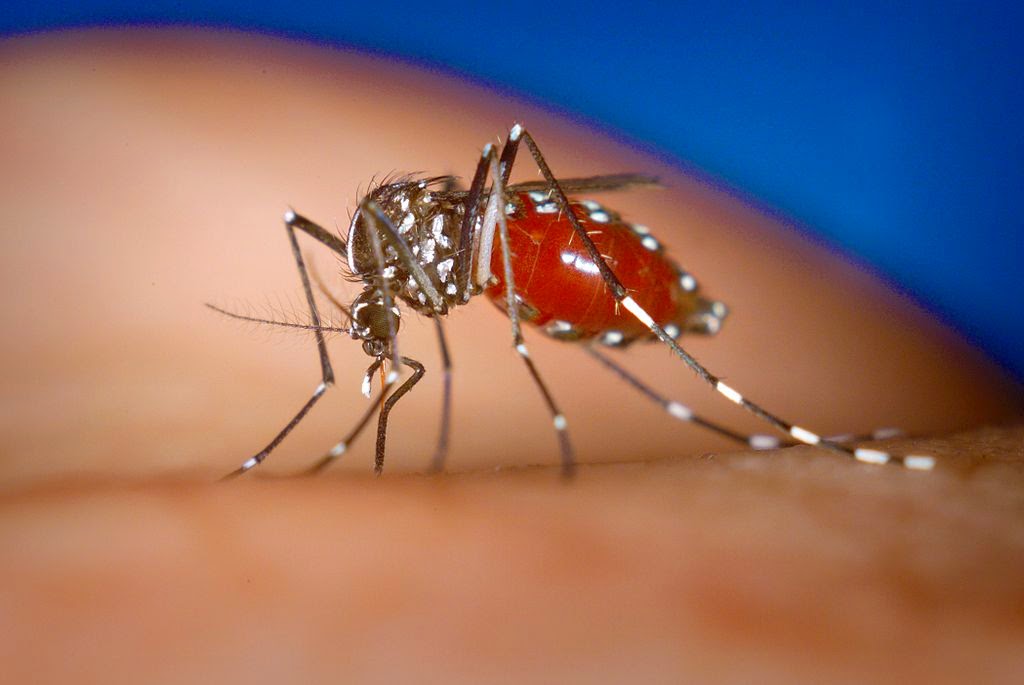
Chikungunya fever, like dengue, tortures sufferers with severe pain especially in the joints. Spread by the same mosquitoes that transmit dengue, it is common in Africa and Asia, but is now extending its presence alarmingly.

First detected in the Caribbean in December on St Martin, it has now spread to 15 other countries there. More than 4,500 cases have been confirmed, though health officials admit there may be thousands more. Haiti has more than 1,500 cases.

The disease probably crossed the ocean in the blood of an infected traveller. It has also reached French Guiana and Florida. Chikungunya is less lethal than dengue, but there are fears that it could leave victims with long-lasting arthritic pain in the joints.

Local people are being urged to get rid of puddles or containers holding water where mosquitoes thrive, while travellers are being told to wear long trousers, long-sleeved shirts and socks, and to use insect repellent. 

Wednesday, 31 July 2013

Dengue fever


Honduras has declared a state of emergency following the deaths of 16 people in an outbreak of dengue fever. Altogether more than 12,000 people have been infected with the virus that is borne by mosquitoes.
The disease causes flu-like symptoms and occasionally develops into a potentially lethal form called haemorrhagic dengue. Honduras’s worst outbreak happened in 2010, when 83 people died.
Earlier this year, the authorities in Brazil reported a steep rise in cases of dengue, with more than 200,000 people infected compared with 70,000 in the same period of 2012, though the health minister said most cases were less severe.
The World Health Organisation says that across the world there are 30 times as many cases as there were 50 years ago, with up to 100 million infections a year in more than 100 countries.