Showing posts with label Caribbean. Show all posts

Sunday, 10 September 2017

The deadliest ever Atlantic hurricane


First there was Harvey (see my blog of Sept 4). Now we have Irma, and soon there will be Jose. Hurricane Irma is the fiercest Atlantic tropical storm in a decade. It has caused more than 30 deaths across a number of Caribbean islands, including Barbuda which is now said to be ‘barely habitable’. Next in its path is Florida.

But the deadliest Atlantic hurricane of all remains the Great Hurricane of 1780, which made landfall in Barbados on 10 October. Most buildings were destroyed or severely damaged and ‘a luxuriant fertile island’ turned into ‘the dreariest winter.’ The number killed was put at 4,500.

Next the storm moved on to St Lucia, where only two houses survived in the port city of Castries. Five Royal Navy ships that had been fighting in the American War of Independence were sunk and nine others severely damaged. The island’s death toll was estimated at 6,000.

On St Vincent, more than 580 out of 600 houses at Kingstown were destroyed. At Grenada, 19 Dutch ships were sunk, while off Martinique, 4,000 French sailors were drowned, and perhaps 9,000 people lost their lives on the island. The total death toll from the storm was put at around 30,000.

For the full story, see Storm: Nature and Culture (Reaktion Books).


Saturday, 23 January 2016

Mosquitoes strike again - this time it's zika


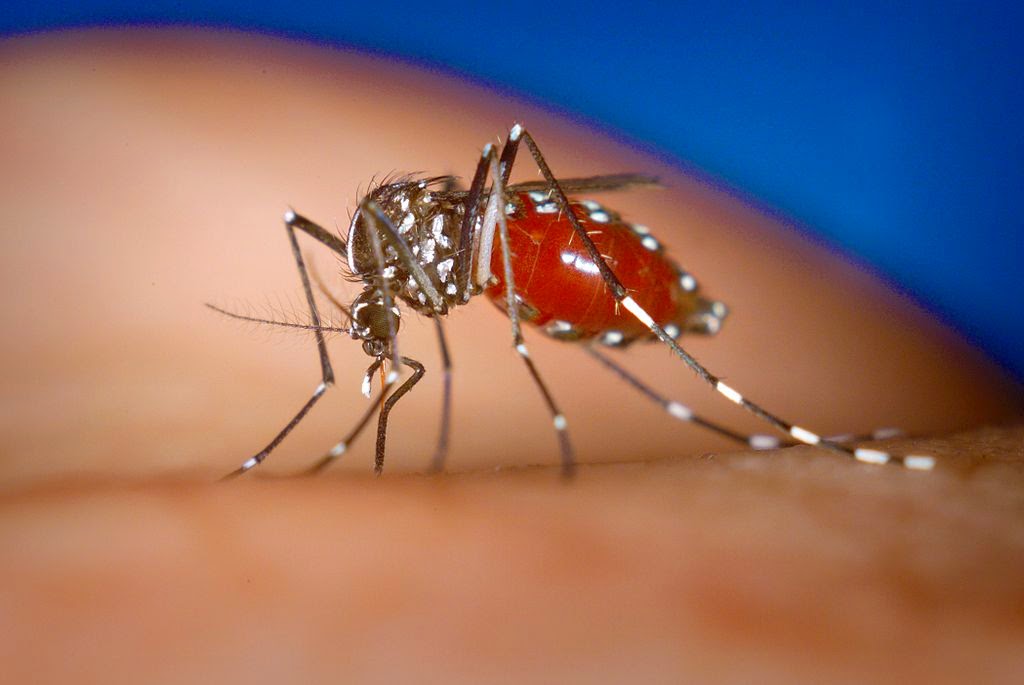
First there was malaria, then yellow fever, then dengue (see my post of 31 July 2013), then it was chikungunya (see my post of 21 May 2014), now it is zika – all of them spread by mosquitoes. In the case of zika, now moving through Latin America and the Caribbean, it is the same mosquito (see picture) that spreads dengue and yellow fever.

If a pregnant woman is infected with zika, it is believed the virus can cause her baby to have an abnormally small head – a condition known as microcephaly, which is often caused by the failure of the brain to develop at its usual speed. Nearly 4,000 such babies have been born in Brazil since October, and 49 have died.

A number of countries including Colombia, Ecuador, El Salvador and Jamaica, have advised women to delay becoming pregnant until more is known about the disease, which was first identified in Africa in the 1940s. Some believe it was introduced to Brazil during the World Cup in 2014.


There is no known cure for zika, and the only way to prevent it is to avoid being bitten by the mosquitoes that carry it. In Brazil, they are working to clear stagnant water where the insects breed.

Monday, 7 December 2015

Naming of storms


At least two people have now been killed by Storm Desmond. A 90 year old man was blown into the side of a moving bus in London, and another elderly man was swept into a river in Cumbria. Before Desmond, we were buffeted by Abigail, Barney and Clodagh

Until the last few months, only the very biggest storms got names in the UK - and those were unofficial ones, like the Great Storms of  1703 and 1987, the Burns' Day Storm of 1990, and the St Jude's Storm of 2013. Now, though, the Met Office has adopted the practice that forecasters in other countries have followed with major storms, and started giving them consecutive alphabetical names.

In the old days  in the West Indies, storms would be named after the saint's day on which they appeared. Then in the 19th century, an Australian meteorologist started calling them after politicians he disliked. Next the authorities tried numbers, but this proved too confusing when there was more than one blowing.

During World War Two, clarity was essential, so US meteorologists went back to names - often those of a wife or girlfriend. Then in 1953, the US National Weather Service drew up an official slate of female names, which continued until the late 1970s when feminist groups protested, and the authorities agreed to alternate male and female names. 


Wednesday, 21 May 2014

Chikungunya - dengue's nasty cousin spreads


Chikungunya fever, like dengue, tortures sufferers with severe pain especially in the joints. Spread by the same mosquitoes that transmit dengue, it is common in Africa and Asia, but is now extending its presence alarmingly.

First detected in the Caribbean in December on St Martin, it has now spread to 15 other countries there. More than 4,500 cases have been confirmed, though health officials admit there may be thousands more. Haiti has more than 1,500 cases.

The disease probably crossed the ocean in the blood of an infected traveller. It has also reached French Guiana and Florida. Chikungunya is less lethal than dengue, but there are fears that it could leave victims with long-lasting arthritic pain in the joints.

Local people are being urged to get rid of puddles or containers holding water where mosquitoes thrive, while travellers are being told to wear long trousers, long-sleeved shirts and socks, and to use insect repellent. 

Monday, 5 November 2012

Sandy's shadow


New York City is still facing major disruption from ‘superstorm’ Sandy.   Up to 40,000 people have been driven from their homes, public transport is still severely disrupted, and 130,000 residents are still without electricity.

Across New York State, there are another 600,000 without power, as well as nearly a million in New Jersey.    The storm is thought to have caused 106 deaths in the USA, including 40 in New York City, and another 69 in the Caribbean.

At 900 miles wide, Sandy was the largest storm ever seen in the Atlantic.   It hit the Big Apple with a record 14 foot tidal surge, shutting down the subway system, and closing nearly all the road tunnels and bridges, virtually isolating Manhattan.    The National Guard had to be called out to deliver emergency supplies.

Only last year, a report from the New York State Energy Research and Development Corporation had delivered a warning of how devastating a major storm combined with a tidal surge could be for the City.
*The Londonist website has reminded us of another 'forgotten' London fire - the Colney Hatch asylum fire of 1903.  http://londonist.com/2012/09/londons-forgotten-disasters-the-colney-hatch-fire.php.   See also p 107 of A Disastrous History of Britain.