Showing posts with label dengue. Show all posts

Saturday, 23 January 2016

Mosquitoes strike again - this time it's zika


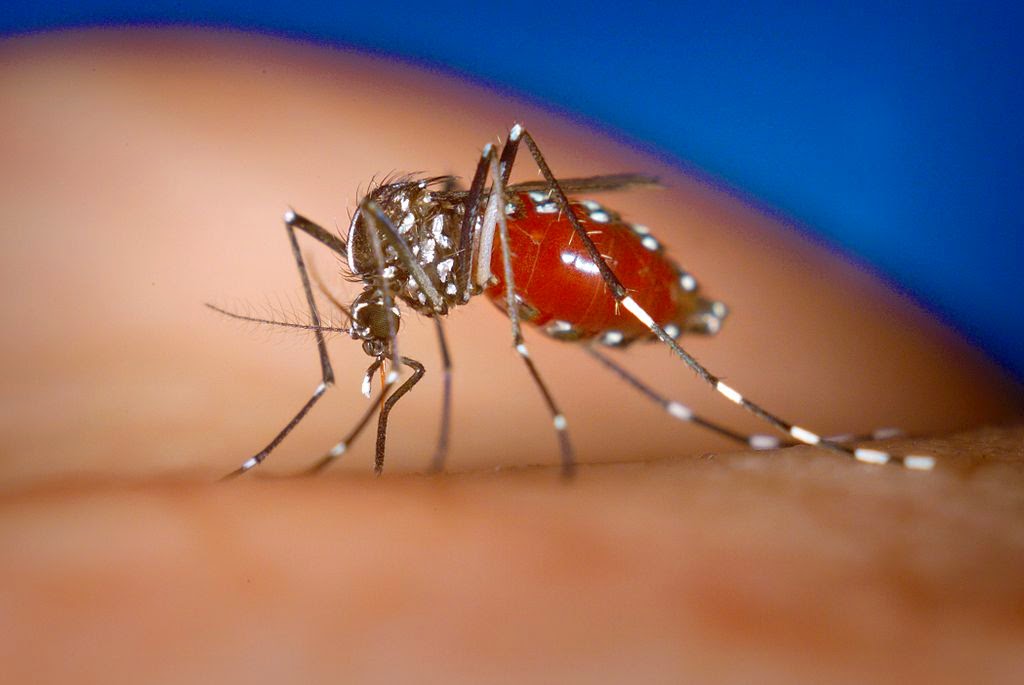
First there was malaria, then yellow fever, then dengue (see my post of 31 July 2013), then it was chikungunya (see my post of 21 May 2014), now it is zika – all of them spread by mosquitoes. In the case of zika, now moving through Latin America and the Caribbean, it is the same mosquito (see picture) that spreads dengue and yellow fever.

If a pregnant woman is infected with zika, it is believed the virus can cause her baby to have an abnormally small head – a condition known as microcephaly, which is often caused by the failure of the brain to develop at its usual speed. Nearly 4,000 such babies have been born in Brazil since October, and 49 have died.

A number of countries including Colombia, Ecuador, El Salvador and Jamaica, have advised women to delay becoming pregnant until more is known about the disease, which was first identified in Africa in the 1940s. Some believe it was introduced to Brazil during the World Cup in 2014.


There is no known cure for zika, and the only way to prevent it is to avoid being bitten by the mosquitoes that carry it. In Brazil, they are working to clear stagnant water where the insects breed.

Wednesday, 21 May 2014

Chikungunya - dengue's nasty cousin spreads


Chikungunya fever, like dengue, tortures sufferers with severe pain especially in the joints. Spread by the same mosquitoes that transmit dengue, it is common in Africa and Asia, but is now extending its presence alarmingly.

First detected in the Caribbean in December on St Martin, it has now spread to 15 other countries there. More than 4,500 cases have been confirmed, though health officials admit there may be thousands more. Haiti has more than 1,500 cases.

The disease probably crossed the ocean in the blood of an infected traveller. It has also reached French Guiana and Florida. Chikungunya is less lethal than dengue, but there are fears that it could leave victims with long-lasting arthritic pain in the joints.

Local people are being urged to get rid of puddles or containers holding water where mosquitoes thrive, while travellers are being told to wear long trousers, long-sleeved shirts and socks, and to use insect repellent. 

Wednesday, 31 July 2013

Dengue fever


Honduras has declared a state of emergency following the deaths of 16 people in an outbreak of dengue fever. Altogether more than 12,000 people have been infected with the virus that is borne by mosquitoes.
The disease causes flu-like symptoms and occasionally develops into a potentially lethal form called haemorrhagic dengue. Honduras’s worst outbreak happened in 2010, when 83 people died.
Earlier this year, the authorities in Brazil reported a steep rise in cases of dengue, with more than 200,000 people infected compared with 70,000 in the same period of 2012, though the health minister said most cases were less severe.
The World Health Organisation says that across the world there are 30 times as many cases as there were 50 years ago, with up to 100 million infections a year in more than 100 countries.