Showing posts with label ebola. Show all posts

Thursday, 20 July 2017

What was the Black Death?


Did bubonic plague really cause the Black Death? This was one of the questions tackled in BBC TV’s Decoding Disaster, which went out under the Timewatch banner.

What is certain is that the epidemic was one of the greatest, if not the greatest, disaster in history, killing perhaps 75 million people in Europe and Asia from 1346 to 1353 – 30 to 40 per cent of the population. The conventional explanation is that it was bubonic plague, carried by the fleas of the black rat, along with pneumonic and septicaemic plague which could be transmitted from person to person.

Sceptics, though, have suggested there were just not enough rats to spread the disease on the scale that happened, so other ideas have been suggested – notably anthrax or some kind of haemorrhagic plague, like Ebola. Others maintain that with a death toll on this scale, a number of different diseases must have been raging at the same time.

At the time, top academics at Paris University came up with their own explanation: a triple conjunction of Saturn, Jupiter and Mars in the 40th degree of Aquarius on 20 March 1345, but they were humble enough to acknowledge that some things were ‘hidden from even the most highly trained intellects.’


For the full story, see A Disastrous History of the World. See also my posts of 19 January and 31 March 2009, 1 September 2011 and 17 December 2013.

Sunday, 3 April 2016

The cost of pandemics, and how to reduce it


SARS, bird flu, swine flu, Ebola, Zika. It is hard to believe that not too long ago, there was an idea that infectious diseases had been largely conquered, at least in principle. Then along came AIDS, and now with more people on the planet and more travelling, new infections are actually becoming more common.

Ebola has infected almost 30,000 people, killing 11,000, and inflicted an economic cost of more than $2 billion on some of the poorest countries in the world. SARS infected far fewer – 8,000, and killed 800, but because it hit richer places, it cost more than $40 billion. A recent report on global health risks put potential global losses from pandemics at around $60bn a year.

America’s National Academy of Medicine suggests that $4.5bn a year, about 3% of what the rich world spends on development aid, invested in medical research, public health services and better emergency co-ordination could significantly strengthen our defences against disease.

More effective health systems would help fight illnesses such as tuberculosis that costs perhaps $12bn a year, and malaria which probably costs several times that. Better research could help find vaccines to treat diseases that at the moment are mercifully rare, but which could become pandemics, such as Lassa fever and Crimean-Congo haemorrhagic fever.

Monday, 4 May 2015

Ebola survivors afflicted by mysterious after effects


Hopes are rising that the worst of the Ebola epidemic in West Africa may finally be over. Liberia, once the worst affected country, has had no new case since March 27, and it is hoped it will be declared Ebola free this week.

But signs are emerging of a disturbing ‘post-Ebola syndrome’ which seems to be affecting some survivors, who are reporting a variety of symptoms such as loss of sight and hearing. A WHO official said she had come across two people who were now blind.

Other complaints include severe joint, muscle and chest pain, and extreme fatigue. Experts acknowledge that so far the focus has, understandably, been on trying to save people’s lives, and that little research has been done on the disease’s long term effects, so that it is not even clear whether the symptoms reported are caused by the illness or its treatment.

The current outbreak is by far the deadliest the world has ever seen, killing 11,000 people. The previous worst came in 1976 when 280 died.  (See also my blogs of April 4, June 7, Aug 8, Oct 30, 2014, and Jan 29, Feb 16, 2015.)

*Thanks to York Library, New Hampshire for this listing of my book Disaster!  http://www.seacoastonline.com/article/20150428/NEWS/150429058/101017/NEWS


Monday, 16 February 2015

Fight against Ebola hindered by attacks on aid workers


I have blogged a number of times about attacks on health workers vaccinating people against polio in Pakistan (24 February, 3 March, and 10 December, 2014), so how depressing to report that local people are attacking aid workers helping the fight against Ebola in Guinea.

The Red Cross says they are being subjected to about 10 assaults a month. The latest happened on Sunday when two volunteers were beaten while trying to conduct a safe burial. Traditional funeral rituals can help spread the virus. Last year eight aid workers were hacked to death in Guinea.

Apparently, many Guineans believe that those who come to bury the dead, disinfect areas and bring information about the disease are in fact spreading it.


And alarm bells are ringing. After several weeks of decline, the number of new cases is rising again. So far, in its deadliest outbreak ever, Ebola has claimed nearly 9,270 victims; more than 2,030 of them in Guinea. Liberia has been worst hit with nearly 3,860 while Sierra Leone has suffered more than 3,360.

Thursday, 29 January 2015

Ebola virus mutates


Scientists at the prestigious Institut Pasteur in Paris believe the ebola virus has mutated during the current outbreak. Now they are trying to find out whether that has made it more contagious.

So far more than 22,000 people have been infected in this epidemic and 8,795 have died in Guinea, Sierra Leone and Liberia, making it by far the deadliest in history. The previous worst death toll came in 1976, when 280 people died in Congo and Zaire.

But for the first time since June last year, there were fewer than 100 new cases last week, leading to hopes the epidemic may finally be on the wane.

At present, it seems the virus can be passed only in bodily fluids. The great fear is that it may develop a means of infection through the air, though there is no evidence to suggest this is likely at the moment, and no similar virus has moved to this route of transmission.


Meanwhile, researchers at the Institut Pasteur are developing two vaccines they hope will be in human trials by the end of the year. (See also my blogs of 4 April, 7 June, 8 August, 8, 23 and 30 October, 2014.)

Wednesday, 8 October 2014

The march of ebola


This is now by far the worst ebola outbreak the world has ever seen, with 3,400 people dead, and 7,500 confirmed cases, though the true figure is thought to be much higher. The deadliest until now saw 280 people die in 1976 in Zaire, now Congo.

Most of the deaths have happened in Guinea, Sierra Leone and Liberia, with the World Health Organisation expressing concern at the poor state of the health services in those countries. Liberia says it is short of ambulances, and that it has only a third of the number of treatment centres it needs.

Now alarm is sweeping through Spain after a nurse who had been treating two missionaries who caught ebola in Africa, was found to be infected herself. It had been hoped that the stringent safety precautions available in modern hospitals would prevent the virus spreading.

Her husband and five other people are now in quarantine and another 50 are being monitored, while the European Commission has asked Spain for an explanation as to how the nurse became infected.

Friday, 8 August 2014

Ebola outbreak deadliest ever


The current Ebola outbreak is by far the worst the world has yet experienced. So far more than 930 people have died in West Africa, while more than 1,700 cases have been reported. The previous worst death toll came in 1976, when 280 people died in Congo and Zaire.

The mortality rate this time appears to be about 55%, though it can reach 90%. The World Health Organisation has now declared an international health emergency, but it is not proposing any bans on trade or travel.

Ebola is a fearsome disease, with symptoms that include high fever, internal and external bleeding, and damage to the central nervous system. There is no vaccine and no cure.


One of the obstacles to containing its spread is the poor state of the health services in the countries it has struck, with a lack of medical staff, laboratory technicians and protective clothing for doctors and nurses.  (See also my blogs of April 4 and June 7.)

Saturday, 7 June 2014

Current Ebola outbreak among worst ever


The current outbreak of Ebola in Guinea in West Africa is now perhaps the fourth deadliest ever. The World Health Organisation says it has so far registered 328 confirmed or suspected cases in the country, and that 208 people have died.

The worst ever outbreak so far was in Congo, then Zaire, in 1976, in which the death toll was 280. A further 245 died in the country in 1995.

As well as the cases in Guinea, the disease has cost 6 lives in Sierra Leone, where there are 79 known or confirmed cases, and there are also fears that Ebola has reappeared in Liberia, which suffered 9 deaths earlier this year.

There is no vaccine and no effective treatment for the disease, which causes fever, muscle pain, and severe bleeding.  Death rates can reach 80 per cent or more.

Wednesday, 21 May 2014

Chikungunya - dengue's nasty cousin spreads


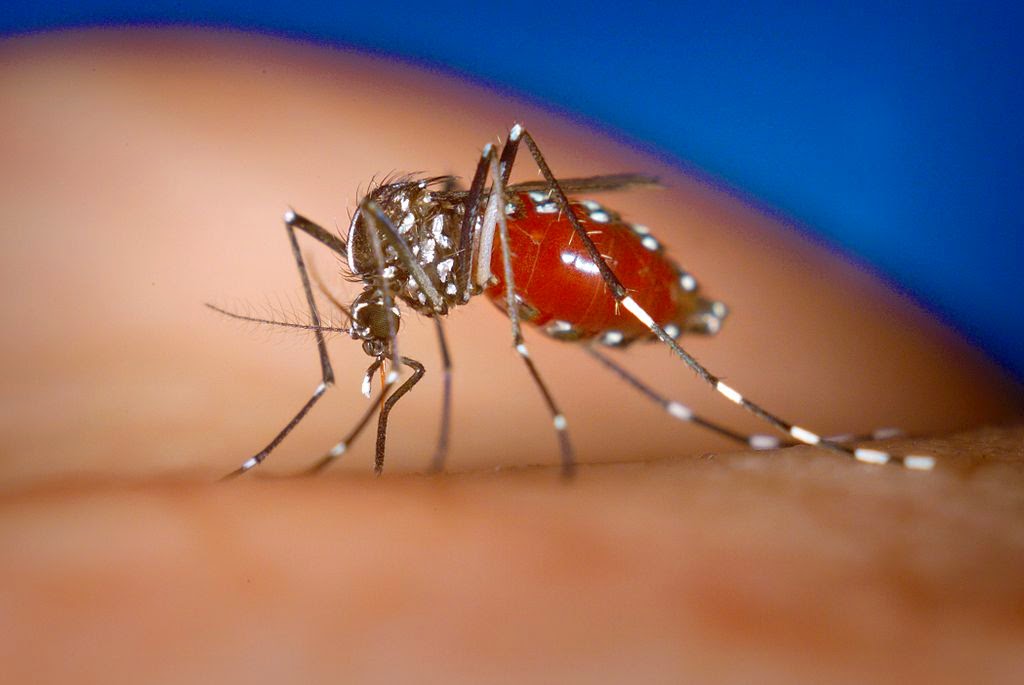
Chikungunya fever, like dengue, tortures sufferers with severe pain especially in the joints. Spread by the same mosquitoes that transmit dengue, it is common in Africa and Asia, but is now extending its presence alarmingly.

First detected in the Caribbean in December on St Martin, it has now spread to 15 other countries there. More than 4,500 cases have been confirmed, though health officials admit there may be thousands more. Haiti has more than 1,500 cases.

The disease probably crossed the ocean in the blood of an infected traveller. It has also reached French Guiana and Florida. Chikungunya is less lethal than dengue, but there are fears that it could leave victims with long-lasting arthritic pain in the joints.

Local people are being urged to get rid of puddles or containers holding water where mosquitoes thrive, while travellers are being told to wear long trousers, long-sleeved shirts and socks, and to use insect repellent. 

Friday, 4 April 2014

Ebola spreads


Mali is the latest West African country to go on alert against the Ebola virus, after three cases were reported close to the border with Guinea where 86 people have died. Another six people have died in Liberia, while Sierra Leone has also reported cases.

Senegal has now closed its border with Guinea, and controls are being imposed on people entering Mali’s capital, Bamako.  The virus first appeared in Guinea's remote south-eastern region of Nzerekore, where most of the deaths have happened, but it was not confirmed as Ebola for six weeks, and it has now reached the capital, Conarky.
This is the first known outbreak of the disease in Guinea. Most recent cases have appeared in Uganda and the Democratic Republic of the Congo, and a sign of the alarm it is causing is that Saudi Arabia has suspended visas for Muslim pilgrims from Guinea and Liberia.

The virus is spread easily and kills 25-90% of those it infects. Just as with AIDS when it first appeared, there is no vaccine and no cure. The deadliest outbreak so far came in Congo (then Zaire) in 1976 (pictured), when 280 people died - about 88% of those infected.