Showing posts with label pandemic. Show all posts

Tuesday, 18 January 2022

The Plagues of Britain and Devon - my radio interview


What was the worst plague to hit Britain and Devon? The Black Death, cholera, Spanish flu, covıd? And what can we learn from the diseases of the past about how we should deal with the coronavirus pandemic? I was lucky enough to discuss all this and more with Pippa Quelch on BBC Radio Devon.

How the Black Death killed nearly half the clergy in parts of Devon, how the authorities in Exeter took the right approach to cholera even though no one knew what was causing it, and how one Devon medical officer warned women that low-cut tops and thin stockings were spreading Spanish flu.

You and hear it here -

https://www.bbc.co.uk/sounds/play/p0bf7sld


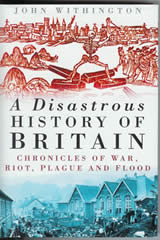
And learn more from my book A Disastrous History of Britain https://www.amazon.co.uk/Disastrous-History-Britain-Chronicles-Plague/dp/075093865X/ref=sr_1_3?crid=WCY5DXBCGGAD&keywords=a+disastrous+history+of+britain&qid=1642507048&sprefix=a+disastrous+history+of+britain%2Caps%2C209&sr=8-3

Sunday, 14 June 2020

Cummingsgate: will it be Johnson's Black Wednesday?


A recently elected Conservative party leader won a surprise victory against considerable odds in a general election, and, as a result, appeared to be in a strong position with considerable authority. But just a few months later came a crisis.

The prime minister and his government did not handle it well. They made promises they were unable to keep, and though they stayed in office for the best part of five more years, the prime minister's credibility never recovered, and his government was torn apart by internecine warfare over Europe. When the next general election came along, the Tories were comprehensively defeated.

That is the story of John Major, prime minister from 1992-7, but the first three and a half sentences at least could also have been written about Boris Johnson. The crisis that found Major wanting, was 'Black Wednesday'. The government promised to keep the UK in Europe's Exchange Rate Mechanism at all costs. But even raising interest rates 4 per cent in a day and spending billions of pounds was not enough to fight off the currency dealers who believed Major was trying to keep the pound at a higher level than the economy justified, and the UK crashed out.

Johnson's crisis has been an odder one: his insistence on hanging on to an unelected adviser who had flouted coronavirus lockdown rules. It is coalescing, of course, with a general feeling that the crisis has been handled badly: locking down too late, abandoning testing, failing to supply protective equipment to frontline workers, failing to protect care homes, etc, but the decision to protect Dominic Cummings generated a huge wave of anger, even among Conservatives.

Will the story end the same? Sam Goldwyn said: 'beware of making predictions especially about the future,' and a lot can happen in what could be four years or more before the next election. Johnson also has a much bigger parliamentary majority than Major, but it is possible that when the history of his government is written, the day he decided to defend Cummings instead of firing him may be seen as his 'Black Wednesday'.

Wednesday, 22 April 2020

Coronavirus: renewed interest in the historical perspective


Is it the coronavirus epidemic that has stirred up renewed interest in my book A Disastrous History of the World (Little, Brown), which appeared in the US as Disaster! (Skyhorse)?

A Mexican blog has been drawing on the sections on the early plagues of Athens, Rome and Byzantium, quoting the Spanish language edition – Historia mundial de los desastres (Turner). https://imparcialoaxaca.mx/opinion/418240/de-pandemias-y-otras-desgracias/


This Romanian blogger concentrates on the chapters on plagues and diseases – discussing, among others, smallpox, cholera, typhus, malaria, sleeping sickness and flu.

While this Romanian article covers what I wrote about the great European famine that occurred during the ‘Little Ice Age’ of the early 14th century, and killed, according to some, up to a quarter of the population.

 The Romanian language edition of the book is Cele mai mari dezastre din istoria omenirii (Polirom).

Friday, 6 March 2020

Brexit and coronavirus


On the radio the other day, Edward Argar, a health minister in Boris Johnson’s government, said its approach to dealing with the coronavirus would be ‘evidence-based’. As distinct from its approach to Brexit which will be based on ignoring all evidence and ploughing on blindly to disaster.

Indeed, ignoring evidence is not nearly enough, and needs to be supplemented by suppressing evidence wherever possible by, for example, making sure the government does no proper assessment of what Brexit is going to cost you, and keeping the Russia Report under lock and key.

Evidence-based approach to coronavirus or not, Johnson has pulled the UK out of the EU’s pandemic warning system because it would ‘cross Brexit red lines’. Good job Brexiters are all immune from the virus, eh?

Pip! Pip!

Sunday, 3 April 2016

The cost of pandemics, and how to reduce it


SARS, bird flu, swine flu, Ebola, Zika. It is hard to believe that not too long ago, there was an idea that infectious diseases had been largely conquered, at least in principle. Then along came AIDS, and now with more people on the planet and more travelling, new infections are actually becoming more common.

Ebola has infected almost 30,000 people, killing 11,000, and inflicted an economic cost of more than $2 billion on some of the poorest countries in the world. SARS infected far fewer – 8,000, and killed 800, but because it hit richer places, it cost more than $40 billion. A recent report on global health risks put potential global losses from pandemics at around $60bn a year.

America’s National Academy of Medicine suggests that $4.5bn a year, about 3% of what the rich world spends on development aid, invested in medical research, public health services and better emergency co-ordination could significantly strengthen our defences against disease.

More effective health systems would help fight illnesses such as tuberculosis that costs perhaps $12bn a year, and malaria which probably costs several times that. Better research could help find vaccines to treat diseases that at the moment are mercifully rare, but which could become pandemics, such as Lassa fever and Crimean-Congo haemorrhagic fever.

Sunday, 5 December 2010

Progress on AIDS

Slow but sure progress appears to be being made in fighting AIDS across the world. Last year was the 12th in succession in which there was a fall in the number of deaths, and in the number of new cases.


Even so, according to the United Nations, about 2.6 million people contracted the HIV virus last year, though this is nearly 20 per cent fewer than the figure in 1997, the worst year ever recorded. The worst year so far for deaths was 2004, when the total was 2.1 million. Last year, it was down to 1.8 million.


The executive director of the UN’s AIDS programme, Michael Sidibe said: ‘We have halted and begun to reverse the epidemic.’ There are more than 33 million people living with HIV; two-thirds of them in sub-Saharan Africa, still the worst affected region. (See also my blogs of Sept 4, 2009 and Sept 18, 2010.)


*For the history of AIDS, see A Disastrous History of the World. Reviews of the new paperback edition:-


http://www.independent.co.uk/arts-entertainment/books/reviews/a-disastrous-history-of-the-world-by-john-withington-2149559.html


http://www.longridgenews.co.uk/news/book_review_a_disastrous_history_of_the_world_by_john_withington_1_2789974

Thursday, 26 August 2010

Rain and cholera

More trouble being caused by heavy rains. Now they’re being blamed for a cholera outbreak that has hit a third of Nigeria’s 36 provinces. Doctors say the whole country is now threatened. So far, there have been more than 6,000 cases and more than 350 people have died.

The outbreak has also killed 200 people in neighbouring Cameroon, and in Pakistan doctors are also seeing cases in the wake of the monsoon floods. In the 19th Century, cholera was driven out of most of the industrialised world by improved hygiene, living conditions and public health measures.

The disease may have struck India as early as the 4th century BC, but the first pandemic is reckoned to have begun in 1817 at Jessore and then spread through the rest of India before attacking much of Asia as well as Russia and East Africa.

The UK was struck for the first time during the second pandemic, which started in Russia. It reached every corner of Britain and killed an estimated 60,000 people. Hungary and Russia lost perhaps 200,000 each. It managed to cross the Atlantic, causing many deaths in Canada, the USA, Mexico and Cuba. (See also my blogs of Jan 31 and July 20.)

Sunday, 13 December 2009

Swine flu - a cause for cautious optimism?

In the UK, the swine flu pandemic is turning out to be less threatening than had originally been feared. Last week, there were 11,000 new cases – a reduction of half on the previous week. Back in July, there were predictions that we might be seeing 100,000 new cases every day.

There have been 283 deaths – just one for every four thousand people who catch the illness. The chief medical officer warned against complacency, though, and history would suggest rightly. The great flu pandemic of 1918 first appeared as a relatively mild illness, but then returned as the devastating killer of perhaps 70 million people.

Across the world, more than 7,800 people are known to have died of H1N1 after the figure leapt by 1,000 in a week. Most of the deaths have been in the American continents – more than 5,300.

Mutated strains have killed people in Norway and France, and these have been seen in four other countries, but overall most victims still suffer fairly mild symptoms. (See also my blogs of 30 April, 13 May, 6, 11 July, 24 Oct)

Saturday, 11 July 2009

Swine flu worsens + the real "Great Fire"

Since my last blog on Monday, swine flu has taken quite a turn for the worse in the UK. Then there were 4 deaths, now there have been 15 – meaning the death rate may be around one in 500 rather than the 1 in 1,875 we were talking about five days ago. We have also had the first death of someone without any other underlying medical problems.

The government is still stressing that for the vast majority of people, it will be a mild infection from which they soon make a complete recovery, but if they are right that the number of new cases may reach 100,000 a day by the end of next month, plainly many more people will die.

One of the disturbing things about the 1918 pandemic was how it appeared in the spring as a relatively mild illness, but by the autumn it had become much more lethal. Of course, today we have weapons that doctors lacked 90 years ago, like anti-viral drugs and perhaps soon a vaccine, but the ending of the swine flu story is one that we do not yet know.

On this day….797 years ago (or perhaps 796 – historians cannot agree), London suffered what may have been its deadliest ever peacetime fire. This “Great Fire” broke out to the south of the Thames in Southwark, and spread quickly. Crowds had poured onto London Bridge – some to try to rescue people from its buildings, others just to watch – when the flames leapfrogged them, and set buildings on the north bank ablaze, trapping them.

Some estimates put the number of people killed at an astonishing 3,000. That is hard to accept, but this fire certainly killed many more than the “Great Fire” of 1666, though that devastated a much bigger area. To learn more, see The Disastrous History of London.

Monday, 6 July 2009

Swine flu v bird flu

Swine flu has now overtaken bird flu. We have had 262 deaths from bird flu (H5N1) against 382 from swine flu (H1N1). Bird flu remains far more virulent, with its 262 deaths coming from just 436 confirmed cases, while there have been nearly 90,000 cases of bird flu.

The World Health Organisation says that most people who catch swine flu can expect a mild infection from which they make a full recovery within a week, and that the main risk is to pregnant women or people with other health problems.

The virus has now spread to 100 countries, and there are some peculiarities in the figures. Argentina has had 26 deaths at a rate of about 1 for every 60 cases – the highest in the world. Mexico, where the disease first appeared, has suffered 119 deaths at about 1 in every 85 cases. The United States has the highest number of deaths – 170 – but the rate is only about 1 in 200 of those infected.

Europe has suffered much less so far. The UK has been worst hit with nearly 7,500 cases, but only four deaths – a rate of 1 in 1,875. However, the government is warning that by the end of next month, Britain could be seeing 100,000 new cases every day. Could that produce the same kind of devastating effect on public services that we saw in the great flu pandemic of 1918, when schools closed, fire stations had no firemen, buses stopped?

That epidemic was dubbed “Spanish flu”, because it was there that the world first became aware of the virus. This time around, Spain has had 760 cases and just one death. Even so, yesterday, the Spanish newspaper El Pais decided to publish the section on flu from my book A Disastrous History of the World. This is the link to the story:- http://www.elpais.com/articulo/sociedad/Fue/gripe/espanola/elpepusoc/20090704elpepusoc_2/Tes

Thursday, 5 February 2009

Bird flu

Egypt has just reported its third case of bird flu in humans this year, while China says that four people have died from the disease in 2009 – the latest a 31 year old woman in the Xinjiang Uygur region in the north-west of the country. China has also been accused of covering up an outbreak of the disease in poultry after more than 20 dead birds were washed up on beaches in Hong Kong. At least three have tested positive for the H5N1 bird flu virus.

The World Health Organisation reported 348 cases of the disease in humans up to January 2008 across 14 countries. Two hundred and sixteen of those infected had died. That represents a death rate of more than 60% - stoking fears that if the strain ever did manage to pass from human to human it could threaten us with a pandemic on the scale of that of 1918 in which perhaps 70 million died, including a quarter of a million in Britain (see A Disastrous History of the World and A Disastrous History of Britain).

So far, mercifully, there has been little evidence of transmission of H5N1 from human to human apart from isolated cases in Thailand and Vietnam.