Showing posts with label Bangladesh. Show all posts

Friday, 24 February 2017

History's most lethal storms


Doris has just reminded us how lethal storms can be, causing deaths in Wolverhampton, Swindon and London, but mercifully it was much less deadly than other tempests in our history.

As my latest book Storm: Nature and Culture reveals, the worst storm ever to hit the UK was the Great Storm of November 1703 which claimed about 125 lives on land and perhaps 8,000 around our coasts, where many vessels, especially Royal Navy ships, were sunk.

The deadliest storm of all was probably what became known as the Bhola Cyclone which also struck in November, this time in 1970. The world has seen many stronger storms, but this one was particularly lethal because it hit the Bay of Bengal where the land was densely populated and just a few feet above sea level.

Estimates of the number of people killed go as high as a million. The cyclone also played a significant role in history. The land it struck was then East Pakistan, which was already longing for independence. The dilatory response of West Pakistan to the disaster was the final straw, and after a bloody civil war, East Pakistan became the new country of Bangladesh.


Sunday, 15 May 2016

Lightning kills more than 50 in Bangladesh


More than 50 people have been killed by lightning in Bangladesh over the last few days, and scores have been injured. In total, over 90 have been killed since March, compared with 51 in the whole of last year.

Most of the victims were working in the fields, though two students were struck as they played football in the capital, Dhaka. March to May is the worst time of the year for thunderstorms, and more are expected over the next week or so.

M. Abdul Mannan, a meteorology department official, said storms had been getting more severe over the last 30 years because of climate change. He blamed this year’s exceptionally hot weather for the increase in deaths, while the Bangladesh Disaster Preparedness Forum said the felling of trees was also a factor.

Lightning is also India’s deadliest natural disaster, killing at least 1,500 people every year since 2003. (See my post of 7 September 2015. See also my posts of 1 July 2011 and 4 July 2015.)


*My new book Storm: Nature and Culture (Reaktion Books) is due out in September.

Monday, 21 December 2015

Deadliest building collapse of modern times - 24 accused on the run


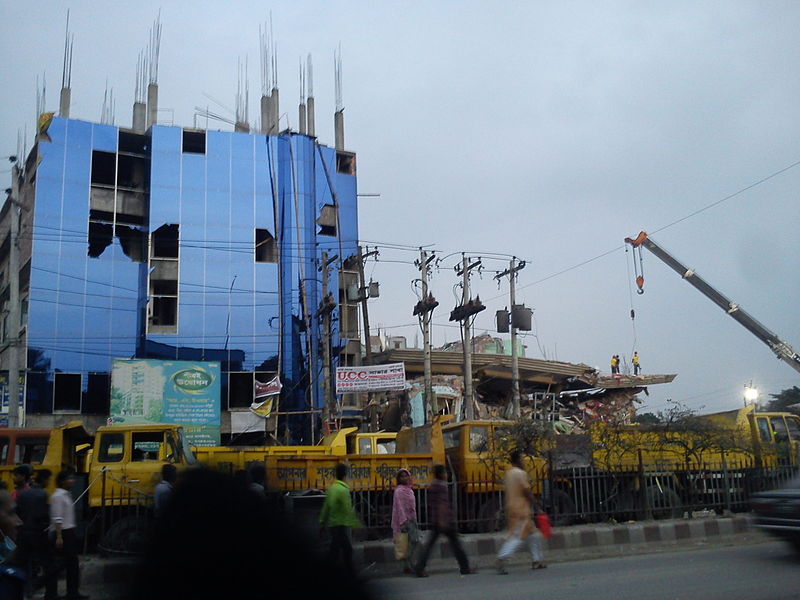
The Rana Plaza disaster of 2013 in Bangladesh was the deadliest building collapse of modern times, costing the lives of at least 1,138 people. More than 2,000 were injured, and some are still not accounted for.

41 people were charged with murder in connection with the collapse, but now 24 have absconded. A court has issued arrest warrants, and ordered that their property should be seized. The owner of the building, Sohel Rana, is still in custody. The trial is expected to start by April.

The building on the outskirts of Dhaka, originally constructed as a 6-storey shopping mall, had been converted into a 9-floor factory complex. It is alleged that workers drew attention to cracks in the structure before it collapsed.


Bangladesh’s clothing industry employs 4 million people, and makes garments for a number of well-known Western names. (see also my blogs of May 20 and June 12, 2013, and June 1, 2015.)

Friday, 11 December 2015

War crimes: Of Bangladesh and long shadows


Facebook has been restored in Bangladesh, after a three-week shutdown following the hanging of Salahuddin Quader Chowdhury and Ali Ahsan Mohammad Mujahid for war crimes during the country’s bloody struggle for independence from Pakistan 44 years ago.

A special war crimes tribunal had found Chowdhury guilty of 9 charges including genocide, arson and persecuting people on religious and political grounds. While Mujahid was convicted of 5, including abduction and murder.

Both were prominent opposition politicians. A senior figure in the Bangladesh Nationalist Party, Chowdhury had been elected an MP 6 times. Mujahid, an Islamist, was social welfare minister from 2001 to 2006. Both men maintained their innocence.


The tribunal was set up in 2010 by the current government, following an election pledge to bring murderers to justice, but human rights groups argue the men were not given a fair trial.

Friday, 13 November 2015

Friday the 13th: is it really unlucky?


On Friday, 13th November, 1970, the deadliest storm in history devastated Bangladesh, with some estimates putting the number killed at as high as a million. And that was just one of the disasters that happened on this feared date.

On Friday, 13th October, 1307, scores of members of the elite military Knights Templar order, who had played a crucial role in the Crusades, were arrested by Philip IV of France and accused of heresy, blasphemy and vice. After the authorities extracted confessions by torture, the order was dissolved in 1312.

On Friday, 13th November, 1972, a Fairchild FH-227D on charter from the Uruguayan Air Force crashed in the Andes. 29 of the 45 people on board died. It took more than two months to rescue the remaining 16, some of whom had to survive by eating the dead. Their story was told in the feature film, Alive.

Then on Friday, 13th January, 2012, the Italian cruise ship, Costa Concordia, (pictured) struck a rock and capsized off a little Tuscan island with the loss of 32 lives. All nasty things to happen, but statistically enough to brand Friday the 13th as any worse than any other date? Well, funnily enough, a study in the British Medical Journal in 1993 apparently concluded that you might expect a higher than average rate of road accidents on Friday, 13th.


Monday, 1 June 2015

Rana Plaza collapse - murder charges


The owner of the Rana Plaza factory complex in Bangladesh which collapsed in April 2013 with the loss of more than 1,100 lives has been charged with murder. It was the deadliest event of its kind in modern times.

Sohel Rana and 41 others, including government officials, are accused of ignoring warnings that the buildings, about 20 miles from the capital, Dhaka, were not safe. Any convicted of murder could face the death penalty.

There has been criticism of the length of time it has taken to bring charges, but investigators say they have had to take statements from more than 1,200 people. It is said this is the first time anyone has faced criminal charges over an accident in the country’s clothing industry, which is one of the biggest in the world, and provides cheap items for some well-known Western retailers.


It is alleged that three extra storeys had been illegally added to the building. After the disaster, Mr Rana tried to flee to India. (For more details, see my blog of 3 May 2013.)

Saturday, 14 December 2013

Bangladesh war crimes execution


The execution that attracted most attention over the last few days was the killing – apparently by machine gun fire – of Jang Song Thaek, the uncle of North Korea’s young dictator, Kim Jong Un, but there was another of great significance in Bangladesh.

An Islamist leader, Abdul Kader Mullah, was hanged after being found guilty of crimes during Bangladesh’s bloody war of independence in 1971, which cost the lives of up to 3 million people. He was the first person to be executed following conviction by Bangladesh's International Crimes Tribunal.

At his trial, he was described by prosecutors as the ‘Butcher of Mirpur’, a suburb of the capital, Dhaka, where he is alleged to have been involved in the massacre of unarmed civilians and of intellectuals who supported independence from Pakistan. Mullah always denied the charges, and human rights groups have expressed concern about the court’s fairness.


Another 4 members of Mullah’s Jamaat-e-Islami party are also facing the death penalty. His execution has led to clashes in which at least 5 people have died.

Thursday, 5 December 2013

Disasters and politics


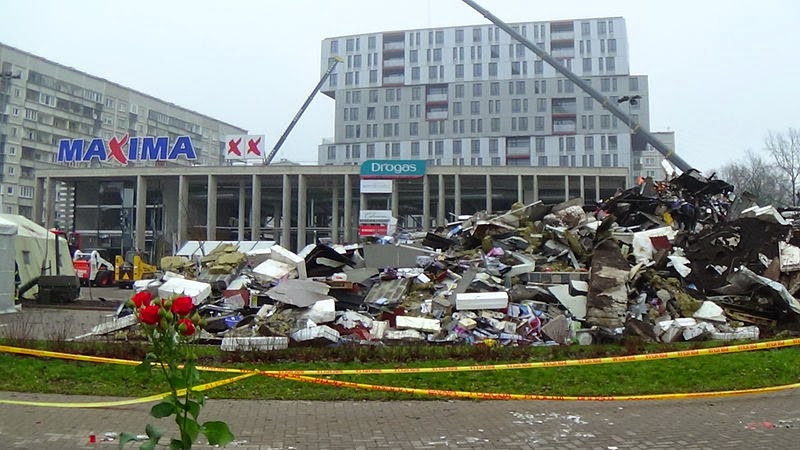
When the Maxima supermarket collapsed in the Latvian capital, Riga, last month, with the deaths of at least 54 people, (see my blog of Nov 22) it also brought down the government.  Prime Minister Valdis Dombrovskis resigned after the president, Andris Berzins, described the disaster as ‘murder’.

Disasters often have important political consequences. The Bangladesh cyclone of 1970 was the deadliest in history, killing up to a million people. It was also the last straw in the fractious relationship between East and West Pakistan. The response of the government in the West was seen as grudging and inadequate, and the East began a war of independence from which it emerged as the new nation of Bangladesh.

In 2008, another cyclone, Nargis, killed perhaps 140,000 people in Myanmar. Again, the government was heavily criticised, for the slowness of the relief effort and its reluctance to accept foreign help. Many saw this as the beginning of the current transition to democracy.

Going further back into history, a devastating hailstorm  that flattened crops across much of France in 1788 played a crucial role in fomenting the Revolution that came the following year, as it bankrupted the government through loss of tax revenues, and sent food prices into the stratosphere.

Tuesday, 12 November 2013

A deadly storm and a deadly anniversary

The strongest storms are not always the deadliest. It all depends where they strike. But Typhoon Haiyan has proved both strong and deadly. It has brought winds gusting at up to 170 miles an hour, and it has killed an estimated 10,000 people.

The worst hit area appears to be city of Tacloban on Leyte island in the Philippines, and the worst damage seems to have been done by the 45 foot waves the storm generated. More than 670,000 people have been driven from their homes.

The airport at Tacloban was damaged, at first preventing aircraft arriving to deliver supplies and evacuate survivors, but now the Philippines air force is getting transport aircraft in and out. Hundreds of thousands of people did leave before the typhoon arrived, but many evacuation centres were unable to withstand the winds and storm surges.


The deadliest storm of all time was probably the cyclone that hit Bangladesh 43 years ago today, on the night of November 12, 1970. Its winds peaked at 115 miles an hour as it devastated the low-lying islands of the Bay of Bengal, killing up to a million people. For the full story see A Disastrous History of the World.

Friday, 11 October 2013

War casts long shadow

An 83 year old Bangladeshi politician has been sentenced to life imprisonment for his part in the country’s bloody independence struggle in 1971, which cost up to 3 million lives. A special war crimes tribunal had found him guilty of involvement in the deaths of 372 Hindus.

Abdul Alim, of the Bangladesh National Party, was convicted on nine charges. Last week the tribunal sentenced another senior BNP figure, Salahuddin Quader Chowdhury, to death for crimes against humanity. 

Alim was spared the death penalty because of his poor health. Prosecutors say he headed part of a militia fighting on the side of the Pakistan government that was trying to stop Bangladesh, then East Pakistan, breaking away.

Six current and former leaders of the main Islamic party, Jamaat-e-Islami, have  been convicted by the same tribunal. Critics say the trials failed to meet international standards, and dozens of people have died in violent protests against the verdicts.

(See also my blog of July 19.)

Friday, 19 July 2013

Bangladesh - the war goes on


It is more than 40 years since the brutal war of independence that allowed the new nation of Bangladesh to emerge from what had been East Pakistan. In that war, up to three million people died.

Now Bangladesh is torn by riots over the conviction of two leading politicians for collaborating with the Pakistan army to target pro-independence activists during the struggle. The spiritual leader of the Islamist Jamaat-e-Islami party, Ghulam Azam, has been sent to gaol for 90 years, while another leading member of the party, Ali Ahsan Mohammad Mujahid, has been sentenced to death.

The verdicts were handed down by the International Crimes Tribunal in Dhaka, set up in 2010 by the current government led by the Awami League. Two people have been killed in riots this week, and 100 so far this year.

Mr Mujahid was a student leader in 1971 who wanted to keep Bangladesh part of Pakistan. His party claims the trials are politically motivated, while Human Rights Watch has described them as "flawed".

Wednesday, 12 June 2013

Bangladesh factory collapse - inspectors suspended


The Bangladesh government has suspended seven inspectors who it claims were negligent in their oversight of clothing factories in the Rana Plaza building which collapsed in April, killing more than 1,100 people.

An official said the inspectors never visited five of the factories and that one had been operating without a licence since 2008. A government investigation has blamed the use of poor building materials for the collapse of the block.

Over the last few years, the number of factories in Bangladesh has soared to more than 240,000, but there are only 50 inspectors.  The clothing industry alone employs more than 3 million workers, mainly women from poor villages.

The Rana Plaza’s owner and five executives and owners of factories housed in the building have all been arrested, but no formal charges have yet been brought.


Monday, 20 May 2013

Great disasters - great escapes


With a death toll of more than 1,120, the fall of the Rana Plaza in Bangladesh is now confirmed as the deadliest building collapse in modern history, but in the midst of terrible tragedy, there was an astonishing story of survival.

Nineteen year old Reshma Begum was pulled from the rubble alive after being trapped for 17 days.  Rescuers had spotted her waving an aluminium curtain rail.   Reshma had come to the big city from the countryside three years ago, and had been working at her factory in the Rana Plaza for less than a month when the block collapsed.  

Three years ago, a 24 year old man was dragged out of the remains of a hotel eleven days after the Haiti earthquake, and 17 days after the collapse of the Sampoong department store in Seoul, South Korea, in 1995, an 18 year old was found alive.

In 1906, nearly 1,100 miners were killed by an explosion in a colliery at Courrieres in France.   To the astonishment of rescue workers, 20 days later, a group of 13 survivors emerged.    They had kept themselves alive on food that miners took down the pit to eat during their breaks and by slaughtering a horse.
*My third video on Britain's 20 Worst Military Disasters is a story from Scotland - https://www.youtube.com/watch?v=IKR5Ayyx6cs
 

Friday, 3 May 2013

Bangladesh factory collapse now deadliest of modern times


The collapse of the Rana Plaza factory building near the Bangladeshi capital, Dhaka, is now confirmed as the deadliest event of its kind in modern times.    Officials say the death toll has now reached 507, but that scores of people have still not been accounted for. 

About 2,500 people were injured as the 8-storey building fell, and rescuers say they do not know how many are still missing because they have not been able to get accurate figures from the factory owners.  Nine people have been arrested in connection with the disaster.

Ever since the Rana Plaza collapsed last week, workers in Bangladesh’s huge clothing industry have been holding protests to demand better safety standards.

Until now, the deadliest building failure of modern times was the collapse of the Sampoong department store in Seoul, South Korea in 1995, in which 501 people died. When part of the Circus Maximus in Rome collapsed during a gladiator fight some time between 138 and 161AD, it was said to have cost more than 1,100 lives.

*The second in my series of videos on Britain’s 20 Worst Military Disasters – the defeat of Boudicca.  https://www.youtube.com/watch?v=mR7U4cjenuQ

Sunday, 28 April 2013

Bangladesh building collapse - owner arrested


The owner of the factory building that collapsed last Wednesday in Bangladesh’s capital, Dhaka, killing hundreds of people, has been arrested by soldiers from the country’s Rapid Action Battalion at the border with India.

Five other people have also been detained - 3 owners of clothes factories that were housed in the Rana Plaza and 2 engineers.   Two more survivors have been pulled from the rubble today, but altogether about 360 people are known to have died.

Police said officials had ordered an evacuation of the block on Tuesday after cracks appeared, but that the factories ignored them, while municipal engineers are reported to have declared the building safe the day before it collapsed. 

Bangladesh has one of the biggest clothing industries in the world, providing cheap products for well-know Western retailers, but it has been widely criticised for low pay and dangerous conditions.     
Now available in paperback – Disaster! A History of Earthquakes, Floods, Plagues and Other Catastrophes.  http://www.barnesandnoble.com/w/disaster-john-withington/1111579925?ean=9781620871812

Saturday, 9 February 2013

It's the poor that gets the disaster


We are used to the idea that it is usually the poor who suffer most from natural disasters.   They tend to live in less sturdy dwellings in more dangerous places, have poorer access to telecommunications for warnings etc

But we have had a reminder this week that they are also more likely to be victims of man-made disasters.   At least 53 people are known to have been killed in a crash between a bus and a lorry about 60 miles north of Zambia’s capital, Lusaka.

The accident happened on a busy road as the bus was reportedly swerving to avoid an oncoming vehicle.    Roads in Zambia are often poorly maintained and vehicles overloaded, but this is believed to have been one of the worst accidents in the country’s history.

Meanwhile in Bangladesh, a ferry capsized on the Meghna River, near the capital, Dhaka, plunging scores of passengers into the water.    Only two bodies have so far been recovered, but up to 40 are still missing.  Ferry accidents are common on the country’s vast river network.    In March last year, more than 112 people drowned when a ferry collided with an oil tanker and sank also in the Meghna.

*My account of the Irish Potato Famine of the 1840’s from A Disastrous History of the World has been reproduced on this website.    http://stravaganzastravaganza.blogspot.co.uk/2013/01/the-irish-potato-famine_9376.html#!/2013/01/the-irish-potato-famine_9376.html

Monday, 4 February 2013

War crimes - first conviction in Bangladesh


More than 40 years after Bangladesh’s war of independence, in which as many as 3 million people died, a special tribunal in the country has convicted its first war criminal.   Abul Kalam Azad was sentenced to death in his absence for genocide and murder.
Azad is described as a former leader of the youth wing of Jamaat-e-Islami, Bangladesh’s biggest Islamic party.    Its youth wing was the main source of paramilitary recruits for those supporting West Pakistan’s efforts to stop East Pakistan, as Bangladesh then was, seceding.
Its members are alleged to have abducted and murdered dozens of civilians.   Azad himself is accused of killing at least 12 people and of rape.    He fled the country last year, and is believed to be in Pakistan.
Critics, though, allege irregularities in the judicial process, and complain that it has been subverted in order to damage opponents of the government.

Tuesday, 18 December 2012

Bangladesh factory fire 'sabotage'


Last month’s factory fire on the outskirts of Bangladesh’s capital Dhaka, in which at least 110 people died (see my blog of Nov 25) was caused by sabotage according to an official inquiry.

But the head of the inquiry, Main Uddin Khandaker, added that the owner had been guilty of ‘severe negligence’.  He said factory officials had padlocked exits and prevented workers from escaping.

It is claimed that the factory’s fire certificate was out of date and that the company had permission for only a three-storey building even though it stood nine storeys high.  

The owner of the Tazreen factory has denied the building was unsafe.   It made clothing for a number of well-known retailers.  After the blaze, thousands protested in the streets, demanding higher safety standards.

*A new review of my book Disaster!  http://scienceblogs.com/gregladen/2012/12/05/disaster-earthquakes-floods-plagues-and-other-catastrophes/

Sunday, 25 November 2012

Another deadly factory fire


Last month I blogged about what was perhaps the deadliest factory fire in history in a clothing works in Karachi (see my post of Oct 15).  Now a fire at a clothing factory on the outskirts of Bangladesh’s capital, Dhaka, is believed to cost more than 112 lives.

The blaze started late on Saturday on the ground floor of the factory, perhaps because of an electrical fault, trapping workers on upper floors.  Some jumped to their deaths from windows.  The building was in a narrow lane, making it hard for fire crews to reach the blaze.

Thousands flocked to the factory looking for relatives who worked there.   A senior fire official said that if there had been a fire escape on the outside of the building, it might have save many lives, while the factory owner said he had never had a fire before at any of his seven premises.

Clothes account for up to 80 per cent of Bangladesh’s exports, and about two million people work in the industry.    Two years ago, another fire in a factory nearby resulted in the deaths of 25 workers.

Sunday, 19 August 2012

Landslides more deadly than realised


According to a study by Durham University in the UK, landslides kill up to ten times as many people as we thought.    Its authors said the worldwide death toll from 2004 to 2010 was 32,300, compared with earlier estimates of between 3,000 and 7,000.

The main author, David Petley, said most data tended to record only landslides in which ten or more people are killed, when many victims perish in much smaller events. 

The study identified the most vulnerable regions as being countries along the Himalayan Arc - India, Pakistan, Bhutan, Nepal and Bangladesh - plus China, and Central and South America.  It suggested that better management of forests and discouraging people from living in vulnerable areas were the best way of reducing the danger.

Perhaps the world’s deadliest landslide was the one that hit coastal areas of Venezuela after torrential rain in the last few days of the twentieth century.   Estimates of the number killed range as high as 30,000.   For the full story see A Disastrous History of the World.