Showing posts with label Myanmar. Show all posts

Thursday, 5 December 2013

Disasters and politics


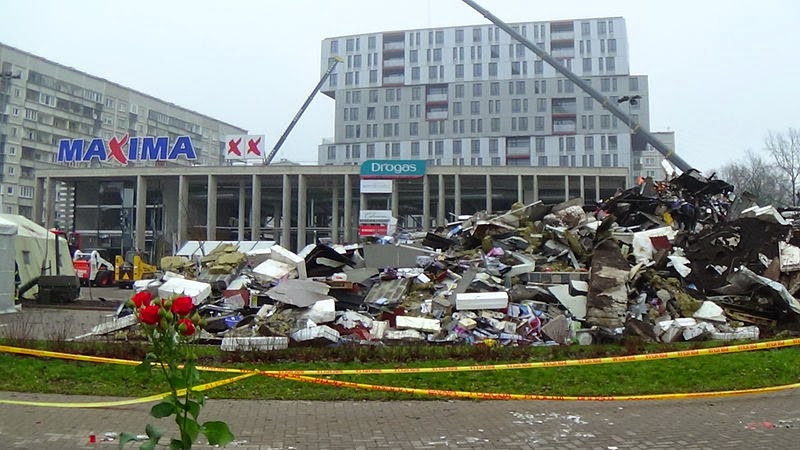
When the Maxima supermarket collapsed in the Latvian capital, Riga, last month, with the deaths of at least 54 people, (see my blog of Nov 22) it also brought down the government.  Prime Minister Valdis Dombrovskis resigned after the president, Andris Berzins, described the disaster as ‘murder’.

Disasters often have important political consequences. The Bangladesh cyclone of 1970 was the deadliest in history, killing up to a million people. It was also the last straw in the fractious relationship between East and West Pakistan. The response of the government in the West was seen as grudging and inadequate, and the East began a war of independence from which it emerged as the new nation of Bangladesh.

In 2008, another cyclone, Nargis, killed perhaps 140,000 people in Myanmar. Again, the government was heavily criticised, for the slowness of the relief effort and its reluctance to accept foreign help. Many saw this as the beginning of the current transition to democracy.

Going further back into history, a devastating hailstorm  that flattened crops across much of France in 1788 played a crucial role in fomenting the Revolution that came the following year, as it bankrupted the government through loss of tax revenues, and sent food prices into the stratosphere.

Wednesday, 26 May 2010

Sri Lanka fights against inquiry

Sri Lanka is trying to block efforts by the United Nations to investigate possible human rights abuses by the government in its war with the Tamil Tigers which ended last year. UN Secretary-general Ban Ki-moon, however, says he will press on, and the International Crisis Group NGO is demanding an inquiry into suspected war crimes by both sides.

The ICG believes the Sri Lankan government may have killed tens of thousands of Tamil civilians. Ministers say it killed none at all, but in northern Tamil areas, people have been demonstrating to demand information about 12,000 who have disappeared. Some may be being held by the army.

The ICG’s head, Louise Arbour, says Sri Lanka’s tactics were based on allowing the army complete freedom to pursue scorched earth policies in rebel territories, making no distinction between combatants and non-combatants, and ignoring any international criticism.

Whatever the IGC’s qualms, some applaud, like Myanmar’s military dictator, Than Shwe. General Than rarely strays from the shores of the country he represses so relentlessly. But he did make a visit to Sri Lanka to see if there were any tips he might pick up. (See also my blogs of Feb 24 and May 11, 18 and 24, 2009.)

Wednesday, 18 November 2009

Another ferry disaster

At least 50 people have drowned after a wooden ferry collided with a barge and then sank in Myanmar’s Irrawaddy Delta. There were about 180 people on board the Naywintun, or rising sun.

The delta is the area that was devastated last year by Cyclone Nargis. Most of the population of the low-lying region depend on river ferries which are often poorly maintained. At least 38 people were killed when a boat sank in the delta in July 2008, while the worst shipwreck in the area came in 1902 when the British steamship, SS Camorta, was caught in a cyclone and sank with the loss of 737 lives.

For other ferry disasters, see my blogs of April 15, Aug 7, Sept 6 and 26.

This day 22 years ago saw one of London’s worst fires of modern times as a carelessly discarded match caused a terrible disaster at King’s Cross underground station. The match set fire to rubbish that had accumulated through years of neglect beneath an escalator. Smoking was supposed to be banned on the escalators but the rule was poorly enforced. The story of how 31 people were killed can be seen in The Disastrous History of London.