Showing posts with label 2008. Show all posts

Sunday, 13 September 2015

Mumbai train bombers convicted


In India, 12 men have been convicted for their part in the co-ordinated bombings of Mumbai commuter trains in 2006 that killed 189 people and injured more than 800. One man was acquitted. Sentencing is due tomorrow.

The seven bombs went off during a 15 minute spell, and appeared to have targeted first class compartments as people were going home from jobs in the city’s financial district. Explosives were packed into pressure cookers, then put in bags.

Prosecutors said the attack was planned by Pakistan's intelligence agency ISI, and carried out by the Pakistan-based militant group Lashkar-e-Taiba with help from the Students' Islamic Movement of India, a banned Indian group. Pakistan has rejected the allegations.

Mumbai has been hit by a number of terrorist attacks. In 2013, bombs killed 257 people, and bombers also struck in 2003 and 2011, killing a total of 70, while in 2008, gunmen attacked a number of places in the city, killing 165.


Sunday, 1 March 2015

'Homeland' comes true! How Pakistan handles top terror suspects


It sounds like a plot line out of Homeland. One of the main suspects alleged to be behind the Mumbai terrorist attacks of 2008 which killed more than 160 people, is said to be living a life of luxury in a Pakistan prison, with internet and mobile phone access, and dozens of visitors popping in and out every day, without anyone bothering to check who they are.

Zaki-ur-Rehman Lakhvi is being held with six of his comrades at the Adyala Jail in Rawalpindi. After being named by Indian officials, he was arrested at what was said to be a training camp for the militant, some would say terrorist, group Lashkar-e-Taiba.

In 2014, after doubts were raised over the Indian evidence, he was released on bail – embarrassingly, barely a day after the worst terrorist outrage in Pakistan’s history when Islamic fanatics murdered 145 people, including 132 children, at a school in Peshawar. The Pakistan military and civilian authorities had responded by calling for a crackdown on ‘all shades of terrorism’.


India protested, while the US and China are also said to have put on pressure, and the Pakistan government detained Lakhvi again under the Maintenance of Public Order law. But if the authorities believe he is a threat, the ‘anything goes’ prison regime seems an odd way of trying to protect Pakistanis.

Thursday, 5 December 2013

Disasters and politics


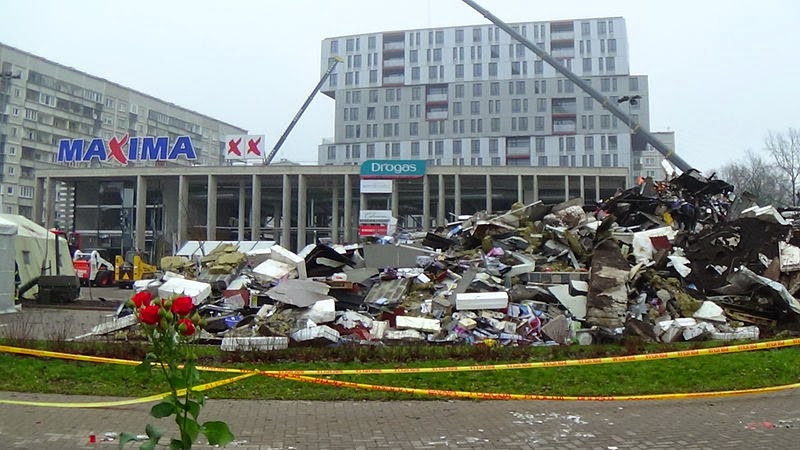
When the Maxima supermarket collapsed in the Latvian capital, Riga, last month, with the deaths of at least 54 people, (see my blog of Nov 22) it also brought down the government.  Prime Minister Valdis Dombrovskis resigned after the president, Andris Berzins, described the disaster as ‘murder’.

Disasters often have important political consequences. The Bangladesh cyclone of 1970 was the deadliest in history, killing up to a million people. It was also the last straw in the fractious relationship between East and West Pakistan. The response of the government in the West was seen as grudging and inadequate, and the East began a war of independence from which it emerged as the new nation of Bangladesh.

In 2008, another cyclone, Nargis, killed perhaps 140,000 people in Myanmar. Again, the government was heavily criticised, for the slowness of the relief effort and its reluctance to accept foreign help. Many saw this as the beginning of the current transition to democracy.

Going further back into history, a devastating hailstorm  that flattened crops across much of France in 1788 played a crucial role in fomenting the Revolution that came the following year, as it bankrupted the government through loss of tax revenues, and sent food prices into the stratosphere.

Sunday, 23 June 2013

Indian monsoon death toll rises


The death toll in India’s monsoon floods has now reached at least 600, and may eventually get as high as 1,000. 40,000 people are still stranded in the mountains of Uttarakhand state, the worst hit area.

The early monsoon rains are said to be the heaviest in 60 years, and with more downpours expected, search and rescue efforts are being stepped up. 33,000 people have been saved so far, but the terrain is difficult, and roads and bridges have been washed away.

These are likely to be the deadliest monsoon floods in India since 2008 when more than 2,400 people were killed between June and September in Maharashtra, Andhra Pradesh and Bihar.
Perhaps the worst monsoon flood ever in India came in 1978 when up to 15,000 people were killed, and more than 40 million were driven from their homes.  The disaster was made worse by a cyclone.

Monday, 1 August 2011

World's deadliest supermarket fire

On this day…..7 years ago, the world’s deadliest ever supermarket fire killed around 400 people at Asuncion, the capital of Paraguay.    The food court at the Ycua Bolanos store was packed with families when there was an enormous gas explosion.

The blaze spread through the building at such speed it was said that firemen found cashiers sitting dead at their tills.   Some shoppers were burned alive in the underground car park, while other victims were found hugging each other in the store.

Allegations surfaced that fire exits had been locked, and in December 2006, the owner of the store, his son and a security guard were each gaoled for five years, but the verdicts were followed by a riot, as families of the victims complained furiously at what they considered the undue leniency of the sentences.

At a re-trial just over a year later, the owner’s sentence was increased to 12 years, his son got 10 years, while the security guard’s five year sentence was confirmed.    In addition, a shareholder who had been present when the fire started was gaoled for two and a half years, while the building’s architect spent two years under house arrest.

Friday, 15 July 2011

Target Mumbai

Mumbai was always regarded as a diverse, tolerant city.   Maybe that is why it has been targeted so often by terrorists.    In Wednesday’s attack, three bombs went off, thought to have been activated by timers, and 18 people were killed.

In 2008, a group of ten Muslim gunmen murdered 165 people in attacks on hotels, a station, and other places frequented by foreigners.   Back in March 1993, more than a dozen bombs made from plastic explosives and detonated by timers killed at least 257 people, while the terrorists also threw grenades at Mumbai airport.

Ten years later, bombings killed another 50 people, while in July 2006, seven bombs were set off on rush-hour trains during a period of 11 minutes, claiming 209 lives.   Police blamed an outlawed Indian Muslim organisation, Lashkar-e-Toiba (‘Soldiers of the Pure’), but said the outrage had been planned by Pakistan’s intelligence agency, the ISI.

A trial of 13 people accused of involvement is still wending its way through the Indian justice system, with judgment now expected before the end of the year.

Monday, 18 October 2010

Mumbai appeal

The only surviving gunman from the 2008 terrorist attacks in Mumbai has begun his appeal against the death sentence. 23 year old Mohammad Ajmal Amir Qasab, a Pakistani national, was one of ten assailants who caused the deaths of more than 170 people.

Qasab and an accomplice carried out the attack on the city’s main railway station, killing 52 people. In May, he was found guilty of mass murder and waging war against India.

For security reasons, the convicted man is appearing via video link from his prison. Reporters in the courtroom say he smiled frequently as he looked into the camera. The hearing is expected to last three months.

(See also my blogs of July 23 and Nov 26, 2009.)


Thursday, 14 January 2010

Haiti earthquake

The Red Cross estimates that up to 50,000 people have been killed by the earthquake in Haiti, and some say the total could be as high as 100,000. The United States is sending 5,500 service personnel to help the rescue effort in one of the poorest, most chaotic countries on earth.

The UN had been playing a major role in keeping a semblance of normal life going , and now 150 of its staff are missing after its headquarters in Port-au-Prince collapsed. At the moment, the search for survivors in the city is mainly being carried out by the bare hands of rescuers.

It is 240 years since an earthquake approaching this magnitude hit Haiti. In June 1770, Port-au-Prince was razed to the ground as were a number of villages. At least 200 people died in the quake itself, and up to 30,000 in the chaos that followed.

In 2004, the country was hit by Hurricane Jeanne, which killed 3,000 and caused widespread disruption. Then in 2008, the town of Gonaives was hit by four hurricanes in a month, causing 1,000 deaths, and making a million people homeless.

Tuesday, 5 January 2010

Road accidents - Bangladesh

Another country with dangerous roads is Bangladesh. On New Year’s Day, at least 18 people were killed when a bus skidded off the road and plunged into a ditch in dense fog at Kanaipur in the south-west of the country.

Early last month, near the same town, at least 20 people died when two buses collided head-on, and in December 2008, 24 perished when the lorry in which they were travelling veered off the road, again in thick fog. The accident happened at Tangail, about 40 miles north of the capital Dhaka.

Altogether, up to 5,000 people are killed every year in road accidents in Bangladesh. Poor roads and old, badly maintained vehicles are blamed for most crashes.

The Inter-American Development Bank once named the North Yungas Road, a 40 mile highway in Bolivia that leads from La Paz to Coroico, “the world’s most dangerous”. Also known as the “Road of Death”, it is said to see up to 300 travellers killed every year. (See also my blogs of Dec 20 and 29)

Thursday, 26 November 2009

Mumbai bombings anniversary

Mumbai has been marking the first anniversary of the terrorist attacks that killed 174 people. The targets included luxury hotels and a railway station. The only surviving attacker is currently on trial in India while seven other people have just been charged in Pakistan with being involved. (see my blog of July 23)

The 2008 attacks were just the latest in a series that have targeted India’s financial capital. In 1993, a number of bombs hit targets such as the Stock Exchange, a shopping complex, and banks. A total of 257 people were killed, including 90 on a crowded double-decker bus.

During the winter before the bombings, about 900 people, mainly Muslims, had been killed in inter-communal rioting in the city – a sad blot on Mumbai's reputation for diversity and tolerance.

Another bombing campaign in 2003 cost the lives of more than 50 people. Then in July 2006, terrorists planted explosives on seven rush hour trains taking commuters home from the city. This time the death toll was 209. For more details, see A Disastrous History of the World.