Showing posts with label Britain's 20 Worst Military Disasters. Show all posts

Sunday, 25 June 2023

I-Spy Penang, Malaysia. A reward for losing America


This is Fort Cornwallis, built by the British East India Company in the late 18th century to defend Penang against pirates. It was named after Earl Cornwallis, who lost America. Maybe I should have lost America, then I could have had a fort named after me!

Actually, that's a bit unfair to Cornwallis. There were plenty of British defeats and disasters in the American War of Independence (see my book Britain's 20 Worst Military Disasters, Spellmount), but the British never recovered from Cornwallis's surrender at Yorktown in 1781 and the following year parliament voted to end the war. Cornwallis went on to become Governor-General of India, and Lord-Lieutenant of Ireland.

Monday, 24 July 2017

The real 'Dunkirk'


Just seen Christopher Nolan’s film, Dunkirk. An impressive and gripping account of the evacuation of nearly 200,000 British troops from the beaches in 1940. 140,000 French and Belgian troops were also rescued.

Churchill, though, recognised that the campaign overall had been a ‘colossal military disaster’, with the British Expeditionary Force losing almost all its equipment as well as 66,000 men killed, wounded or captured.

One of the fascinating questions the film does not tackle is why Hitler made his rampaging army call a halt when the enemy appeared to be at his mercy. Was he concerned that in some parts of his force, half the tanks were now out of action?  

Had he been shaken by a British counter-attack near Arras or did he believe that surely at some point, the French – supposedly Europe’s greatest military power – must have a serious counter-attack in them?   Or was he convinced by Göring’s boast that the Luftwaffe could destroy the Allied forces on Dunkirk’s exposed beaches without any help from the army?

Whatever the reason, the result was ‘Dunkirk’.

For the full story see Britain’s 20 Worst Military Disasters. See also my post of 24 January 2012.

Saturday, 24 June 2017

The two battles of the Medway: two British military disasters


Drawing heavily on my book Britain's 20 Worst Military Disasters (The History Press), Forces Network's new account of these two two battles of the Medway can be found at http://www.forces.net/news/money-root-all-evil-and-defeat

The first in AD43 was the decisive battle of the Roman conquest, happening somewhere near where the M2 bridge now crosses the river. It may well also have been one of the two biggest battles ever fought on British soil

After two days of fierce fighting (highly unusual in those days), the Romans managed to force their way across the river. British resistance continued for a time, but soon the Emperor Claudius was able to take the surrender of eleven British kings.

The second in 1667 saw the Dutch sail up the Medway and burn the British fleet. An important factor was a government austerity programme that saw sailors left unpaid, though there seemed to be plenty of money for King Charles II's mistresses.

For the full story, see my book Britain's 20 Worst Military Disasters. See also my posts of 14 and 23 November 2011.

Friday, 18 November 2016

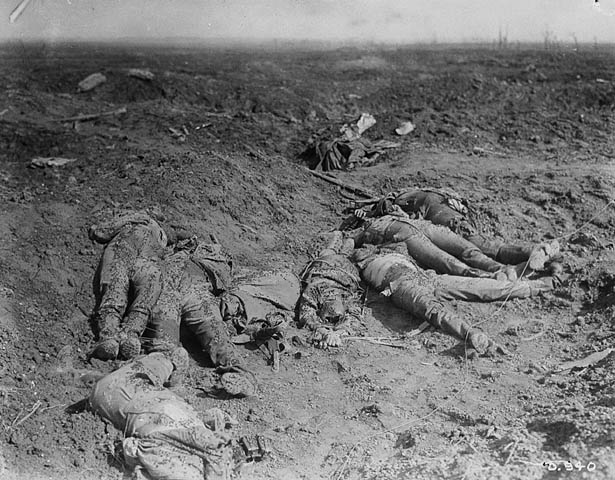
100 years ago today - the last day of the Somme


A service of remembrance is being held today at Thiepval in northern France to commemorate the last day of the Battle of the Somme. (Though the historian Martin Gilbert in his Somme: The Heroism and Horror of War, puts the final action on November 19.) Thiepval’s Memorial to the Missing lists the names of more than 72,000 soldiers whose bodies were never found.

I wrote about the Somme in my book Britain’s 20 Worst Military Disasters, noting that every other battle I featured was clearly a defeat, while the Somme is sometimes seen as a victory.

The ground gained was negligible. Nowhere did the Allied line advance more than six miles, and many objectives due to be taken on the first day were never captured, nor did the Allies liberate a single town or gain a single strategically significant point. But it is said that the bloody attrition fatally drained German resources and paved the way for the Allied victory two years later.

The offensive involving British, British Empire and French soldiers had begun on 1 July, 1916. By the end of that day, nearly 20,000 British soldiers were dead, and 36,000 wounded – the worst toll for a single day in the history of the British Army.


When rotten weather and cloying mud finally brought an end to the battle, Britain and the British Empire had suffered an almost unimaginable 400,000 casualties, the French had lost about 200,000, and the Germans perhaps 450,000.

Monday, 29 April 2013

Malaria - a pugnacious parasite


New drug-resistant strains of the parasite that causes malaria have been identified in western Cambodia.    There have been reports of drug resistance in the region since 2008, and the problem has now spread to other parts of South-east Asia.

Scientists investigating the new organism say that all the most effective drugs developed in the last few decades ‘have been one by one rendered useless by the remarkable ability of this parasite to mutate and develop resistance.’   They do not know why this part of Cambodia should be such a hotbed of resistance.

In 2010, there were more than 200 million cases of malaria and 600,000 deaths – 90 per cent of them in Africa.   The World Health Organisation has made preventing the spread of resistant strains a major objective.  

See also my blogs of 11 April, 30 May, and 24 Sept, 2009; 21 Oct, 2010; 23 Sept, 2011 and 23 May, 2012.

*I’ve just started to post a series of videos on Britain’s 20 Worst Military Disasters.   This is the first -  https://www.youtube.com/watch?v=D0Bgf-xHHGE