Showing posts with label First World War. Show all posts

Saturday, 25 April 2026

I-Spy Cascais: a memorial to four of Portugal's wars


Cascais is a charming historic town along the Tagus estuary from Lisbon. Its war memorial, pictured above, commemorates four of Portugal's wars.

First, the War of Roussillon and Catalonia (1793-5) when, following the French Revolution, they landed troops in Catalonia to join up with Spanish forces and tried to attack France in the Pyrenees. It did not go well.

 The second was the Peninsular War (1808-14) in which British troops joined the Portuguese and Spaniards to drive out the French who had occupied the Iberian Peninsula. The war turned the tide against Napoleon in Western Europe and made the reputation of the Duke of Wellington, who went on to become the victor of Waterloo.

The third commemoration is of a Portuguese auxiliary division that fought in one of Spain's civil wars in 1837.

And the fourth is the First World War, or Great War (1914-18). Portugal had been Britain's ally since 1377, but approached the conflict cautiously. It had been hoping to remain neutral, but there were clashes in Africa where German South-west Africa bordered Portuguese Angola. 

Britain was at the time Portugal's most important overseas market, and when German U-boats tried to impose a blockade, Portugal seized German ships in its ports, so in 1916 Germany declared war. More than 12,000 Portuguese servicemen were killed in the conflict.

Monday, 29 April 2024

I-Spy Turin: memorial to a forgotten front


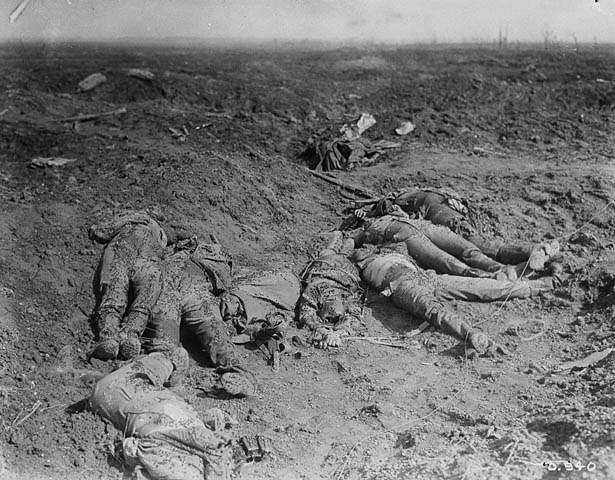
In the old days before we had the EU, European countries used to fight wars with each other. We know a lot about the horrors of the Western Front in the First World War, but there were other equally dreadful theatres we hear much less of.

The war memorial in Turin, pictured above, commemorates soldiers killed in one of them, the conflict between Austria and Italy, much of which was fought on the Alpine Front.

Italy entered the war late, in 1916. Having been an ally of the Austro-Hungarian Empire, it switched sides to join Britain, France and Russia. Austria and Italy would lose a million men - 600,000 Italians and 400,000 Austrians - many of them in the mountains. One war correspondent said conditions there were worse even than 'in the blood-soaked mud of Flanders'.

In addition to the cold and the usual hazards of war, there were avalanches, sometimes set off deliberately as a weapon, sometimes triggered accidentally by artillery, and sometimes occurring naturally. After heavy snow in December of 1916, avalanches buried 10,000 soldiers in just two days.

Tuesday, 19 March 2024

I-Spy Paris: war memorial to the Tsar's troops


In 1916, Tsar Nicholas II of Russia sent 20,000 Russian troops to help France fight the Germans on the Western Front. Above is the memorial in Paris to the 5,000 who were killed.

Tsarist Russia was part of the Triple Entente with France and Britain, lining up against the Central Powers of Germany, the Austro-Hungarian Empire and the Ottoman Empire. 

Tsar Nicholas would be killed by the Bolsheviks as the Russian Empire collapsed. The First World War also brought an end to the German Empire, and the Austro-Hungarian and Ottoman Empires were dismantled.

Thursday, 22 March 2018

100 years ago this month - the start of the world's deadliest flu epidemic


In March 1918, a cook at Fort Riley in Kansas, USA reported to the infirmary with a 'bad cold'. By noon, 100 men were sick. More than 40 at the camp would die. With America and its allies caught up in the dreadful conflict of the Great War, the authorities tried to keep the news as quiet as possible from the enemy.

But it soon became impossible. For 12 days in May, the British fleet could not take to the sea because 10,000 sailors were ill. The disease appeared to strike with frightening speed. The Times wrote of people being 'perfectly well' at ten o' clock, but 'prostrate' by noon. 

Another odd thing was that unlike most flu epidemics, this one seemed to hit the young and fit harder than the old. More than 30,000 American soldiers would die of the disease, with a top doctor declaring at one point that it was more dangerous to be in a camp in the US than on the front line in France.

Across the world, what became known as 'Spanish flu' is estimated to have claimed about 70 million lives, while the First World War killed perhaps 17 million in all. Famous victims included the painter Egon Schiele, while King George V, the Kaiser, Woodrow Wilson and Walt Disney caught it, but survived.

For the full story, see A Disastrous History of the World.

Sunday, 9 July 2017

British battleship accidents


On this day…..100 years ago, the Dreadnought battleship HMS Vanguard sank in Scapa Flow in Orkney after a series of explosions. Of the 845 men aboard, only two survived.

Although the First World War was still raging, the most likely explanation for the sinking is thought to be an accidental explosion in the ship’s magazine. Certainly it sank almost immediately.

Nor was this an isolated incident. On 26 November 1914, a series of explosions ripped through the battleship HMS Bulwark as it was moored in the Medway (pictured). The ship was lifted out of the water then fell back in a thick cloud of smoke. There were only a dozen survivors from the crew of 750.

It being war-time, not many details emerged, but a court of inquiry heard that shells aboard were not stored according to regulations, and concluded that the probable cause of the disaster was that cordite charges, kept by a boiler room bulkhead, overheated.


For more, see A Disastrous History of Britain.

Friday, 18 November 2016

100 years ago today - the last day of the Somme


A service of remembrance is being held today at Thiepval in northern France to commemorate the last day of the Battle of the Somme. (Though the historian Martin Gilbert in his Somme: The Heroism and Horror of War, puts the final action on November 19.) Thiepval’s Memorial to the Missing lists the names of more than 72,000 soldiers whose bodies were never found.

I wrote about the Somme in my book Britain’s 20 Worst Military Disasters, noting that every other battle I featured was clearly a defeat, while the Somme is sometimes seen as a victory.

The ground gained was negligible. Nowhere did the Allied line advance more than six miles, and many objectives due to be taken on the first day were never captured, nor did the Allies liberate a single town or gain a single strategically significant point. But it is said that the bloody attrition fatally drained German resources and paved the way for the Allied victory two years later.

The offensive involving British, British Empire and French soldiers had begun on 1 July, 1916. By the end of that day, nearly 20,000 British soldiers were dead, and 36,000 wounded – the worst toll for a single day in the history of the British Army.


When rotten weather and cloying mud finally brought an end to the battle, Britain and the British Empire had suffered an almost unimaginable 400,000 casualties, the French had lost about 200,000, and the Germans perhaps 450,000.

Wednesday, 29 April 2015

Who remembers the Armenians?


'Who remembers the Armenians?' was supposed to have been Hitler's scornful question to his commanders as he urged them to be pitiless to the people of Poland on the eve of the German invasion in 1939. He was referring to the massacre of the Armenian Christian minority in the Turkish Ottoman Empire 100 years ago.

A century on, the answer to Hitler's question seems to be: 'quite a lot of people.' Over the past week, remembrance ceremonies have been held all over the world, and the French president, Francois Hollande, urged Turkey to recognise the massacre of up to 1.5 million people as genocide.

Turkey's president said his country 'shared the pain' of the Armenians, but rejected the suggestion that the killings were part of a systematic campaign, and said that many innocent Muslims also perished during the horrors of the First World War.

The fate of the Armenians has long been a subject of bitter controversy in Turkey. In 2006, Orhan Pamuk, the first Turk to win the Nobel Prize for literature, was charged with'insulting Turkish identity' when he referred to the massacre, and the following year, a journalist of Armenian descent was shot dead in Istanbul after he described it as 'genocide'.


Tuesday, 16 December 2014

The shelling of Hartlepool + 100


100 years ago today…..German warships shelled a number of towns on England’s Yorkshire coast. The First World War had come home to Britain in an unforeseen way. Many had expected the first threat to civilians to come from air raids.

The first shells hit the important shipbuilding centre of Hartlepool at about a quarter past eight in the morning. Nine soldiers manning a battery and 7 sailors were killed, but most of the 100+ casualties were civilians – men, women and children.

The ships then moved on to Scarborough (pictured) where a church was hit during a Holy Communion service, while a shop that was damaged quickly put up one of those defiant signs saying ‘Business as usual’, which would become so familiar in both world wars. Whitby was hit too. The Times commented that there was ‘an entire absence of panic’, though many people fled to the countryside.


The attacks had one or two consequences the Germans may not have foreseen, with 22,000 Hartlepool men volunteering for the armed services and the town regularly winning prizes for the amount of money it raised for the war effort. For more on this story, see A Disastrous History of Britain.

Monday, 3 November 2014

Remembering World War One


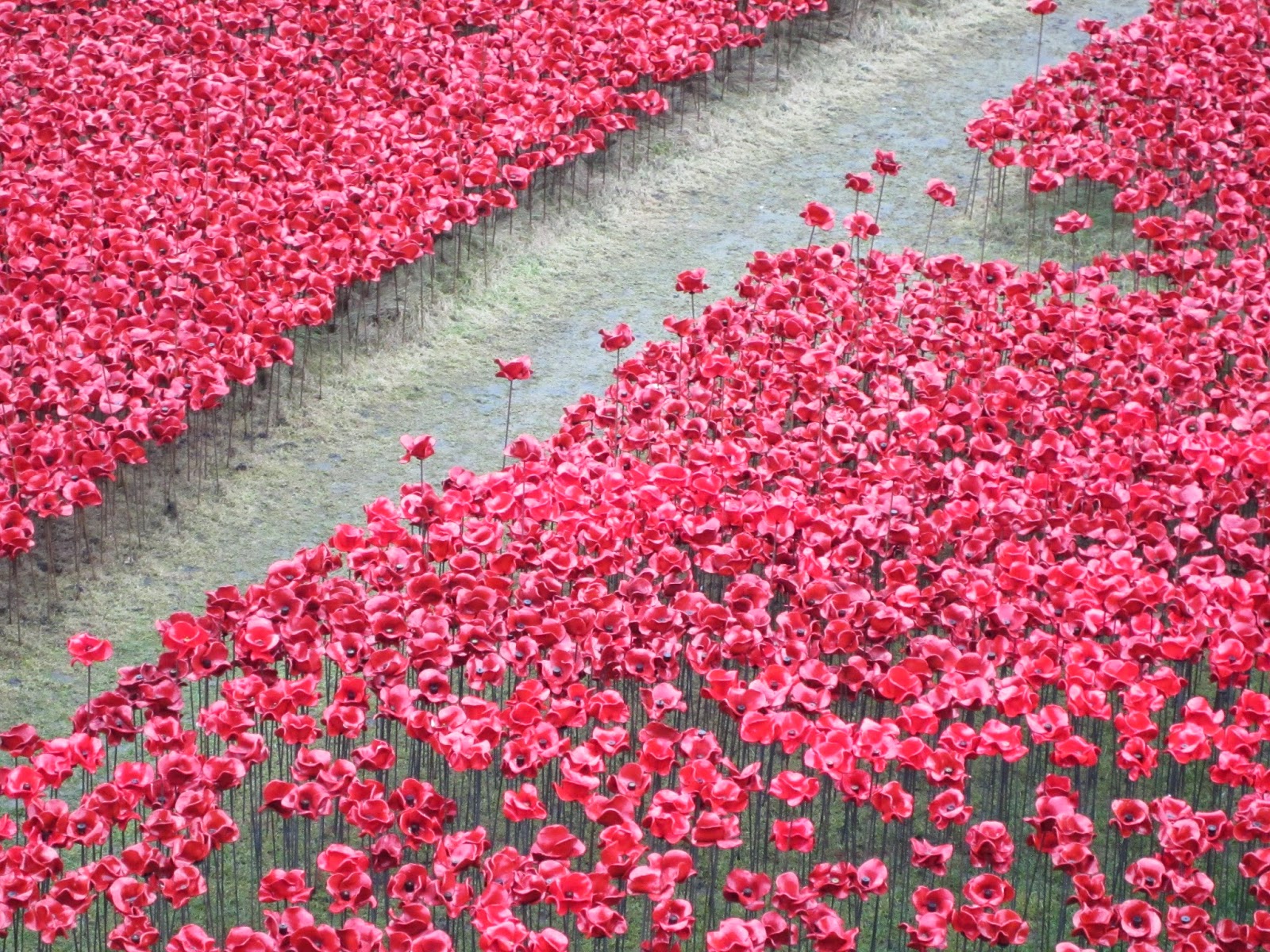
Went to the Tower of London yesterday to see the 888,246 ceramic poppies planted in the moat - each one representing a British military death in World War One. Although I arrived early, there were already hundreds of people there.

In spite of the precision on British losses implied by the number of poppies at the Tower, there is much less certainty about overall casualties in the Great War, partly because of the immense social dislocation the conflict brought, with four of the combatants facing revolutions around its end.

Estimates put the total number of military deaths at more than 8 and a half million, with Germany and Russia each suffering about one and three quarter million, and Austria-Hungary and France each losing well over a million.

Coming up with an authoritative figure for the civilians who perished through massacre, accident, disease, hunger, exposure and hardship is even more difficult, but some estimates put the number even higher than that for military casualties, at around 13 million.

Saturday, 28 June 2014

Sarajevo 1914 - a bizarre chapter of accidents


100 years ago today, the Archduke Franz Ferdinand, heir to the Austro-Hungarian empire, went to one of its outposts, Sarajevo, to inspect the army. He had married his wife, a mere countess, in the teeth of opposition from his family, and she was banned from sitting at his side on ceremonial occasions – except when he was acting in his capacity as a field marshal of the army.

So on June 28, 1914, she rode with him in his open top car as a group of Bosnian nationalists lay in wait. One of them threw a grenade, but it hit the car behind. The Archduke insisted on going to the hospital to visit the injured, but no one told the drivers of the motorcade.

In the confusion that resulted, they found themselves having to back up into a narrow street where they came to a stop outside a café. Sitting inside was 19 year old Gavrilo Princip, one of the conspirators, who had gone there after the apparent failure of their plot. He crossed the street and shot Franz Ferdinand and his wife, who both died.


37 days later the first World War began, a conflict that cost the lives of perhaps 10 million military personnel and 7 million civilians. Nobody much wanted the archduke’s assassination to lead to a world war, but a series of bad decisions by politicians brought precisely that outcome. Princip was sentenced to 20 years in prison. In harsh conditions, he died of tuberculosis six months before Armistice Day.

Wednesday, 7 May 2014

Who remembers the Armenians? Many people

‘Who remembers the Armenians?’, Hitler is supposed to have asked scornfully as he prepared to invade Poland in 1939, referring to the deaths of perhaps 1m people during the First World War at the hands of the Ottoman Empire, now Turkey.

Now for the first time, the Turkish Prime Minister, Recep Tayyip Erdogan, has offered his ‘condolences’ over the mass killings. The Turks still reject the idea that they constituted genocide, and Mr Egoyan talked instead of the ‘shared pain’ of the Turkish and Armenian peoples for their losses in World War One.

Even so, the comments are a marked step forward. In 2006, Orhan Pamuk, the first Turk to win the Nobel Prize, was threatened with prosecution for insulting ‘Turkish identity’ when he drew attention to the killings.

At the start of the First World War, after years of inter-communal tension the Turks feared the Christian Armenians might help their enemy, Russia. They began a mass deportation during which perhaps 600,000 were murdered, while another 400,000 died from hardship.


*Tomorrow at Shoe Lane Library, London EC4, 1230 my talk on Flood: Nature and Culture
http://disasterhistorian.blogspot.co.uk/2014/04/talk-on-flood-nature-and-culture.html

Sunday, 15 April 2012

Soldiers and avalanches

Hopes are fading for the 139 Pakistani soldiers and civilian contractors buried by an avalanche near the disputed Siachen glacier in Pakistani-administered Kashmir.    It engulfed a military camp 15,000 feet above sea level on April 7, and in some places, the snow is said to be 80 feet deep.

Hundreds of troops, as well as villagers equipped only with shovels, sniffer dogs and helicopters have been involved in the rescue effort, but it has been severely hampered by bad weather.   It was reported to be the worst avalanche in the area for 20 years.

Disputes over Kashmir have twice brought India and Pakistan to war, and the Siachen glacier has been dubbed the world’s highest battlefield.     In 2010, 24 Pakistani soldiers died there in an earlier avalanche.

During the First World War, thousands of soldiers were killed by avalanches in the Tyrol during the struggle between Italy and Austria.    On some occasions, they were started accidently by artillery explosions, but both sides also deliberately used them as a weapon.  (See also my blog of Feb 18, 2010.)

Sunday, 22 January 2012

Britain's 20 Worst Military Disasters 18 - the Somme

On Saturday, 1 July, 1916, British, British Empire and French soldiers launched a huge offensive on the Somme.    By the end of that day, nearly 20,000 British soldiers were dead, and 36,000 wounded – the worst toll for a single day in the history of the British Army.

When rotten weather and cloying mud finally brought an end to the Battle of the Somme in November, Britain and the British Empire had suffered an almost unimaginable 400,000 casualties, the French had lost about 200,000, and the Germans perhaps 450,000.

Of all the disasters featured in this series, this is the only one sometimes claimed as a victory.   It is said that this bloody attrition fatally drained German resources and paved the way for the Allies to finally win the war two years later.

The ground gained was negligible.   Nowhere did the Allied line advance more than six miles, and many objectives due to be taken on the first day were never captured, nor did the Allies liberate a single town or gain a single strategically significant point.

For the full story, see Britain's 20 Worst Military Disasters from the Roman Conquest to the Fall of Singapore.

Tuesday, 17 January 2012

Britain's 20 Worst Military Disasters 17 - Gallipoli


The attack on Turkey’s Gallipoli peninsula by Britain and France in 1915 was conceived as a way of getting round the bloody stalemate of the Western Front, which was devouring soldiers’ lives at an almost unimaginable rate.

The initial idea was for warships to breeze through the Dardanelles straits into the Sea of Marmara, threaten Constantinople and force Germany’s Turkish allies to pull out of the war, but as the navy failed to make progress, it was decided that a major land invasion would also be needed.

Suffering uninspired leadership and handicapped by extremely difficult terrain, this quickly degenerated into a murderous deadlock that looked disconcertingly similar to what was happening in Flanders.

After 11 months, with 38,000 British and British Empire troops killed, the invasion was abandoned.  It was feared that the withdrawal would entail heavy losses, but, in fact, this proved the most successful part of the operation.   A brilliant campaign of deception involving rifles firing automatically from deserted trenches, and noisy empty supply trucks running back and forth at night, enabled the pull-out to be made without any significant casualties.

Sunday, 28 June 2009

A sombre anniversary

On this day…..95 years ago, the Archduke Franz Ferdinand, heir to the throne of the Austro-Hungarian empire, was assassinated in Sarajevo by a Serb nationalist, Gavrilo Princip. The killing set off a chain of events that resulted in Austria-Hungary declaring war on Serbia on July 28, 1914, Germany declaring war on Russia on August 1, then France on August 3, and Britain entering the war on August 4.

Princip, a 19 year old Bosnian Serb, wanted to liberate the whole of the Balkans from Austro-Hungarian rule. While Franz Ferdinand was on a visit to the Bosnian capital, then part of Austria's empire, one of Princip’s comrades threw a bomb at his car. It bounced off and exploded beneath the next vehicle, injuring two of the occupants and about a dozen people in the crowd. While the Archduke and his wife were on their way to a hospital to visit the injured, Princip shot them.

While the First World War was raging, Princip was tried and sentenced to 20 years in gaol – the maximum allowed for someone under 20 – on October 28, 1914. He was kept in harsh conditions and died of tuberculosis in April 1918.

The Treaty of Versailles was signed exactly five years after the assassination on June 28, 1919. The war is estimated to have cost the lives of about 8.5 million military personnel, and perhaps 13 million civilians from starvation, disease, being caught up in military action or massacre. It also put paid to the Austro-Hungarian empire.

Wednesday, 20 May 2009

War horses + 30 Years War crime

Normally this blog confines itself to human disasters, but this week I went to see the magnificent play The War Horse at the New London Theatre, and was astonished to see in the programme the figures for the number of horses killed during the First World War. One million were sent from Britain to France, and only 62,000 returned.

One of the first revelations of the conflict was that cavalry was now virtually useless, and defenceless, in the face of machine guns, artillery, barbed wire. Apart from their cavalry duties, horses were also responsible for huge amounts of the fetching, hauling and carrying that fed the war machine. Many were killed by direct attack – bullets, shells, shrapnel, poison gas – others maimed by the lethal debris lying around the battlefield.

This day….378 years ago saw the most notorious atrocity of the Thirty Years’ War – the sack of Magdeburg. After a six-month siege, the mainly Protestant city was taken by Catholic soldiers, and then, in the words of the great German writer Friedrich Schiller, there followed “a scene of horrors for which history has no language – poetry no pencil. Neither innocent childhood, nor helpless old age; neither youth, sex, rank, nor beauty, could disarm the fury of the conquerors. “

The city was burned to the ground. Perhaps 30,000 citizens were murdered while thousands of women were dragged off to the victors’ camp. The atrocity caused horror across Europe, so much so that the Catholic Holy Roman Emperor had to call off a victory celebration, and during the war’s remaining 17 years, many a Catholic soldier crying for quarter would be greeted with the retort “Magdeburg quarter!” and killed.

Friday, 30 January 2009

Two related anniversaries

On this day......76 years ago, Adolf Hitler was sworn in as Chancellor of Germany. In the dying months of the First World War, Hitler had been awarded the Iron Cross (the officer who recommended him for the decoration was Captain Hugo Guttman, a Jew). After the war, his dream of becoming an artist never came true, and he went off to run the propaganda operation of the National Socialist (Nazi) party.

After an abortive Nazi coup, he spent nine months in prison, and used the time to write the first volume of Mein Kampf in which he denounced Communism and the Jews. During the 1920’s the Nazis never managed to poll more than 6.5% in Reichstag elections, but then came Hitler’s big break – the Great Depression. Terrified by the spectre of Communism, big business began bankrolling him, and the rest is disaster history. The Nazis were setting up concentration camps within weeks, and through murder, forced labour, starvation, medical experiments etc, they killed perhaps 20 million people.

On the 12th anniversary of Hitler’s coming to power, on January 30, 1945, a ship named the Wilhelm Gustloff was carrying German refugees along with soldiers and sailors across the Baltic away from the advancing Russian forces. There were up to 10,500 people on board when she was hit by a torpedo from a Soviet submarine. It is believed that not more than 1,000 survived, making this the worst shipwreck in history.